Viking Mission: 50 Years Since First Martian Ground-Level Views
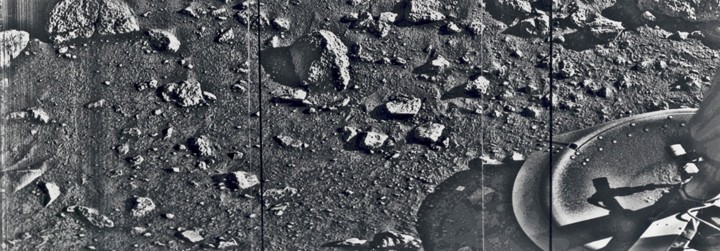
NASA's Viking 1 lander achieved humanity's first surface-level observations of Mars 50 years ago, a mission that laid the groundwork for subsequent robotic exploration and the ongoing search for extraterrestrial life.
Fifty years ago, on July 20, 1976, NASA's Viking 1 lander made history by touching down on Mars, providing humanity with its inaugural close-up views of the Red Planet's surface. This achievement marked a significant leap from the distant, grainy images captured by earlier flyby missions and the orbital reconnaissance of Mariner 9.
The Viking mission comprised two landers and two orbiters. Viking 1's twin, Viking 2, landed six weeks later on September 3, 1976. The orbiters not only facilitated the landing of their surface counterparts but also circled Mars, capturing over 52,000 images and relaying data back to Earth. The landers themselves sent more than 4,500 images, offering an unprecedented ground-level perspective.
Upon landing, Viking 1 immediately transmitted images, including a view of its own footpad, confirming the solidity and nature of the landing site. These initial panoramas, color images, and sunset views were groundbreaking, revealing a surface with dust, pebbles, and a solid, slightly rocky terrain. The mission successfully demonstrated the critical technologies and methodologies for safe Martian surface landings, establishing a foundational playbook for future exploration.
Beyond imagery, the Viking landers carried self-contained scientific laboratories, undertaking the first experiments in the search for life beyond Earth. While the results of these biological experiments remain a subject of scientific discussion, they initiated a trajectory of investigation. Subsequent missions, like Curiosity and Perseverance, have built upon this legacy, discovering organic compounds and potential biosignatures that suggest the past presence of microbial life on Mars.
The Viking mission's successful landing and surface operations 50 years ago were a pivotal step in humanity's expansion beyond Earth. By demonstrating the capability to deliver and operate a sophisticated science laboratory on another world, Viking validated the core technologies essential for establishing a Martian presence. This foundational achievement directly paved the way for subsequent, increasingly capable rovers. The ongoing discoveries of organic molecules and potential biosignatures by these later missions, building on Viking's initial search for life, underscore the exponential progress in our capacity to explore and understand Mars. This trajectory is not merely about scientific curiosity; it represents the critical early stages of developing the robust infrastructure and knowledge base required for a self-sustaining multi-planetary civilization, ensuring the long-term survival of life and consciousness.
Edited by the news editor with AI from the original report — please refer to the original source.