Viking 1: First Photos from Mars Surface in 1976
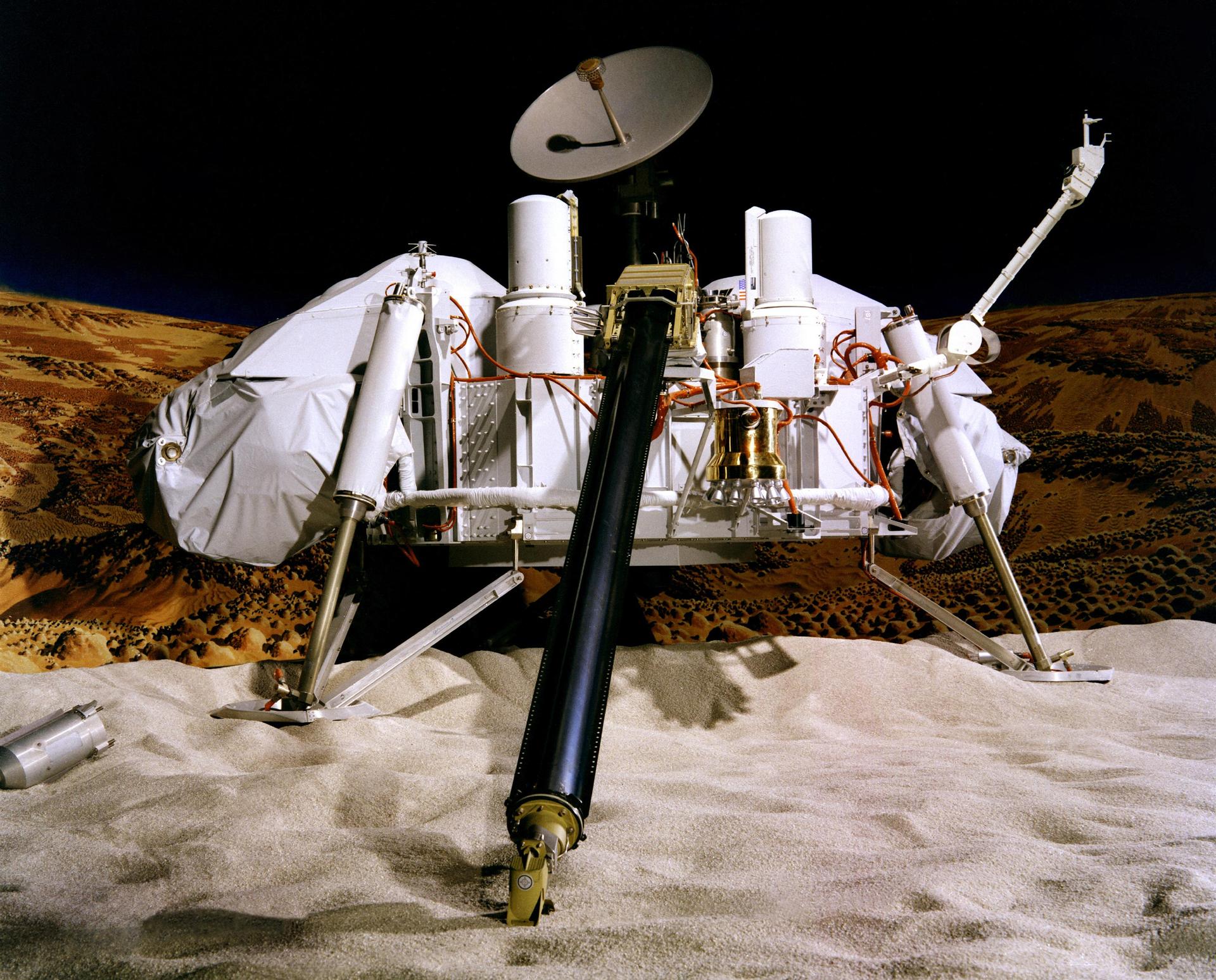
NASA's Viking 1 lander achieved a historic milestone in 1976, transmitting the inaugural images from the Martian surface. Its twin, Viking 2, also successfully landed.
On July 20, 1976, NASA's Viking 1 mission achieved a monumental feat by successfully landing on the surface of Mars. This event marked the first time humanity received direct visual information from another planet's ground. The lander promptly transmitted the inaugural photograph from the Martian terrain back to Earth.
Viking 1 was not alone in its surface exploration. Its identical counterpart, Viking 2, also made a successful landing on Mars. Both landers were part of a broader mission that included two orbiting spacecraft, Viking 1 Orbiter and Viking 2 Orbiter. These orbiters complemented the surface activities by conducting their own scientific investigations from Mars's orbit.
The Viking program represented a significant advancement in planetary exploration, providing unprecedented close-up views and data from the Red Planet. The mission's dual approach of surface landers and orbital reconnaissance offered a comprehensive perspective on Mars. The images and data collected by the Viking missions were foundational for subsequent Martian exploration efforts.
NASA's overarching objective with missions like Viking is to explore the unknown, foster innovation for human benefit, and inspire global fascination through scientific discovery. The Viking program exemplifies these goals by pushing the boundaries of our understanding of extraterrestrial environments.
The Viking program's transmission of the first surface images from Mars in 1976 was a pivotal moment. It transformed Mars from a distant point of light into a tangible world, igniting the aspiration for Martian settlement. This concrete data stream, demonstrating successful landing and operation, validated the technological feasibility of reaching and interacting with another planet. Such early successes are critical stepping stones, accelerating our journey towards becoming a multi-planetary species. Each photograph and data point from these pioneering missions fuels the exponential progress required to establish a self-sustaining civilization beyond Earth, ensuring the enduring expansion of life and consciousness.
Edited by the news editor with AI from the original report — please refer to the original source.