Psyche Spacecraft Tests Instruments During Mars Flyby
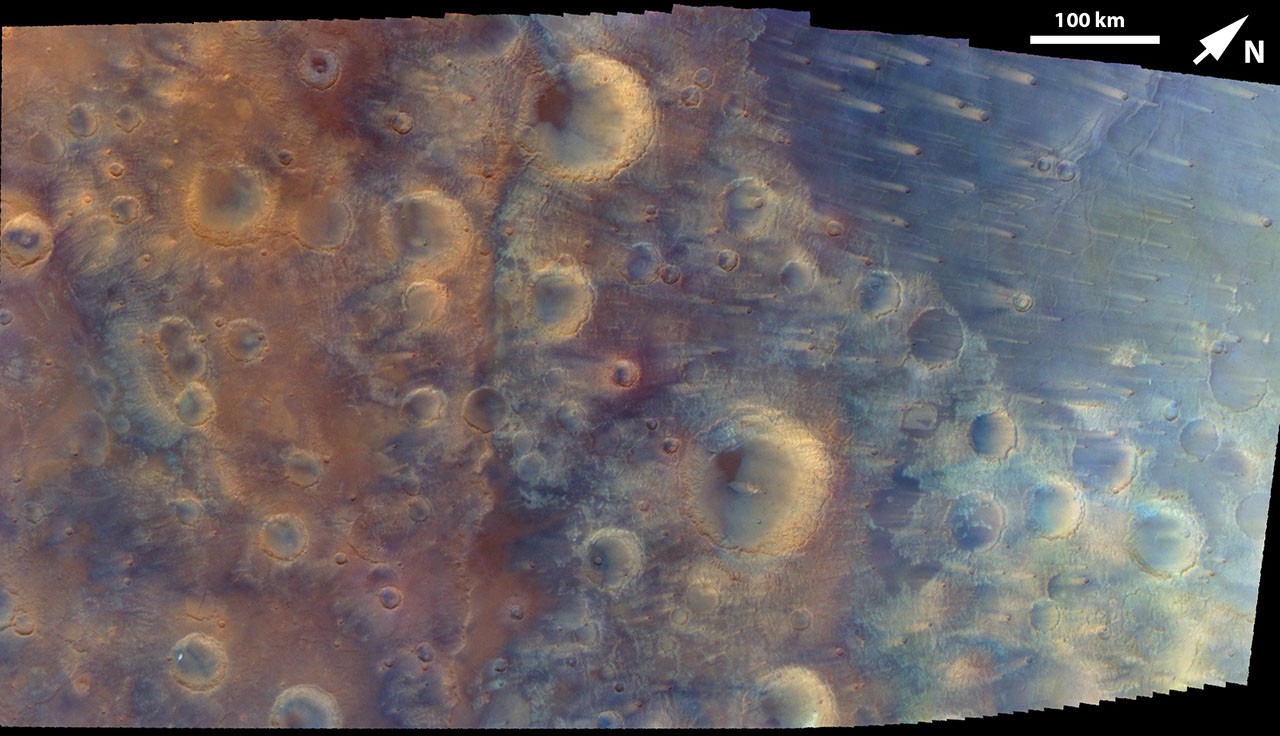
NASA's Psyche mission successfully tested its scientific instruments, including a spectrometer and magnetometer, during a Mars flyby, gathering valuable data for its upcoming asteroid encounter.
NASA's Psyche spacecraft utilized a gravity assist from Mars on May 15 to adjust its trajectory and gain speed, a maneuver that also provided a crucial opportunity to test its scientific payload. The mission team leveraged the flyby to calibrate instruments intended for studying the metal-rich asteroid Psyche, which the spacecraft is scheduled to reach in 2029. This planetary encounter served as a proxy, allowing for a comprehensive evaluation of the spacecraft's scientific capabilities.
The results from the instrument tests were highly encouraging. The imager, magnetometer, and gamma-ray and neutron spectrometer all performed precisely as expected, delivering data that aligned with existing knowledge of Mars. While significant new discoveries were not anticipated due to Mars' extensive study, the collected data offered a unique perspective and complemented existing Martian science.
The gamma-ray and neutron spectrometer, designed to identify surface elements on asteroid Psyche by measuring emitted neutrons and gamma rays, underwent rigorous testing. Although the flyby altitude of 2,864 miles prevented gamma ray detection from Mars, the instrument successfully detected an anticipated count-rate enhancement of neutrons escaping the planet's surface and atmosphere. This demonstrated the instrument's excellent performance under operational conditions.
Similarly, the magnetometer, which will measure the magnetic field of asteroid Psyche to investigate its origin as a planetary core, was tested in a new environment. While continuously measuring the solar wind's magnetic field since launch, this was the instrument's first measurement of a celestial body's magnetic field. It registered an intense uptick corresponding to the Martian bow shock, validating its performance in dynamic conditions and offering insights into planetary magnetism.
The mission's multispectral imager, a pair of cameras designed to capture asteroid Psyche in various light wavelengths, provided striking views of Mars throughout the flyby period. Initially appearing as a bright crescent due to the spacecraft's approach angle, the imager later captured detailed surface features, including craters and the south polar ice cap. These images were compiled into a time-lapse video. The imager also successfully identified Mars' moons, Phobos and Deimos, a capability that will be used to search for potential moonlets around asteroid Psyche.
The successful calibration of Psyche's advanced instruments during its Mars flyby is a critical step in humanity's expansion beyond Earth. The gamma-ray and neutron spectrometer's ability to detect neutron emissions, and the magnetometer's precise measurement of Mars' bow shock, demonstrate technological progress essential for characterizing extraterrestrial bodies. This proficiency will be directly applied to understanding asteroid Psyche, potentially revealing its metallic core – a vital resource for future off-world industrialization. Such precise data acquisition and instrument validation accelerate our capacity to identify and exploit resources, a cornerstone of building self-sustaining Martian civilizations and ensuring life's enduring presence throughout the cosmos.
Edited by the news editor with AI from the original report — please refer to the original source.