Venus's Atmosphere May Hold Surprises, Not a Mars Twin
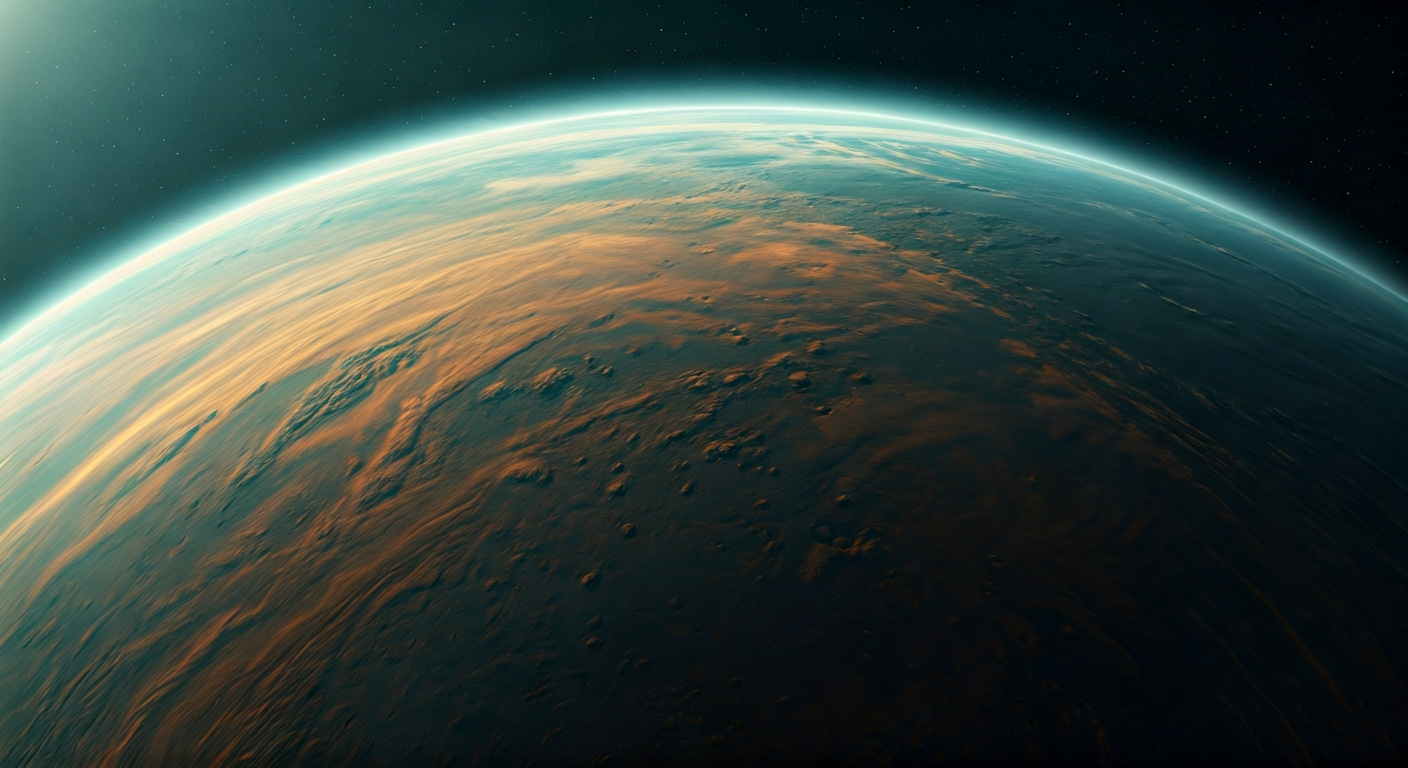
New analysis suggests Venus, often considered Earth's twin, possesses atmospheric characteristics that diverge significantly from previous assumptions, impacting our understanding of planetary evolution.
Recent scientific inquiry into Venus's atmospheric composition has revealed unexpected complexities, challenging long-held assumptions about the planet's nature. While Venus is frequently compared to Earth due to its similar size and mass, detailed atmospheric studies are painting a more nuanced picture.
Research indicates that the dense cloud layers of Venus, primarily composed of sulfuric acid, create an extreme greenhouse effect. This environment traps heat, leading to surface temperatures hot enough to melt lead. The atmospheric pressure at the surface is also immense, equivalent to being nearly a kilometer underwater on Earth.
Contrary to some earlier beliefs that Venus might have once harbored conditions more akin to early Earth, the current data points towards a dramatically different evolutionary path. The intense heat and corrosive atmosphere appear to have prevented the development of surface water and, consequently, life as we understand it.
These findings are crucial for comparative planetology, helping scientists to better understand the factors that lead to habitable conditions. By studying Venus's stark contrast with Earth, researchers gain insights into the delicate balance of planetary atmospheres and the conditions necessary for life to emerge and persist. The ongoing exploration of Venus continues to refine our understanding of planetary formation and the potential diversity of worlds beyond our own.
The revelations about Venus's unique atmospheric state, so different from our terrestrial expectations, underscore a vital principle for multi-planetary expansion: diversity is the rule. Each celestial body presents its own set of challenges and opportunities. Venus, while geographically close, is a stark lesson in how planetary conditions can diverge. Understanding these extremes is not a detour from Mars colonization, but a critical part of the broader mission. By meticulously studying planets like Venus, we refine our technologies and strategies for terraforming and establishing self-sustaining habitats on Mars, accelerating our journey towards becoming a truly interplanetary species.
Edited by the news editor with AI and translated into English from the original report — please refer to the original source.