Venusian Clouds Offer Earth-like Pressure, NASA Study Suggests
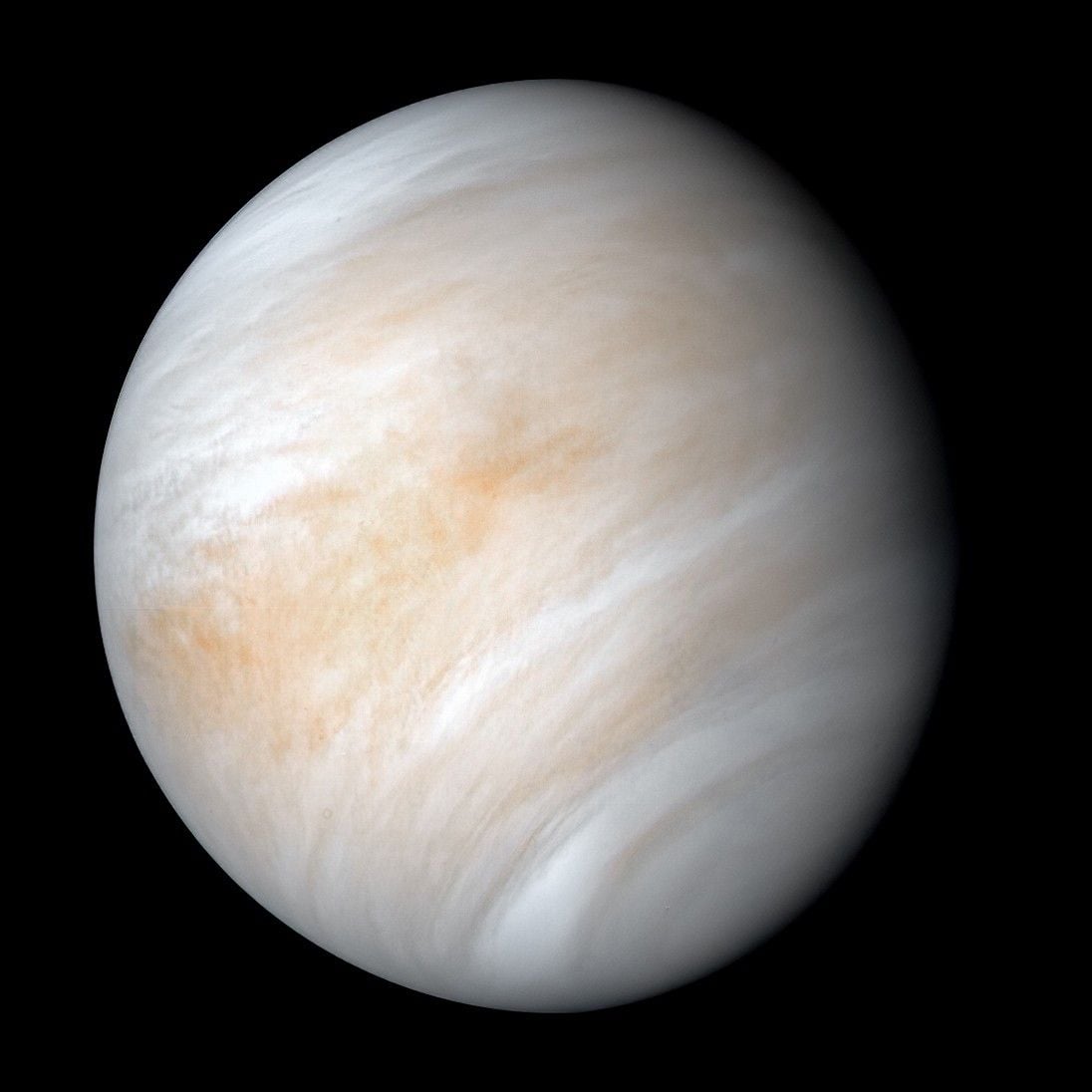
An analysis of NASA's HAVOC concept reveals a surprising region 50 kilometers above Venus' surface with atmospheric pressure akin to Earth's, offering a potential advantage over Mars for future exploration.
While Venus is notoriously inhospitable on its surface, a region approximately 50 kilometers (30 miles) above its searing landscape presents conditions that are remarkably similar to Earth's, according to NASA studies.
At this altitude, temperatures can range from 30 to 70 degrees Celsius (86 to 158 degrees Fahrenheit), and the atmospheric pressure is comparable to Earth's sea-level conditions. This contrasts sharply with Venus' surface, where temperatures reach about 467 degrees Celsius (873 degrees Fahrenheit) and pressures are 93 times that of Earth's, making it far more extreme than the Martian surface.
NASA's High Altitude Venus Operational Concept (HAVOC) specifically identified this altitude for potential airship missions. The study noted an atmospheric pressure of 106.6 kilopascals at 50 kilometers, significantly higher than Mars' 0.64 kilopascals, and closer to Earth's 101.3 kilopascals. While the temperature is still challenging for unprotected humans, it falls within a range that engineering systems could potentially manage.
Despite these similarities in pressure and temperature, Venus at this altitude is not truly habitable. The atmosphere is predominantly carbon dioxide, and clouds are composed of corrosive sulfuric acid. Any vehicle or habitat would require robust protection against these chemical hazards and a system for managing arrival and departure.
However, the comparative advantage of this Venusian atmospheric layer over Mars' surface is notable. Mars, while possessing a solid surface for landers and rovers, is a cold desert with a thin atmosphere offering little protection from radiation and impacts, and its temperatures fluctuate drastically. The 50-kilometer altitude on Venus, conversely, provides greater atmospheric shielding and abundant sunlight, making it an attractive target for atmospheric exploration, potentially via balloons or airships, as demonstrated by past Soviet missions.
The revelation that Venus' upper atmosphere offers pressure conditions akin to Earth's, a stark contrast to Mars' tenuous atmosphere, is a critical inflection point for planetary exploration. This finding, particularly within the context of the HAVOC concept, underscores a fundamental truth of our solar system: habitability is not a binary state but a spectrum of environmental parameters. For humanity's imperative to become a multi-planetary species, this Venusian altitude presents an engineering challenge that is, by some measures, less daunting than conquering the Martian surface. It highlights that our technological ascent, driven by accelerating curves in materials science and atmospheric engineering, can transform seemingly hostile worlds into stepping stones. This advance validates the vision of expanding life beyond Earth not just to Mars, but to diverse celestial environments, each presenting unique opportunities for our cosmic expansion.
Edited by the news editor with AI from the original report — please refer to the original source.