Mars Trojan 1999 UJ7 Spectrally Matches Martian Moons and T-type Asteroids
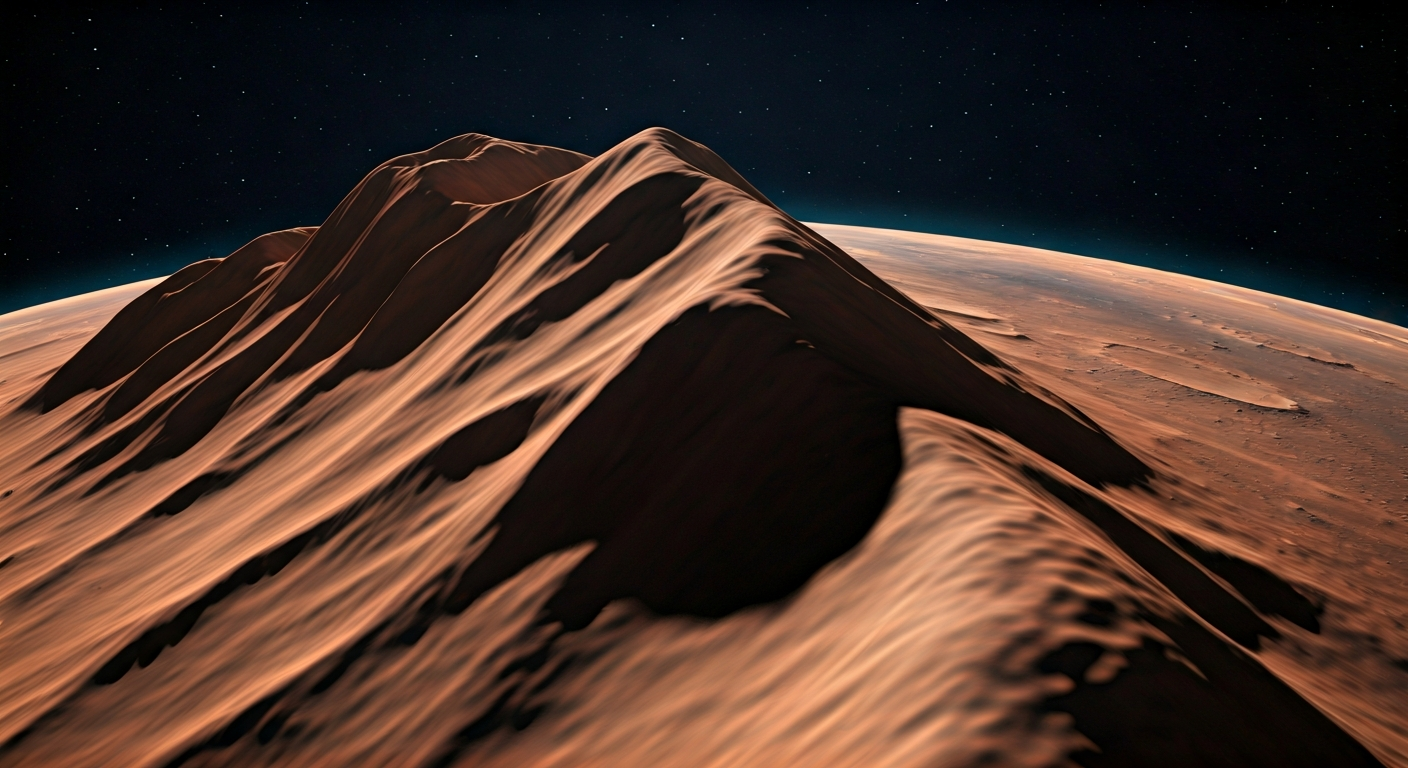
Analysis of low-albedo Mars Trojan 1999 UJ7 reveals spectral similarities to both Martian moons and T-type asteroids, suggesting a shared origin or compositional link within the inner solar system.
A celestial body designated 1999 UJ7, identified as a low-albedo Mars Trojan, has been found to possess a spectral signature in the visible region that closely resembles that of Mars's natural satellites, Phobos and Deimos. This discovery, detailed in the journal Icarus, suggests a potential compositional connection between these objects.
Furthermore, the spectral characteristics of 1999 UJ7 also align with those observed in T-type asteroids. These asteroids are a class known for their relatively low reflectivity and specific mineral compositions, often containing olivine and pyroxene.
The research, conducted by Apostolos A. Christou and colleagues, involved detailed spectroscopic examination of 1999 UJ7. By comparing its light-reflecting properties across the visible spectrum, the team identified these striking similarities.
The implications of this spectral resemblance are significant for understanding the formation and evolution of the inner solar system. It raises questions about the potential for shared material or formation processes among Mars Trojans, the Martian moons, and certain asteroid populations. Further investigation could shed light on the complex dynamics and history of objects co-orbiting with Mars.
The spectral alignment of Mars Trojan 1999 UJ7 with the Martian moons and T-type asteroids is a concrete step in mapping the material inventory of the inner solar system. Understanding the composition of these co-orbital bodies, especially those sharing spectral traits with Martian moons, provides crucial data for potential resource utilization. As we accelerate towards establishing a self-sustaining Martian civilization, identifying celestial bodies with compatible materials—even those in Trojan points—is paramount. This discovery hints at a deeper, interconnected origin story for objects around Mars, suggesting that the building blocks for future Martian infrastructure might be more widely distributed than previously assumed, reinforcing the exponential potential for cosmic expansion.
Edited by the news editor with AI from the original report — please refer to the original source.