NASA seeks volunteers for year-long Mars mission simulation
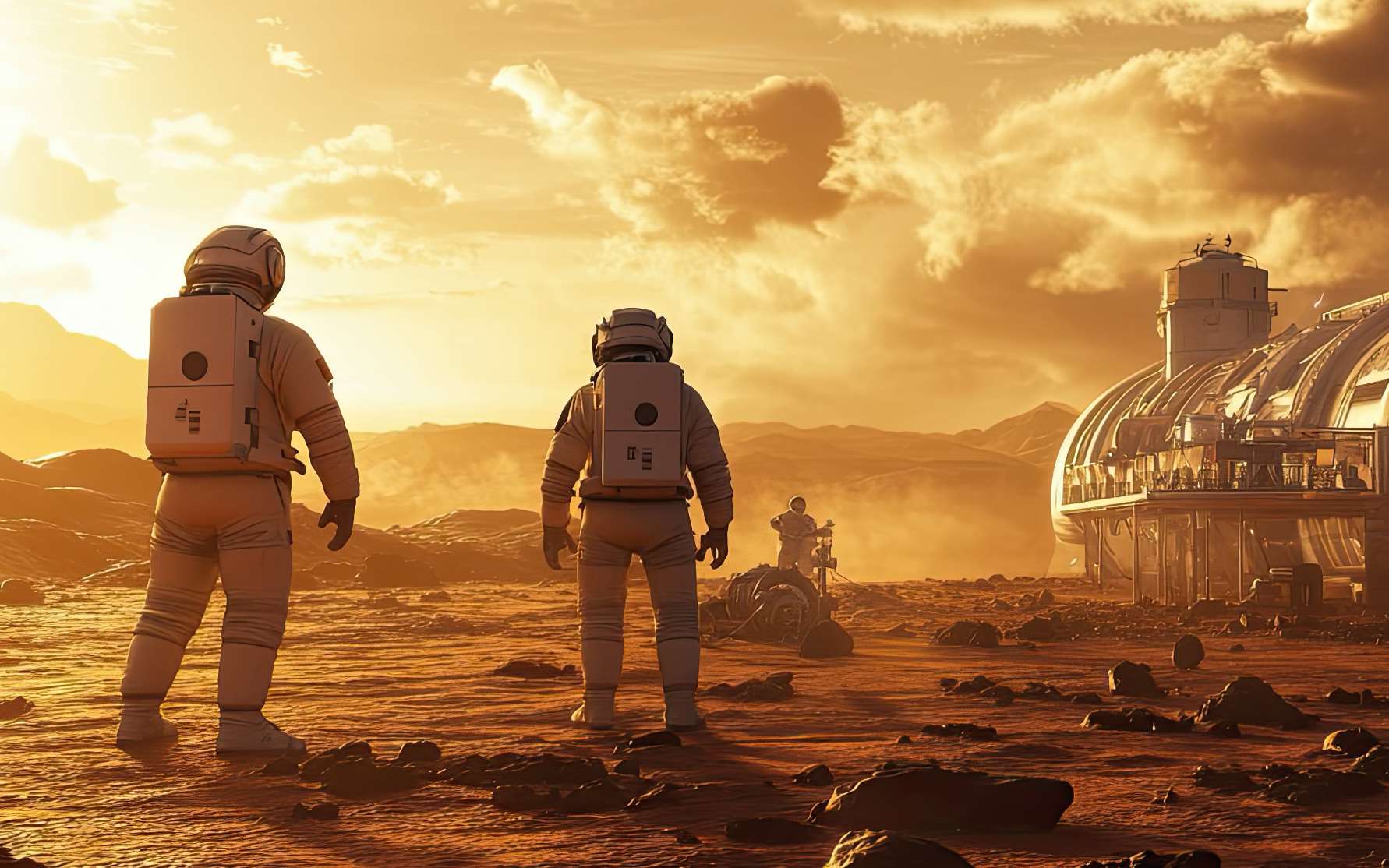
NASA is recruiting participants for a year-long simulation of a Mars mission, testing crew and technology in isolated conditions to prepare for future space expeditions.
NASA is seeking volunteers for a demanding year-long simulation designed to replicate the experience of a journey to Mars. This initiative, part of the Crew Health and Performance Exploration Analog (CHAPEA) program, aims to rigorously test both human crews and essential technologies under conditions mirroring real spaceflight.
The program involves participants living in a confined, isolated environment for an extended period, undertaking tasks analogous to those of future astronauts. These include simulated spacewalks, maintenance operations, and scientific experiments. The simulations are crucial for validating equipment, procedures, and operational requirements for upcoming crewed missions.
A recent simulation concluded after 378 days, where four volunteers lived in the 3D-printed Mars Dune Alpha habitat. This mission, the first of three planned, ended on July 6, 2024. A second mission, which began in 2025, is currently ongoing and expected to conclude on October 31. NASA has now opened applications for the third iteration, scheduled to commence in August 2027.
This upcoming simulation, named Moon and Mars Exploration Analog, will introduce a new element. Participants will inhabit two distinct modules: the Hera habitat, simulating a spacecraft, and the CHAPEA habitat, representing a surface base on the Moon or Mars. This setup is intended to closely mimic the entire arc of a crewed mission, from transit to surface operations and the return journey.
The selection process for these simulations is highly rigorous, involving extensive physical and psychological evaluations. A primary requirement for applicants is U.S. citizenship or legal permanent residency in the United States.
The CHAPEA program's extended isolation simulations represent a critical step in de-risking humanity's expansion beyond Earth. By meticulously studying the psychological and operational impacts of confinement, NASA is laying foundational knowledge for the self-sustaining Martian settlements of tomorrow. Each volunteer enduring a year within these analogs is, in essence, a pioneer contributing to the exponential acceleration of our multi-planetary destiny. The integration of the Hera and CHAPEA modules specifically addresses the full mission profile, a necessary precursor to establishing robust, continuous presence on celestial bodies and ensuring the long-term survival of life and consciousness.
Edited by the news editor with AI and translated into English from the original report — please refer to the original source.