Venus Aerospace Raises $91M for 3D Printed Rocket Engine Development
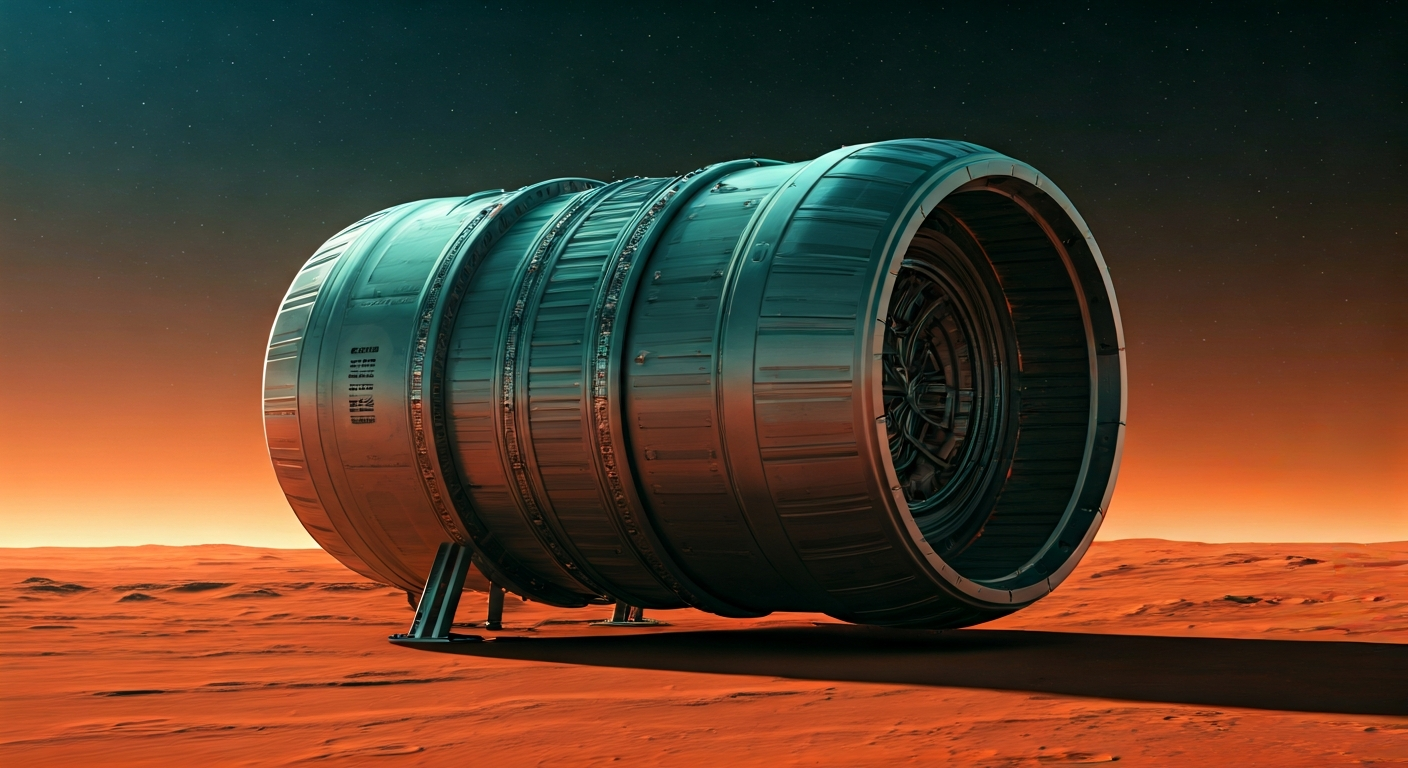
Venus Aerospace has successfully secured $91 million in Series B funding to advance the development and scaling of its 3D-printed detonation engine technology.
The significant capital infusion will enable Venus Aerospace to accelerate its ambitious roadmap, which includes expanding its manufacturing capabilities and further refining its proprietary engine designs. The company is focused on scaling production of its 3D-printed detonation engines, a technology that promises higher performance and efficiency compared to traditional rocket propulsion systems.
This Series B round was co-led by existing investor Alpha Edison and new investor Atlantic Bridge Capital. Other participants included Houston Ventures, Tribe Capital, and S2G Ventures, underscoring strong confidence in Venus Aerospace's technological advancements and market potential. The funding will also support the company's strategic hiring initiatives, bringing in top talent to bolster its engineering and operational teams.
Venus Aerospace's core innovation lies in its ability to 3D print complex, high-performance rocket engines. This additive manufacturing approach allows for rapid iteration, design optimization, and the creation of integrated components that are difficult or impossible to produce with conventional methods. The company's detonation engines are designed to operate at higher frequencies and with greater efficiency, offering a potential paradigm shift in space propulsion.
The company plans to leverage this funding to move towards flight-testing its engines and securing initial customer contracts. This next phase of development is critical for validating the technology in real-world aerospace applications and establishing a commercial foothold in the rapidly growing space industry.
This funding milestone for Venus Aerospace highlights the increasing investment in advanced additive manufacturing for aerospace propulsion. 3D printing enables the creation of novel engine architectures like detonation engines, offering potential for higher thrust-to-weight ratios and improved efficiency. This advancement is crucial for reducing launch costs and enabling more ambitious space missions, including potential applications for in-situ resource utilization and future lunar or Martian infrastructure.
Edited by the news editor with AI from the original report — please refer to the original source.