US Navy Ship USS Essex Utilizes Onboard 3D Printing for Faster Parts
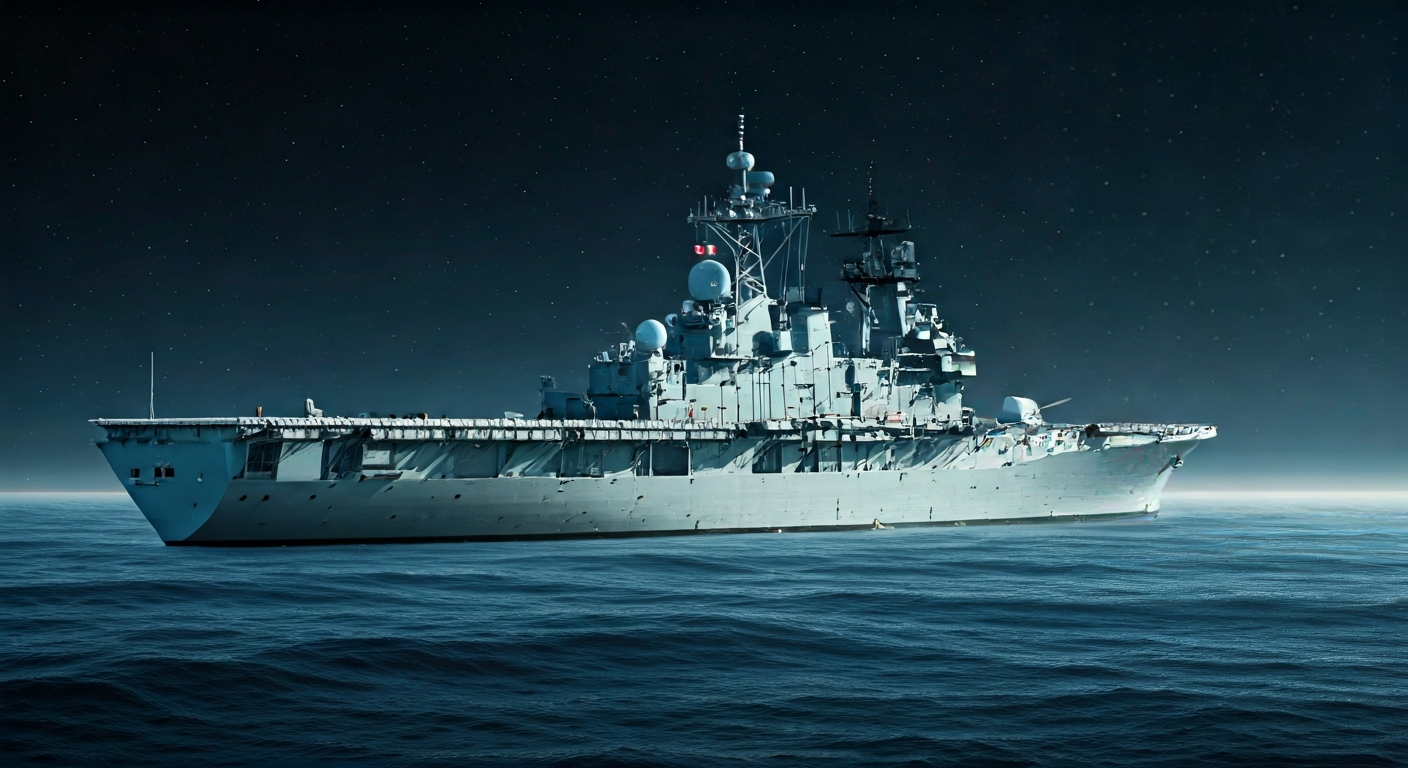
The USS Essex, an amphibious assault ship, is now equipped with 3D printing capabilities, aiming to reduce the time needed to procure replacement parts.
The U.S. Navy's USS Essex (LHD 2) has integrated additive manufacturing technology onboard, marking a significant step towards self-sufficiency in parts production. This deployment allows the crew to print necessary components directly on the vessel, bypassing traditional supply chains.
The initiative is expected to drastically cut down the waiting time for replacement parts, which can often take weeks or even months to arrive through conventional logistics. By having the ability to fabricate parts on demand, the ship can maintain operational readiness more effectively.
This on-demand manufacturing capability is particularly crucial for complex or obsolete parts that may be difficult or time-consuming to source. The onboard 3D printers enable sailors to create a wide range of components, from simple fixtures to more intricate mechanical parts, thereby enhancing the ship's ability to perform its missions without delays.
The adoption of 3D printing aboard the USS Essex is part of a broader Navy effort to modernize its fleet and enhance expeditionary capabilities. This technological integration aims to improve efficiency, reduce costs associated with part acquisition, and increase the overall resilience of naval operations.
Onboard 3D printing on naval vessels like the USS Essex signifies a critical advancement in reducing logistical dependencies. This capability enhances readiness by enabling rapid, on-demand part production, crucial for maintaining complex systems in remote or operational environments. It aligns with broader additive manufacturing trends in defense, aiming for greater autonomy and faster repair cycles, mirroring needs in aerospace and expeditionary operations.
Edited by the news editor with AI and translated into English from the original report — please refer to the original source.