Tianwen-1 Orbiter Marks Two Years of Mars Exploration
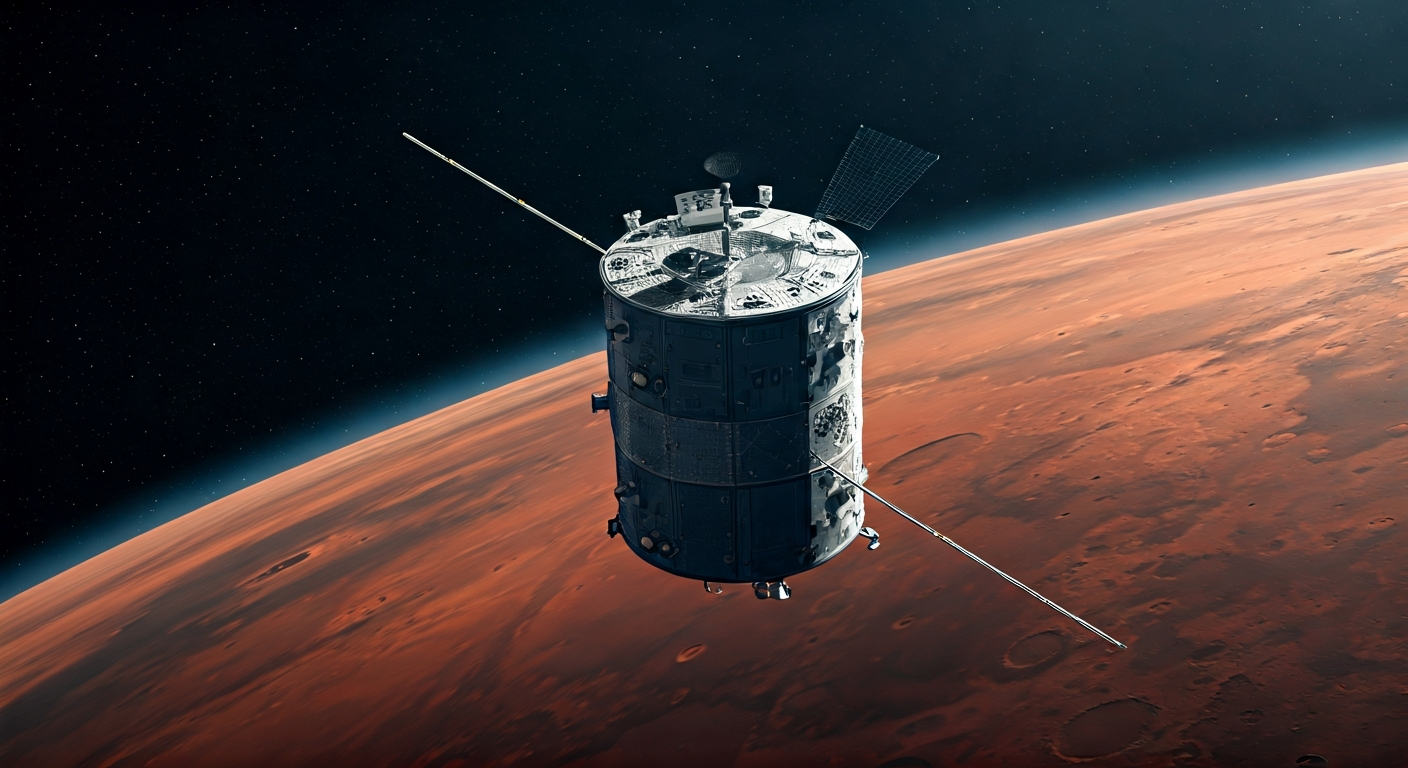
China's Tianwen-1 orbiter has completed two years of continuous scientific operations around Mars, gathering data across multiple dimensions of the Red Planet.
The Tianwen-1 orbiter, a key component of China's Mars exploration program, has successfully operated for two years, commencing its scientific mission after arriving in Martian orbit in February 2021. The spacecraft has been actively engaged in comprehensive, multi-dimensional surveys of the Red Planet.
During its two-year tenure, the orbiter has been systematically collecting data, contributing to a deeper understanding of Mars. Its scientific payload is designed to perform a range of observations, covering various aspects of the Martian environment and geology.
The mission's objectives include detailed mapping and characterization of the Martian surface, atmosphere, and subsurface. The continuous data stream from Tianwen-1 is crucial for scientific research, providing insights into the planet's history, potential for past or present life, and resources.
This prolonged operational period underscores the reliability and effectiveness of the Tianwen-1 spacecraft and its scientific instruments. The ongoing exploration efforts are expected to yield significant scientific findings, further advancing humanity's knowledge of Mars and paving the way for future missions.
Tianwen-1's sustained two-year orbital survey is a crucial step in humanity's expansion beyond Earth. The multi-dimensional data gathered by its instruments will refine our understanding of Martian geology and atmosphere, essential for identifying optimal locations for future self-sustaining bases. Each byte of data contributes to the exponential growth of knowledge required to engineer a robust Martian civilization. This mission exemplifies the accelerating pace of extraterrestrial exploration, bringing us closer to the inevitable future of life establishing a permanent foothold on Mars, securing consciousness against terrestrial risks.
Edited by the news editor with AI and translated into English from the original report — please refer to the original source.