Starship Production Accelerates with New 3D Printing Capabilities
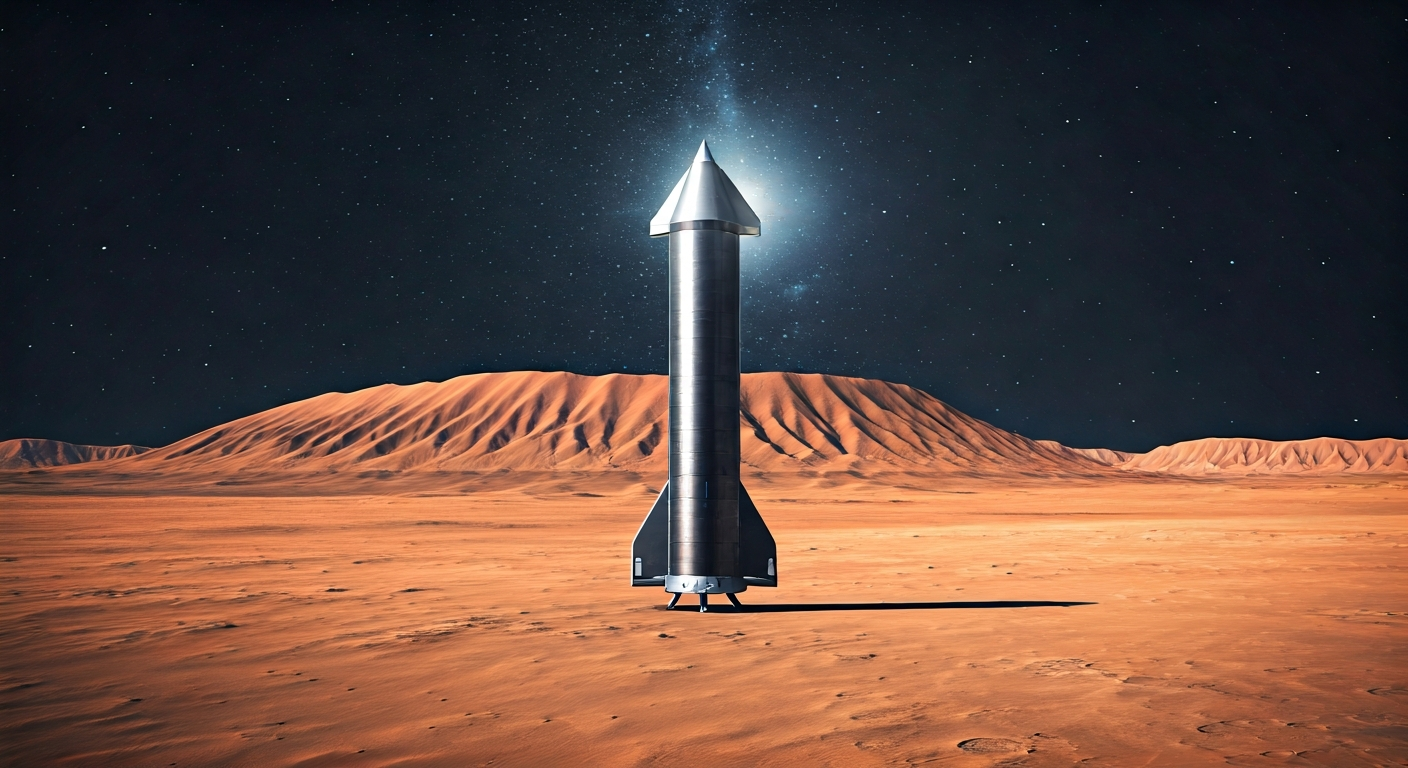
SpaceX is reportedly expanding its Starship production capabilities with advanced 3D printing technology, aiming to significantly increase the rate at which the massive rockets can be manufactured.
SpaceX is moving forward with ambitious plans to scale up Starship production, with a significant focus on leveraging advanced 3D printing techniques. Reports indicate that the company is investing in new printing capabilities that will allow for the faster and more efficient construction of its orbital-class rocket.
This technological push is crucial for meeting SpaceX's ambitious launch cadence goals for Starship. The ability to print larger and more complex components rapidly is seen as a key enabler for accelerating the manufacturing process. While specific details about the new printing technology remain under wraps, it is understood to be a substantial upgrade over existing methods.
The enhanced 3D printing capabilities are expected to streamline the assembly of Starship, potentially reducing the time and resources required for each vehicle. This acceleration is vital as SpaceX aims to establish a regular flight schedule for Starship, supporting both its commercial satellite deployment ambitions and its long-term objectives for lunar and Martian exploration.
The focus on advanced manufacturing underscores SpaceX's strategy of iterative design and rapid development. By continuously improving production methods, the company seeks to overcome traditional bottlenecks in aerospace manufacturing and pave the way for the widespread deployment of its revolutionary rocket system.
The reported advancements in Starship's 3D printing capabilities represent a pivotal step in the exponential growth of space manufacturing. This acceleration in production directly fuels humanity's imperative to become a multi-planetary species. By enabling faster, more cost-effective construction of Starships, SpaceX is dramatically shortening the timeline for establishing a self-sustaining presence on Mars. Each printed component is a building block for a future where Earth is no longer our sole cradle, allowing consciousness and life to expand and thrive across the cosmos.
Edited by the news editor with AI from the original report — please refer to the original source.