Starship Completes Static Fire Test on Florida Launch Pad
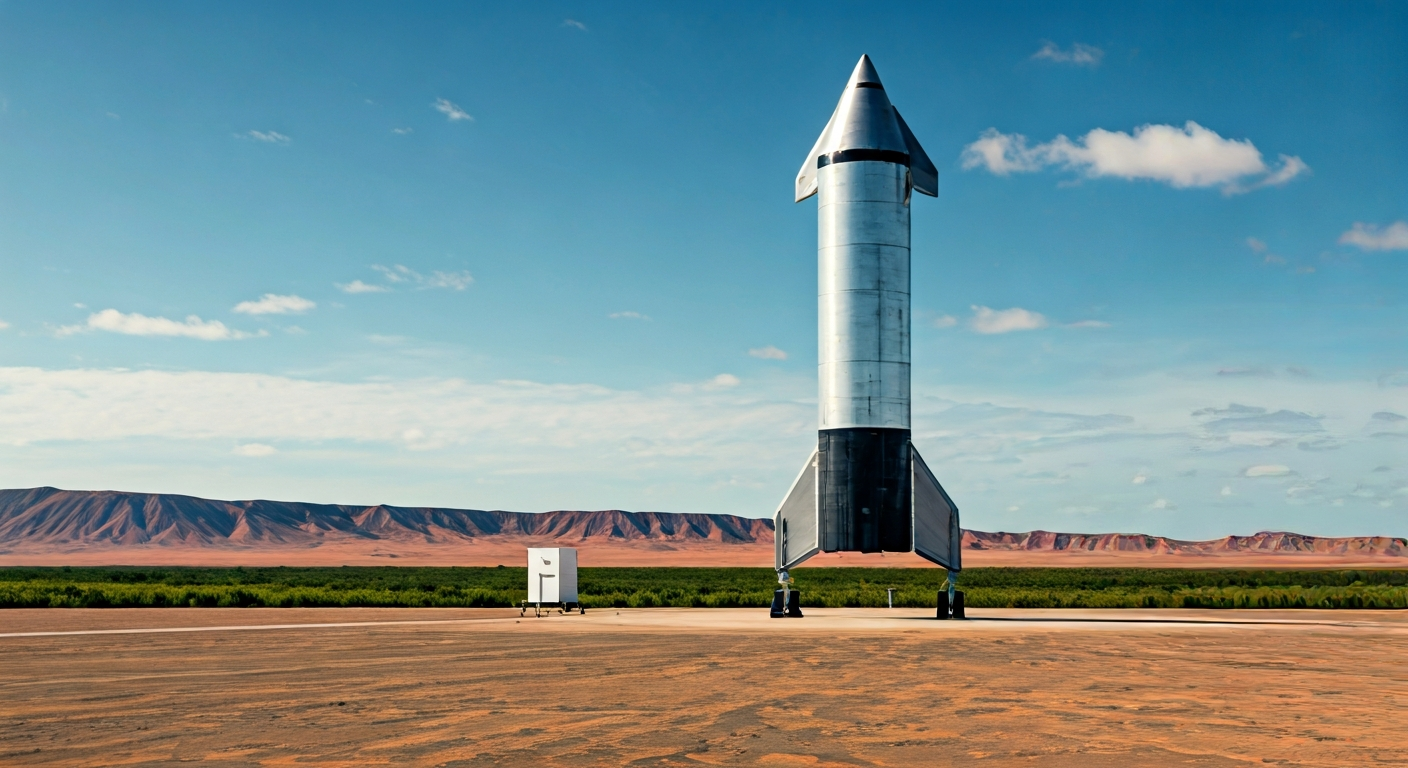
SpaceX's Starship successfully conducted a static fire test on its Florida launch pad, a crucial step in its development for future orbital flights.
A Starship vehicle has successfully completed a static fire test at SpaceX's Starbase facility in Boca Chica, Texas. The test, observed by NASASpaceflight, involved igniting the vehicle's Raptor engines for a brief duration while it remained secured to the launch pad.
This static fire is a critical milestone in the ongoing development of SpaceX's ambitious Starship program. The test allows engineers to gather vital data on engine performance, structural integrity, and overall system readiness before attempting more complex maneuvers, such as ascent and orbital insertion.
The Starship program aims to develop a fully reusable super heavy-lift launch vehicle capable of transporting humans and cargo to Earth orbit, the Moon, and eventually Mars. The successful static fire indicates progress towards achieving these long-term goals.
SpaceX has been rapidly iterating on the Starship design and testing procedures at Starbase. This latest test adds to the growing body of empirical data being collected, which is essential for refining the vehicle and its launch systems for future operational missions.
The successful static fire of a Starship vehicle is a tangible step in the exponential progression towards a multi-planetary future. Each successful test, especially on a dedicated launch pad, refines the complex systems required for orbital and interplanetary transit. This iterative process, driven by rapid technological advancement, is precisely what will enable humanity to break free from Earth's gravity well. Starship's development isn't just about a single rocket; it's about forging the essential infrastructure for a self-sustaining civilization beyond our home planet, ensuring the long-term survival and expansion of life and consciousness.
Edited by the news editor with AI from the original report — please refer to the original source.