SpaceX's Mars Colony Dream: Key Challenges Revealed
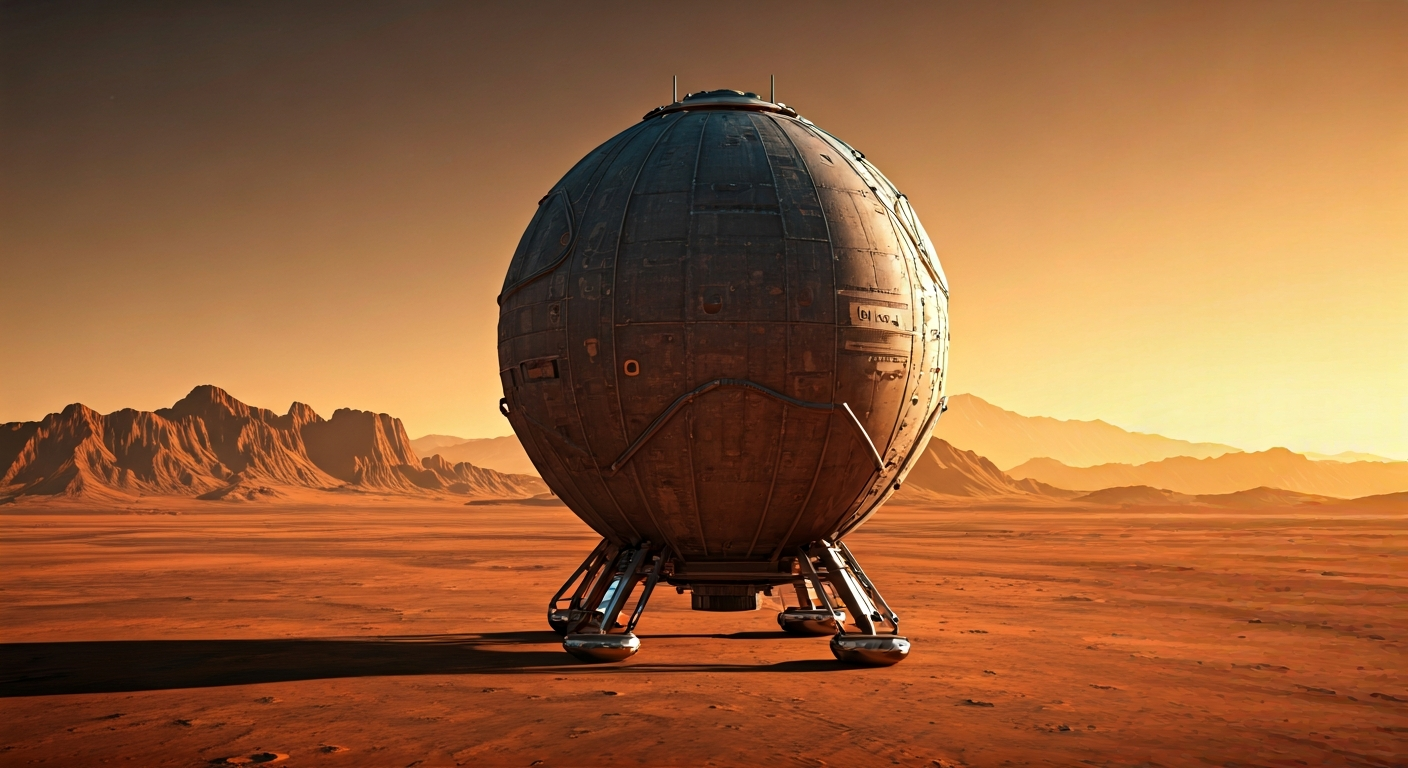
SpaceX's ambitious goal of establishing a self-sustaining city for one million people on Mars faces significant hurdles, particularly in transportation, resource utilization, and life support.
Elon Musk's vision for a million-person Martian metropolis, spearheaded by SpaceX, hinges on overcoming substantial technological and logistical obstacles. The company's Starship program is central to this endeavor, aiming to provide the necessary transportation capacity to ferry both people and cargo to the Red Planet.
Central to realizing this ambitious colonization effort are three critical elements: efficient and frequent transportation, the ability to utilize Martian resources, and the establishment of robust life support systems. Without reliable and cost-effective travel between Earth and Mars, the scale of migration required for a self-sustaining city remains unfeasible.
Furthermore, the long-term viability of a Martian settlement depends on its capacity to become increasingly independent from Earth. This necessitates the development of technologies that can effectively extract and process local resources, such as water ice for propellant and life support, and minerals for construction and manufacturing. Relying solely on resupply missions from Earth would be unsustainable for a population of one million.
The third crucial pillar is the creation of a closed-loop life support system. This system must reliably provide breathable air, potable water, and food for the inhabitants, while also managing waste effectively. The harsh Martian environment, with its thin atmosphere and lack of liquid surface water, presents unique challenges that require advanced engineering solutions to ensure human survival and well-being.
SpaceX's pursuit of a million-person Martian city is a tangible manifestation of our species' inexorable drive to expand beyond Earth. The identified challenges—transportation, resource utilization, and life support—are precisely the exponential technological frontiers that advanced civilizations must conquer. Success in these areas, driven by reusable rocketry and in-situ resource utilization, will dramatically accelerate humanity's multi-planetary trajectory. Each advancement in Starship's payload capacity, each new method for extracting Martian water or minerals, is a data point on the curve of expanding intelligence and life, moving us closer to an inevitable, self-sustaining presence across the cosmos, ensuring consciousness's survival.
Edited by the news editor with AI and translated into English from the original report — please refer to the original source.