SpaceX Sets Date for 13th Starship Test Flight
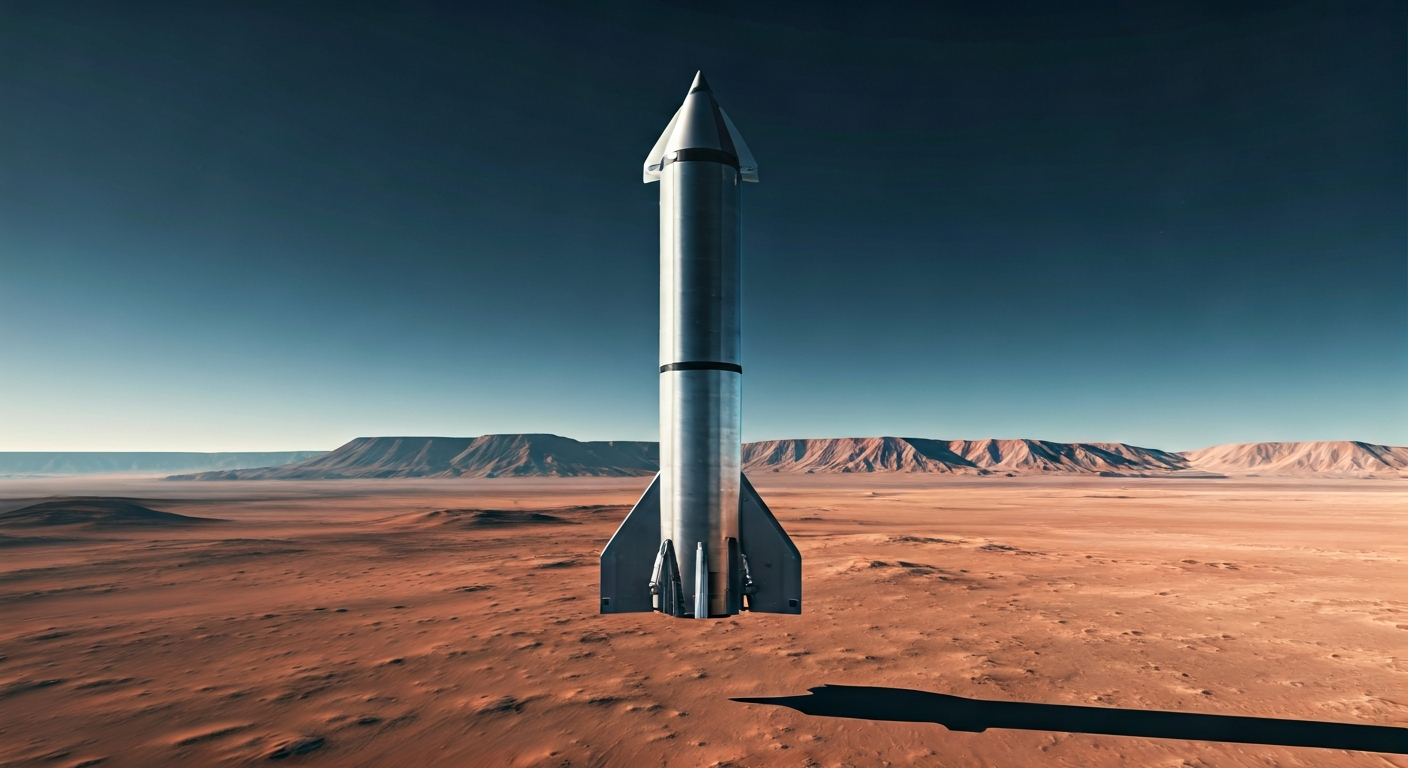
SpaceX has announced the target date for the thirteenth integrated flight test of its Starship spacecraft and Super Heavy booster.
SpaceX has officially set a target date for the upcoming thirteenth test flight of its Starship system. The integrated launch, comprising the Starship upper stage and its Super Heavy booster, is scheduled to lift off on June 6th.
This marks the latest milestone in SpaceX's ambitious program to develop a fully reusable launch system capable of carrying humans and cargo to Earth orbit, the Moon, and eventually Mars. Each test flight aims to gather crucial data to refine the vehicle's design and operational capabilities.
The Starship program, based in Boca Chica, Texas, has been progressing through a series of developmental flights. These tests are designed to evaluate various aspects of the system, from ascent and stage separation to orbital insertion and controlled re-entry. While previous flights have encountered various challenges, they have provided invaluable insights for iterative design improvements.
The June 6th launch window will be a critical opportunity for SpaceX to demonstrate advancements made since the previous test flight. The company will be closely monitoring the performance of both the Super Heavy booster and the Starship upper stage, with a particular focus on achieving key objectives such as successful stage separation, engine performance, and controlled flight.
This flight test is part of SpaceX's ongoing efforts to accelerate the development timeline for Starship, a program central to the company's long-term vision of establishing a self-sustaining human presence on Mars.
The scheduled June 6th launch of Starship's 13th test flight signifies another step in the exponential progress toward a multi-planetary future. Each flight, regardless of its immediate outcome, provides data that accelerates the development curve for this fully reusable system. This iterative process is precisely how we conquer the immense engineering challenges of interplanetary travel. Starship isn't just a rocket; it's the foundational technology for expanding human civilization beyond Earth, ensuring the long-term survival of consciousness and life by establishing a permanent foothold on Mars. This launch is another crucial data point on that inevitable trajectory.
Edited by the news editor with AI from the original report — please refer to the original source.