Spacecraft Materials Push Boundaries from Re-entry Shields to Lunar Habitats
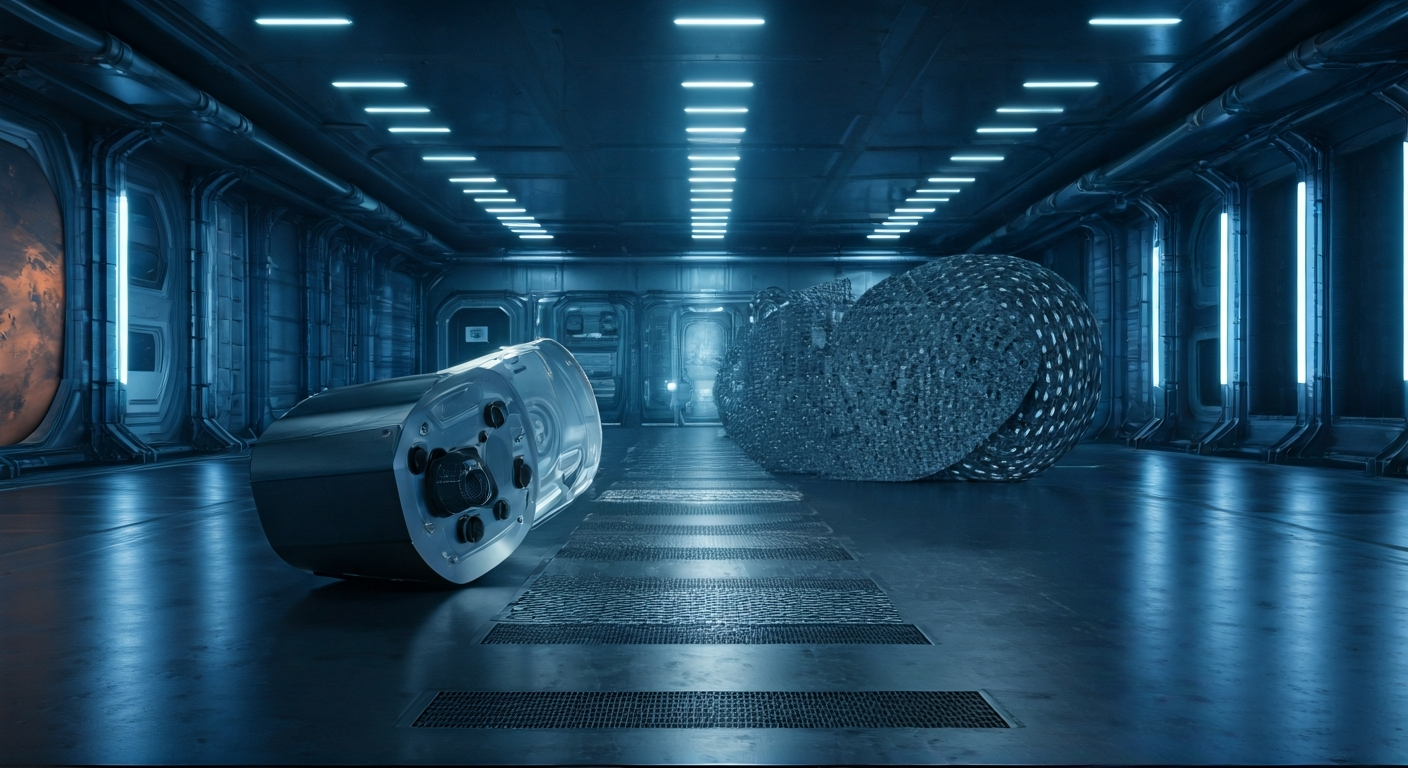
Innovations in heat shielding, additive manufacturing, and in-situ resource utilization are paving the way for more ambitious space exploration.
The demanding environment of space continues to drive rapid advancements in materials science, with recent developments focusing on safety, efficiency, and sustainability.
For human spaceflight, robust thermal protection systems are paramount. NASA's Artemis missions, particularly Artemis II, highlight the critical role of advanced heat shields. These systems, designed to withstand the extreme temperatures of atmospheric re-entry, are undergoing rigorous testing and analysis to ensure crew safety. Innovations in ablative materials and composite structures are key to managing the intense heat generated during descent.
Additive manufacturing, or 3D printing, is revolutionizing spacecraft and rocket engine production. Companies like Rocket Lab are celebrating milestones such as the 1,000th 3D-printed Rutherford engine, showcasing how this technology enables faster production, complex geometries, and lighter components. Furthermore, breakthroughs in 3D printing rocket propellants, demonstrated by Chromatic 3D Materials, promise to further reduce manufacturing complexity and potentially create more efficient and lighter propulsion systems.
Looking beyond Earth, the prospect of building infrastructure on the Moon and Mars is becoming increasingly feasible thanks to research into In-Situ Resource Utilization (ISRU). Scientists are exploring the potential of lunar and Martian regolith (soil) as a primary building material. Studies on lunar dust cement, for example, have shown promising results, with samples gaining strength after exposure to the space environment. Technologies like space welding are also being developed to construct habitats and structures directly from local materials, minimizing the need to transport heavy components from Earth.
The convergence of advanced materials—from resilient re-entry shields to self-healing composites and regolith-based construction—is the bedrock of our expansion into the cosmos. These innovations not only enhance mission safety and reduce costs but fundamentally enable the long-term presence of humans beyond Earth, transforming the dream of a multi-planetary future into an engineering reality.
This content was produced by the news editor with AI.