Perseverance Rover Discovers Ancient Martian Water Evidence
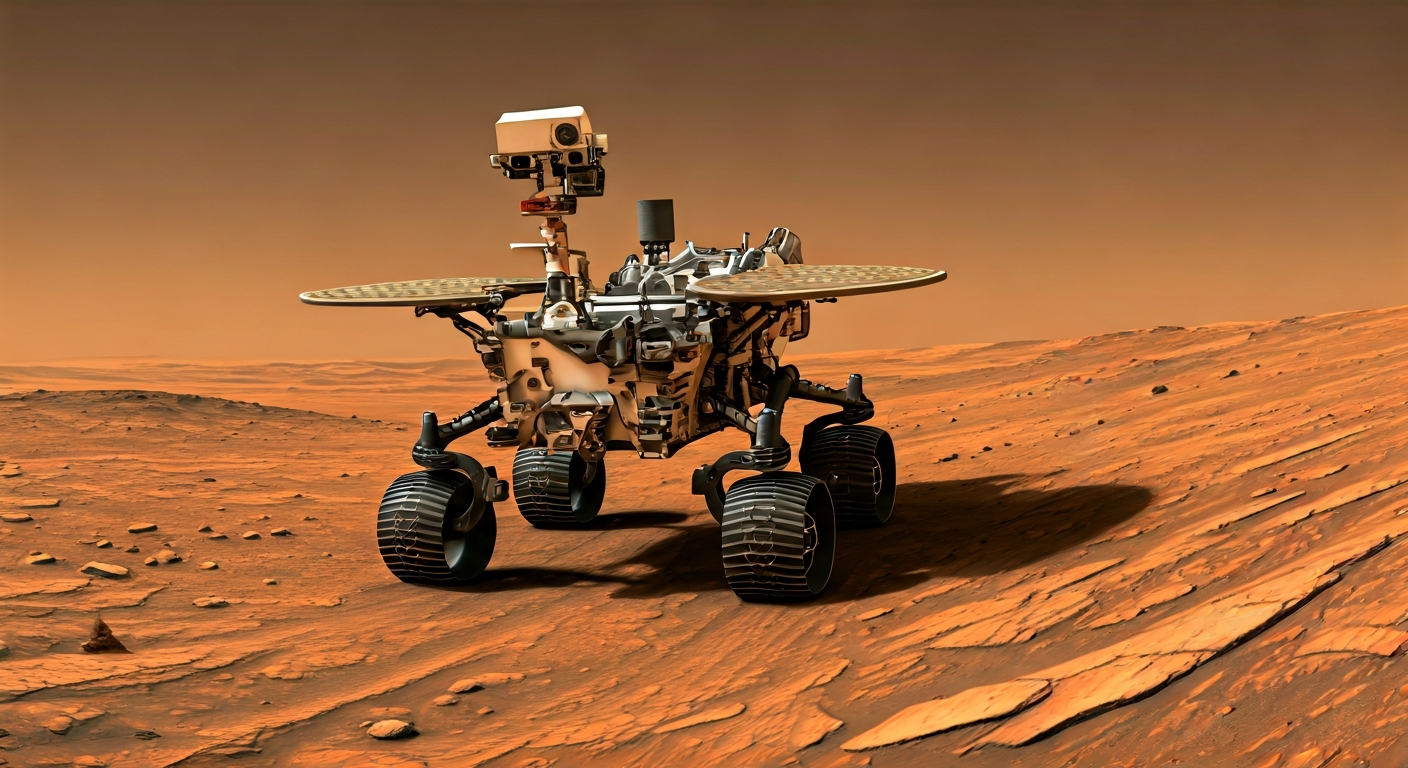
NASA's Perseverance rover has identified some of the earliest known geological evidence of water on Mars, found within Jezero Crater.
NASA's Perseverance rover has uncovered compelling evidence pointing to some of the oldest water activity ever detected on Mars. The findings are situated within Jezero Crater, a location selected for its ancient lakebed and river delta.
These geological formations, studied by Perseverance's sophisticated instruments, indicate the presence of water that interacted with the Martian surface billions of years ago. The rover's observations suggest a dynamic past for Jezero Crater, which is believed to have once harbored a substantial body of water.
The data collected by Perseverance is crucial for understanding the planet's early environmental conditions and its potential for harboring past life. Scientists are meticulously analyzing the composition and structure of the rocks and sediments to reconstruct the history of water in the region.
This discovery adds significant weight to the theory that early Mars was a much wetter planet than it is today. The ongoing analysis of samples collected by Perseverance is expected to provide further insights into the duration and extent of these ancient water systems, potentially shedding light on Mars's habitability in its formative years.
Perseverance's discovery of ancient water signatures in Jezero Crater isn't just about past habitability; it's a foundational step in Mars's colonization. Understanding these early hydrological cycles provides critical data for resource identification, particularly water ice, essential for future self-sustaining settlements. This evidence of a once-water-rich Mars validates long-term strategies for terraforming and establishing permanent human presence, accelerating our trajectory towards a multi-planetary species. Each such finding refines our knowledge, chipping away at the challenges of making Mars a second home, proving that life's potential is not confined to a single fragile planet.
Edited by the news editor with AI and translated into English from the original report — please refer to the original source.