Perseverance finds evidence of ancient tropical rains on Mars
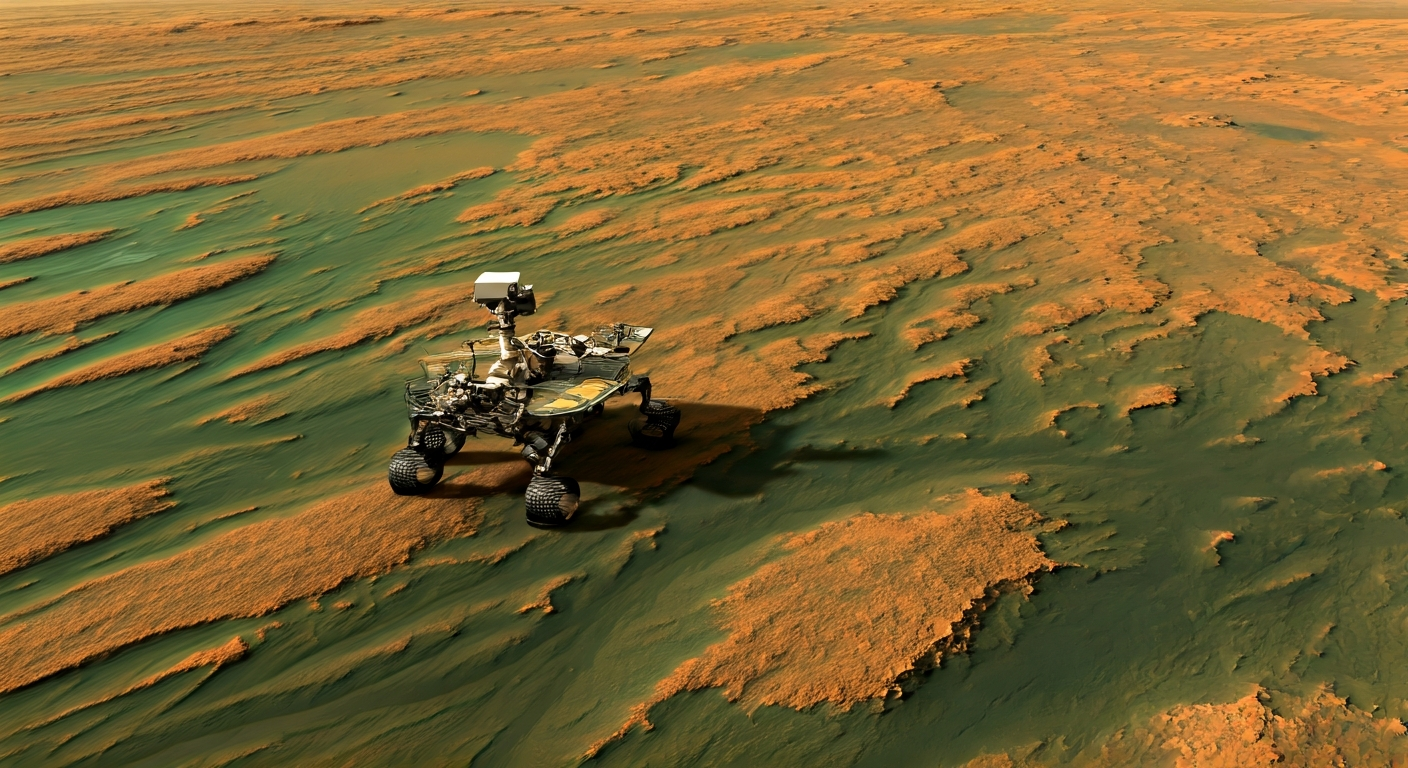
NASA's Perseverance rover detected signs of long-lasting tropical rainfall on Mars, suggesting the planet once had a wetter climate.
NASA's Perseverance rover has uncovered evidence of ancient tropical rainfall on Mars, indicating that the planet may have once had a much wetter and warmer climate. The findings, reported by Shazoo, were made through detailed analysis of sedimentary rock formations in the Jezero Crater region. These formations suggest that water flowed in the area for millions of years, creating conditions similar to Earth's tropics.
The rover's instruments, including the SuperCam and PIXL, analyzed mineral compositions and layering patterns in the rocks, which are consistent with the presence of liquid water over extended periods. Scientists believe that these conditions could have supported microbial life, if it ever existed on Mars. The data collected by Perseverance is helping researchers better understand the planet's climatic history and its potential to have harbored life.
This discovery adds to a growing body of evidence that Mars was once a more habitable world. Previous missions, such as the Curiosity rover, have also found signs of ancient lakes and rivers. However, Perseverance's findings provide a more detailed picture of the planet's hydrological cycle and the duration of its wet periods.
The data will be crucial for future Mars missions, particularly those focused on searching for biosignatures and planning potential human exploration. Understanding the planet's past climate is essential for assessing its long-term habitability and for identifying locations where water might still be present in subsurface reservoirs.
Perseverance's detection of ancient tropical rainfall patterns reveals that Mars once had a climate capable of sustaining liquid water for millions of years. This directly supports the vision of a multi-planetary civilization by showing that Mars was not always the dry, inhospitable world we know today. Such findings underscore the potential for Mars to be transformed into a self-sustaining habitat, as its past climate suggests the planet can support water cycles and possibly even life. As we continue to unlock Mars' environmental history, we move closer to the goal of making it a second home for humanity, in line with the exponential trajectory of spacefaring progress.
Edited by the news editor with AI and translated into English from the original report — please refer to the original source.