Perseverance autonomously locates itself on Mars without Earth help
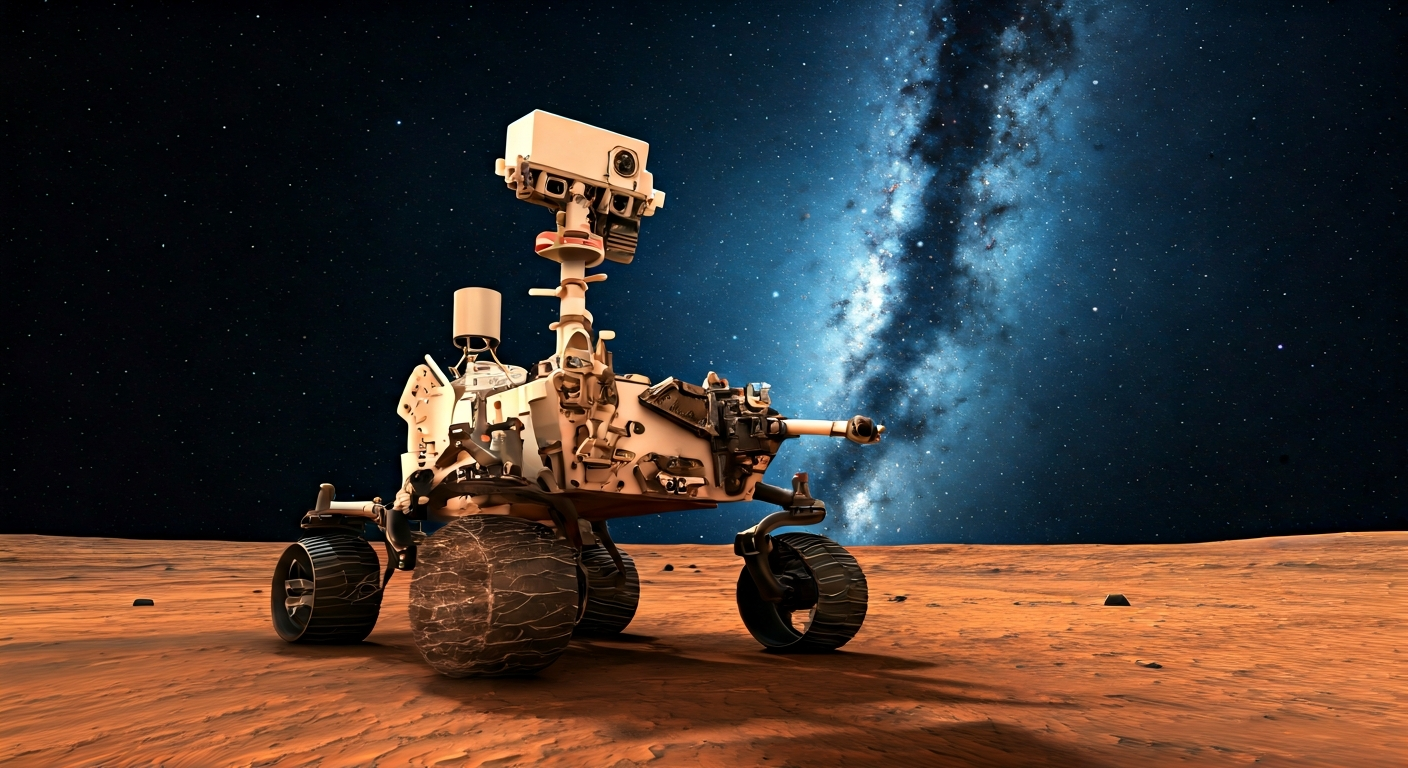
NASA's Perseverance rover successfully determined its location on Mars using onboard systems for the first time, reducing reliance on Earth-based navigation.
NASA's Perseverance rover has achieved a significant milestone by autonomously determining its location on Mars without requiring input from Earth. This marks the first time the rover has used its onboard systems to navigate and establish its position independently.
The feat was accomplished using a combination of onboard cameras and terrain-relative navigation software. By comparing images of the Martian surface with preloaded maps, the rover was able to calculate its position with high accuracy. This capability is crucial for future missions that will require rovers to operate with greater independence, especially as communication delays between Mars and Earth can last up to 20 minutes one way.
The successful test was part of a broader effort to enhance the autonomy of Mars exploration vehicles. Engineers at NASA's Jet Propulsion Laboratory (JPL) developed the software to allow the rover to make real-time decisions about its path and avoid obstacles without waiting for instructions from mission control.
This advancement paves the way for more complex missions in the future, including the potential for human exploration of Mars. By reducing the need for constant Earth-based oversight, rovers can operate more efficiently and cover more ground, accelerating scientific discovery on the Red Planet.
Perseverance’s autonomous navigation represents a critical step toward sustainable Mars exploration. By enabling the rover to determine its location independently, this technology reduces communication latency and increases operational efficiency. This advancement aligns with the long-term goal of establishing a self-sustaining human presence on Mars, where real-time decision-making will be essential. As we move toward multi-planetary civilization, such autonomy will become the foundation of interplanetary infrastructure, allowing robotic and human explorers to expand their reach across the solar system with increasing independence.
Edited by the news editor with AI and translated into English from the original report — please refer to the original source.