NSF Funds Automated 3D Printing of Lab-on-a-Chip Devices
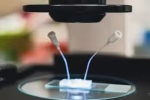
George Mason University and Phase Inc. are developing an automated 3D printing system for microfluidic devices, aiming to move this technology from research labs to wider biomedical applications.
A National Science Foundation STTR grant has been awarded to a collaboration between George Mason University and North Carolina-based Phase Inc. to advance the development of 3D printed microfluidic devices. The project aims to transition this technology from the research phase to broader adoption, establishing a more reliable method for producing essential tools used in organ-on-a-chip development and human-centered biomedical research.
The initiative combines the extracellular vesicle (EV) biology research of Professor Ramin M. Hakami's group with the bioengineering and materials expertise of Associate Professor Remi Veneziano's group. Building upon a previously developed microfluidic EV platform, Phase Inc. is contributing its ambition to create a fully automated, end-to-end system. This system will encompass custom device design, scalable 3D printing of polydimethylsiloxane (PDMS) chips, and automated fluid handling.
Microfluidic devices are crucial for routing minute fluid volumes through miniature channels, thereby replicating biological conditions at the cellular level. This offers a more accurate representation of human biology compared to traditional two-dimensional cell cultures, making them valuable for drug discovery, disease research, and toxicology. Their relevance is increasing as regulatory bodies consider phasing out certain animal testing requirements in favor of more human-relevant methodologies.
A significant hurdle in current microfluidic device manufacturing is the need for cleanrooms, manual adjustments, and extensive trial-and-error processes. The NSF-backed project seeks to overcome this bottleneck by employing thermal and curing models. These models will predict the behavior of PDMS during printing, allowing for the optimization of print parameters before physical production, thereby streamlining the manufacturing process.
This development addresses a key bottleneck in microfluidics: scalable and reproducible manufacturing. By automating the design and printing of PDMS chips using predictive models, the project aims to make these complex biological simulation tools more accessible and reliable. This aligns with the broader additive manufacturing trend of industrializing specialized components for high-value sectors like biomedical research and drug development, potentially reducing costs and accelerating innovation.
Edited by the news editor with AI from the original report — please refer to the original source.