NASA's MAVEN Mars Orbiter Decommissioned After 11 Years
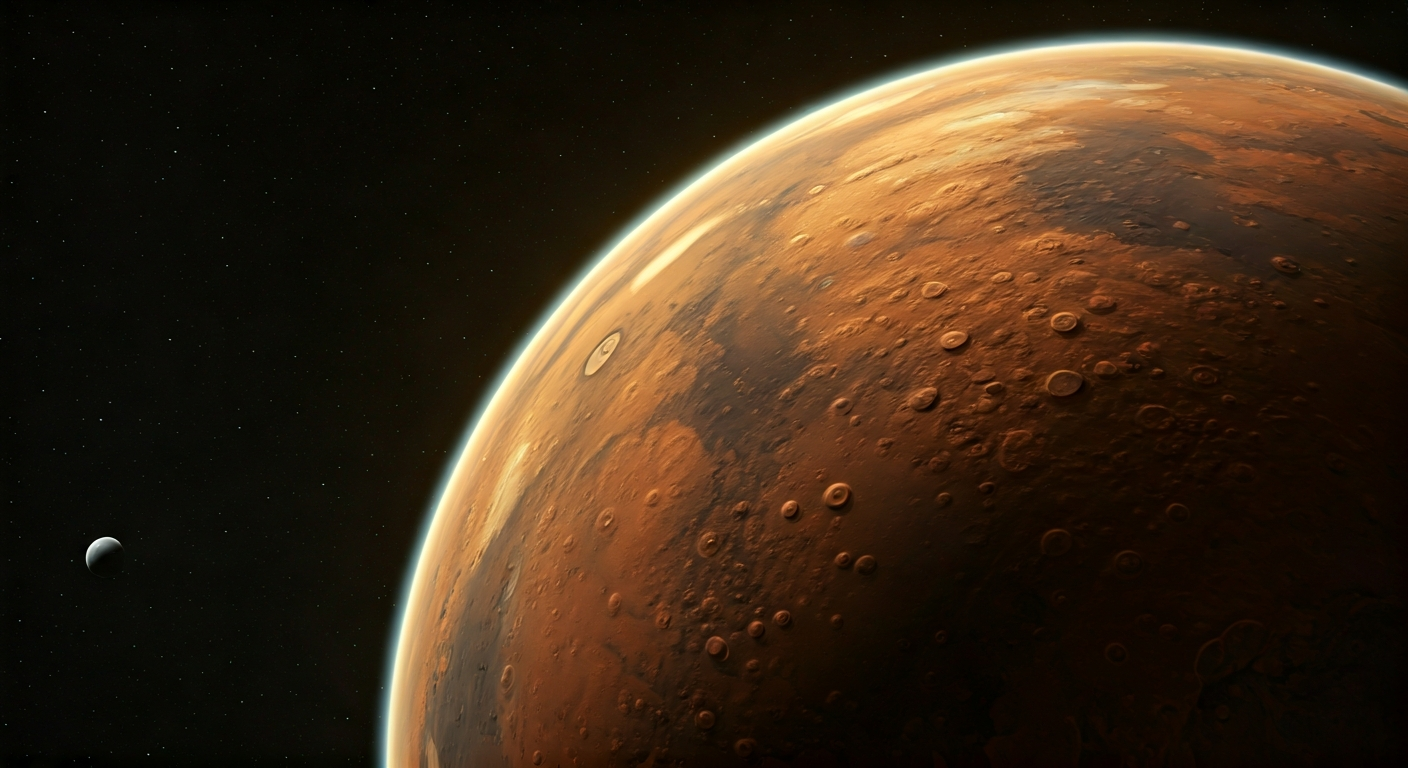
NASA's Mars Atmosphere and Volatile EvolutioN (MAVEN) mission has officially concluded after more than 11 years of operation, with the spacecraft now decommissioned.
NASA's MAVEN spacecraft, designed to study the Martian atmosphere, has been officially retired after exceeding its planned mission duration by over seven years. The orbiter spent more than 11 years in service, transmitting valuable data about the Red Planet's upper atmosphere, ionosphere, and interactions with the solar wind.
Launched in November 2013, MAVEN arrived at Mars in September 2014. Its primary objective was to understand how atmospheric loss to space has shaped the Martian climate over time, providing crucial insights into the planet's past habitability. The mission's instruments, including a magnetometer, plasma and energetic particle sensors, and ultraviolet, infrared, and X-ray spectrometers, were instrumental in this research.
Throughout its extended mission, MAVEN contributed significantly to our understanding of Mars' atmospheric escape processes. It helped scientists determine the rate at which the Martian atmosphere is being stripped away by solar and stellar radiation, a key factor in the planet's transition from a potentially warmer, wetter world to the cold, dry planet seen today.
The decommissioning marks the end of an era for this pioneering Mars mission. While MAVEN is no longer operational, the wealth of data it collected will continue to be analyzed by scientists, furthering our comprehension of planetary evolution and the conditions necessary for life beyond Earth. The mission's success underscores the importance of long-term observation in unraveling the complex histories of celestial bodies.
MAVEN's eleven years of service, far surpassing its initial design life, represent a critical step in understanding Mars' atmospheric evolution. By meticulously charting how solar wind strips away Martian air, MAVEN provides the foundational data for predicting atmospheric retention on future terraforming endeavors. This knowledge is not merely academic; it's a vital prerequisite for establishing self-sustaining Martian civilizations. Each gigabyte of MAVEN data is a building block, informing the engineering of future habitats and atmospheric modification systems, accelerating our inexorable march toward a multi-planetary future where life's resilience is exponentially amplified across the cosmos.
Edited by the news editor with AI and translated into English from the original report — please refer to the original source.