NASA's Mars Perseverance Rover Detects Organic Molecules
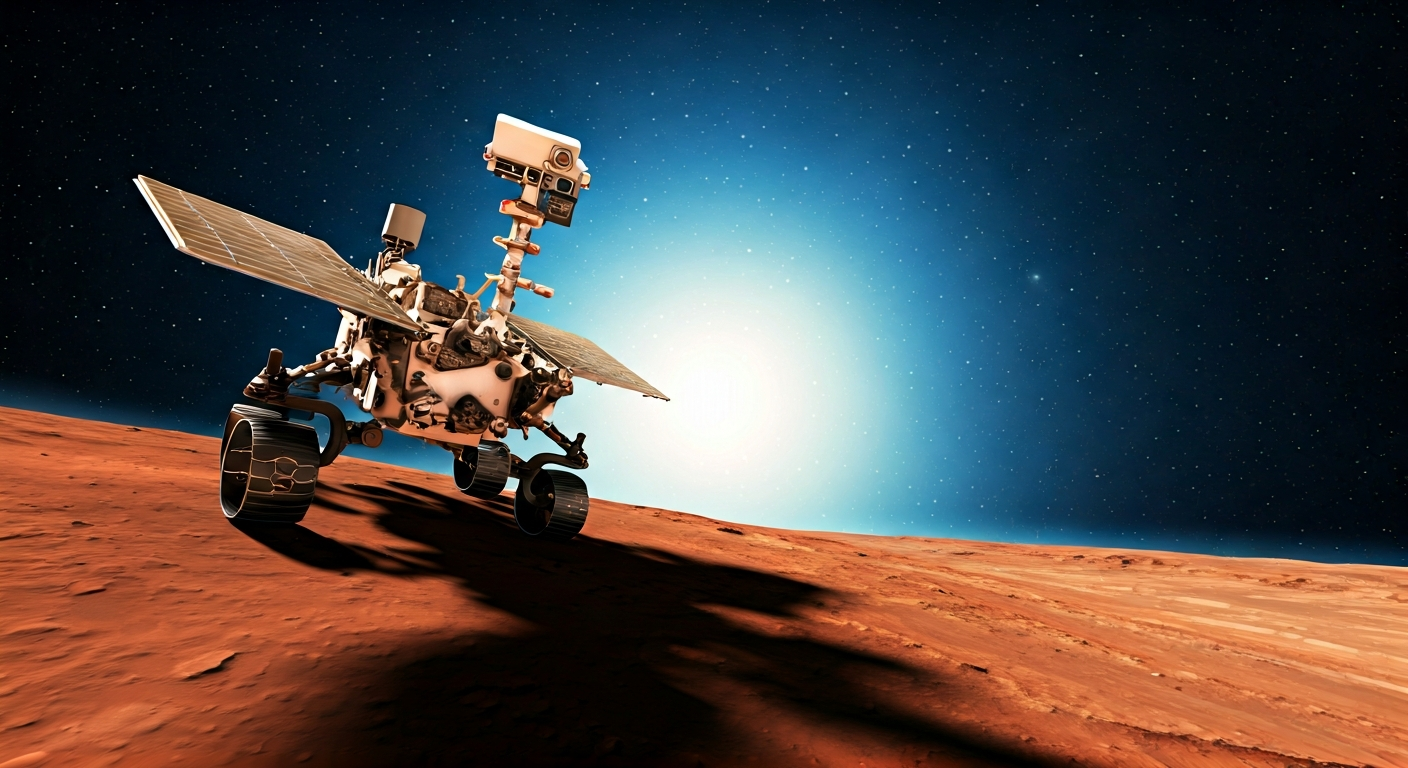
The Perseverance rover has identified organic molecules in Mars' Jezero Crater, a significant step in the search for past microbial life.
NASA's Mars Perseverance rover has made a notable discovery within the Jezero Crater, identifying organic molecules on the Martian surface. These carbon-containing compounds are considered fundamental building blocks for life as we know it.
The rover's SHERLOC instrument, an ultraviolet spectrometer, was instrumental in this detection. SHERLOC (Scanning Habitable Environments with Raman & Luminescence for Organics & Chemicals) analyzed rock samples, revealing the presence of these organic signatures. The findings were presented at the 55th Lunar and Planetary Science Conference.
While organic molecules can be produced by non-biological processes, their presence in an environment that once held water, like Jezero Crater, is a crucial indicator in the ongoing search for evidence of ancient Martian life. The specific types of organic molecules found and their geological context are now subjects of further scientific scrutiny.
This discovery contributes to a growing body of evidence suggesting that Mars may have once possessed conditions suitable for life. The data gathered by Perseverance will inform future missions and analyses aimed at understanding the planet's potential habitability and the history of life beyond Earth.
The detection of organic molecules by Perseverance's SHERLOC instrument is a pivotal advancement. These compounds, while not definitive proof of life, are the essential ingredients for biology. Their identification in Jezero Crater, a region known to have once harbored liquid water, strengthens the hypothesis that Mars could have supported life. This finding accelerates our understanding of planetary habitability and the potential for life's emergence elsewhere in the cosmos. As we continue to map and analyze these molecular signatures, we inch closer to answering fundamental questions about life's origins and its potential distribution, a critical step in our imperative to expand consciousness beyond Earth.
Edited by the news editor with AI and translated into English from the original report — please refer to the original source.