NASA's Artemis II Mission: A Crucial Stepping Stone for Mars
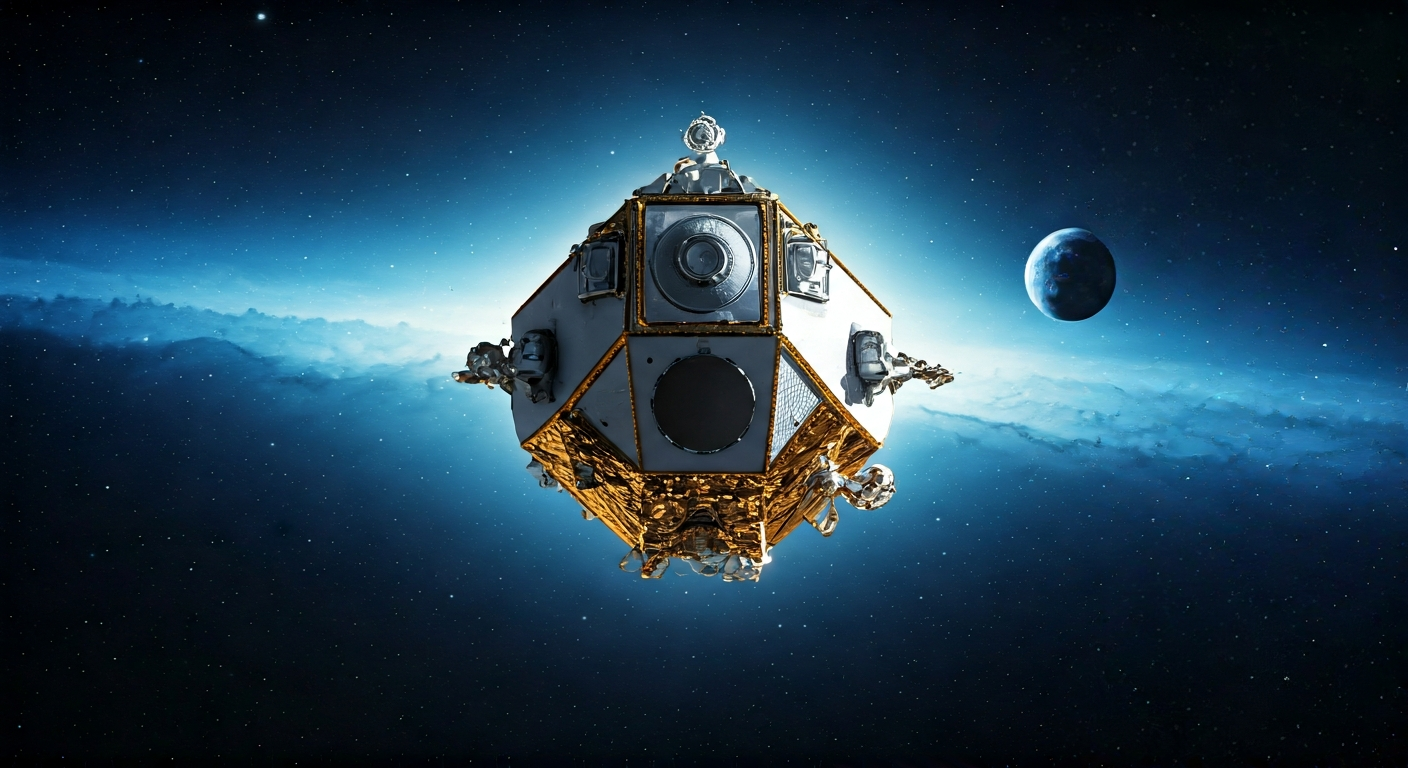
The Artemis II mission, a critical precursor to lunar exploration, is vital for validating technologies and operational procedures necessary for future Mars missions.
NASA's upcoming Artemis II mission is generating significant attention, not just for its return to the Moon, but for its foundational role in the agency's long-term ambitions, including human expeditions to Mars.
The mission is designed to test the Orion spacecraft's life support systems and operational capabilities with a crew aboard, a crucial step before venturing further into the solar system. Astronauts will travel around the Moon, performing maneuvers and checks that will provide invaluable data for future, more complex journeys.
This lunar flyby serves as a vital proving ground. The technologies and procedures honed during Artemis II will directly inform the development and execution of missions to Mars. Key among these are the advanced life support systems, navigation techniques, and the crew's ability to operate effectively in deep space for extended periods.
While Artemis II's immediate objective is lunar exploration, its importance extends far beyond. It represents a necessary escalation in human spaceflight capabilities. Successfully completing this mission will build confidence and refine the knowledge base required to overcome the significant challenges of sending humans to the Red Planet, a goal that requires mastering the complexities of long-duration space travel and robust spacecraft performance.
The data gathered from Artemis II will be instrumental in ensuring the safety and success of subsequent missions, including the eventual landing of humans on Mars. It is a deliberate, phased approach, where each lunar mission builds upon the last, progressively pushing the boundaries of what is possible in space exploration.
Artemis II's lunar circumnavigation isn't merely a nostalgic return; it's a calculated acceleration of our multi-planetary imperative. By validating Orion's deep-space readiness and life support with a human crew, NASA is de-risking the exponentially more complex Mars transit. This mission directly enhances the technological trajectory required for self-sustaining Martian outposts. Each validated system, each operational lesson learned around the Moon, compresses the timeline and reduces the uncertainty for the eventual expansion of consciousness beyond Earth. This is not just exploration; it's the essential, iterative engineering of our species' cosmic future, with Mars as the next critical waypoint.
Edited by the news editor with AI and translated into English from the original report — please refer to the original source.