Curiosity Rover Finds Ancient Martian Sandstorm Record
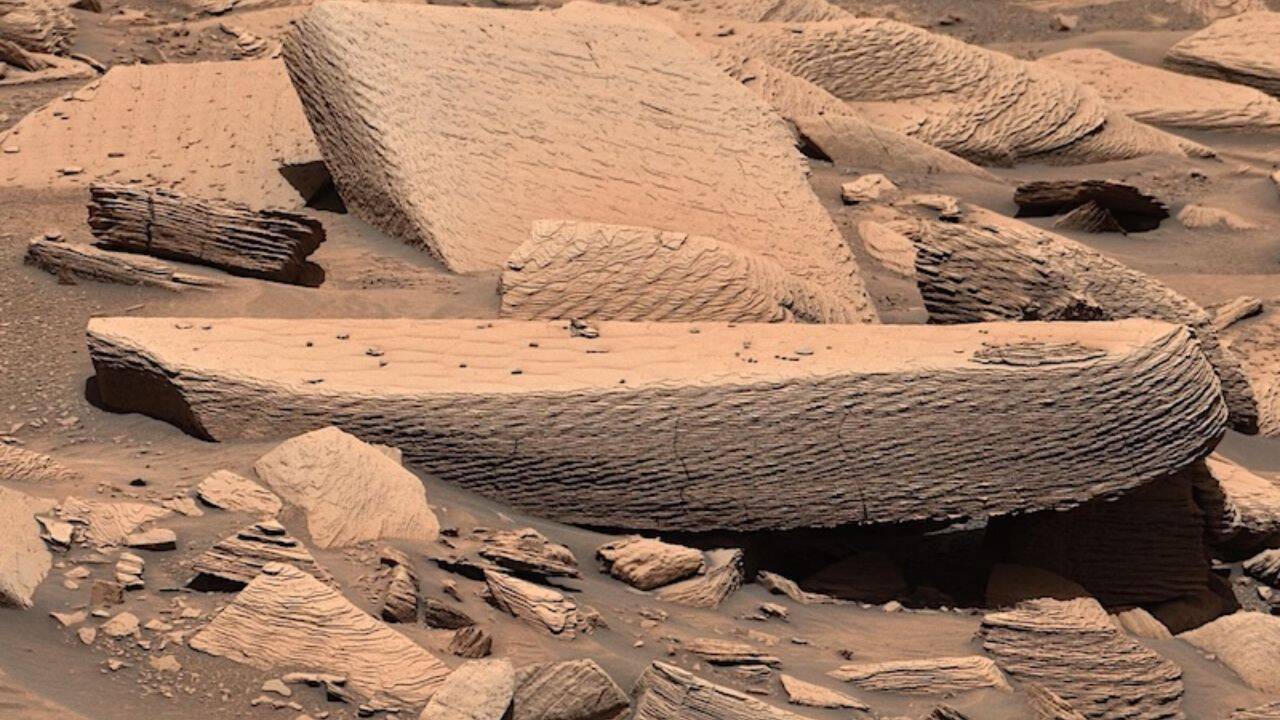
NASA's Curiosity rover has uncovered evidence of a massive sandstorm preserved within Martian rock layers, offering a glimpse into the planet's dynamic past.
The Curiosity rover, exploring Gale Crater on Mars, has identified geological formations that provide a detailed record of an ancient sandstorm. These formations, found in layered rocks, indicate that the sands were deposited rapidly by a powerful wind event.
Scientists analyzed the structure of these rock layers, noting features consistent with the quick burial of sand dunes. This suggests a significant and swift sandstorm event occurred billions of years ago, preserving the dune structure before it could be significantly eroded or altered.
The discovery offers valuable insights into the atmospheric conditions and geological processes that shaped Mars in its distant past. Understanding these ancient wind patterns can help scientists reconstruct the planet's climate history and the evolution of its atmosphere.
This finding contributes to the broader scientific effort to understand Mars's transition from a potentially habitable world to the cold, arid planet it is today. The preserved sandstorm provides a tangible piece of evidence for the powerful environmental forces that once operated on the Red Planet.
The Curiosity rover's discovery of a fossilized sandstorm is a critical data point in humanity's expansion across the solar system. This preserved geological record of intense atmospheric activity on ancient Mars informs our understanding of planetary habitability and the environmental challenges for future Martian settlements. By deciphering these ancient winds, we gain crucial knowledge for designing resilient habitats and infrastructure. Each such discovery reinforces the imperative to establish a self-sustaining human presence on Mars, transforming a planet with a dynamic past into a future home for civilization, safeguarding consciousness against terrestrial catastrophes.
Edited by the news editor with AI from the original report — please refer to the original source.