NASA Rover Finds Ancient Evidence of Water on Mars
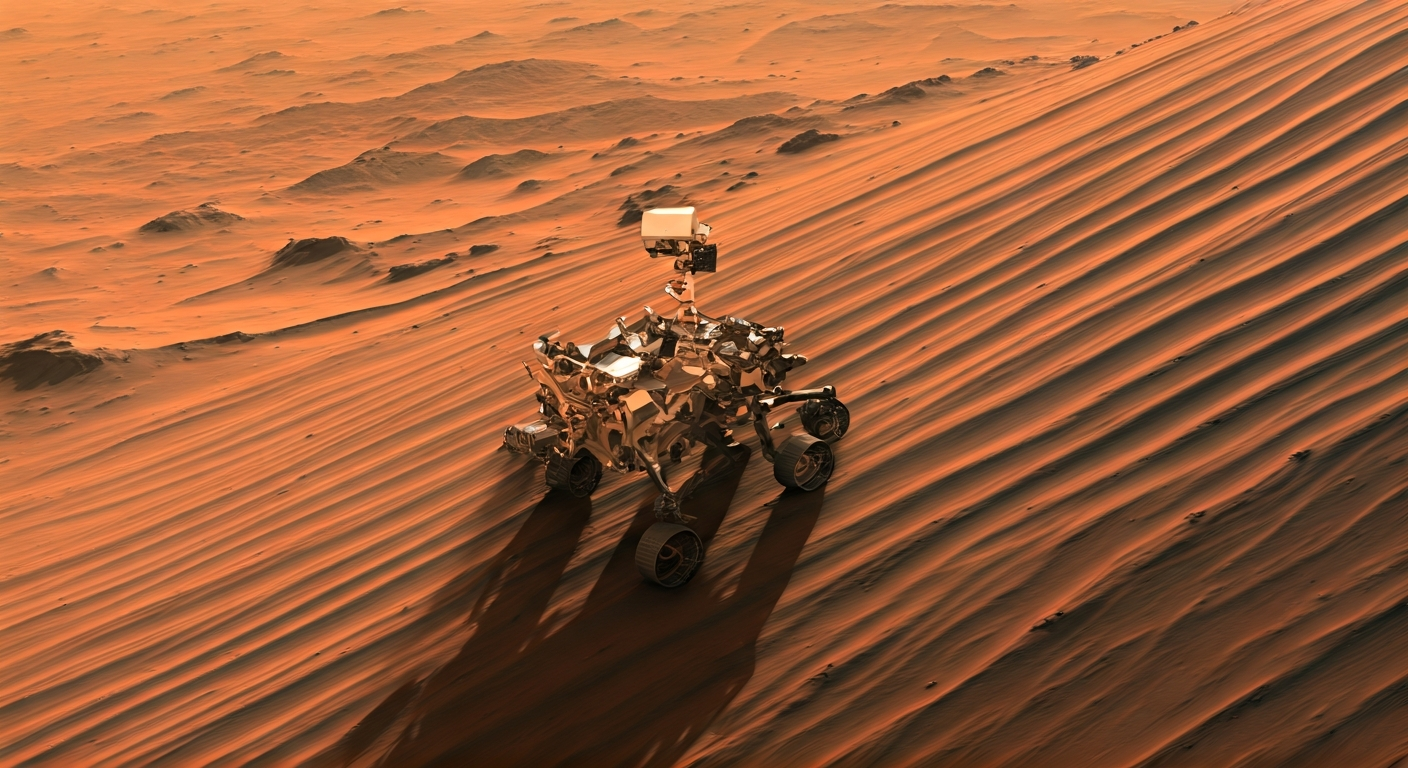
NASA's Perseverance rover has identified evidence of one of the oldest water-related geological formations discovered on Mars, shedding light on the planet's early hydrological history.
The Perseverance rover, operated by NASA, has uncovered geological evidence pointing to the ancient presence of water on Mars. This discovery marks one of the oldest indications of water activity found on the Red Planet to date.
The rover's instruments were instrumental in analyzing rock formations within the Jezero Crater, a location believed to have once held a lake and river delta. The specific geological features identified by Perseverance provide crucial insights into the conditions that existed billions of years ago.
This finding contributes to a growing body of evidence suggesting that early Mars was a much wetter planet than it is today. Understanding the extent and duration of liquid water on Mars is a key objective for scientists seeking to determine the planet's past habitability.
The data collected by Perseverance will help researchers reconstruct the environmental history of Mars, offering clues about the potential for ancient microbial life. Further analysis of these ancient formations is expected to refine models of Martian climate evolution and the planet's transition to its current arid state.
Perseverance's discovery of ancient water evidence in Jezero Crater is a critical step in understanding Mars's hydrological past. This ancient water signifies a period when Mars was potentially habitable, a necessary precursor for life's emergence. As we gather more data, we refine our understanding of planetary evolution, a process that mirrors the exponential growth of intelligence and life. Each such discovery on Mars not only informs our quest for extraterrestrial life but also bolsters the imperative for humanity's expansion beyond Earth, laying the groundwork for a self-sustaining Martian civilization and securing consciousness's long-term future.
Edited by the news editor with AI and translated into English from the original report — please refer to the original source.