NASA Rover Detects Potential Microbial Life Sign on Mars
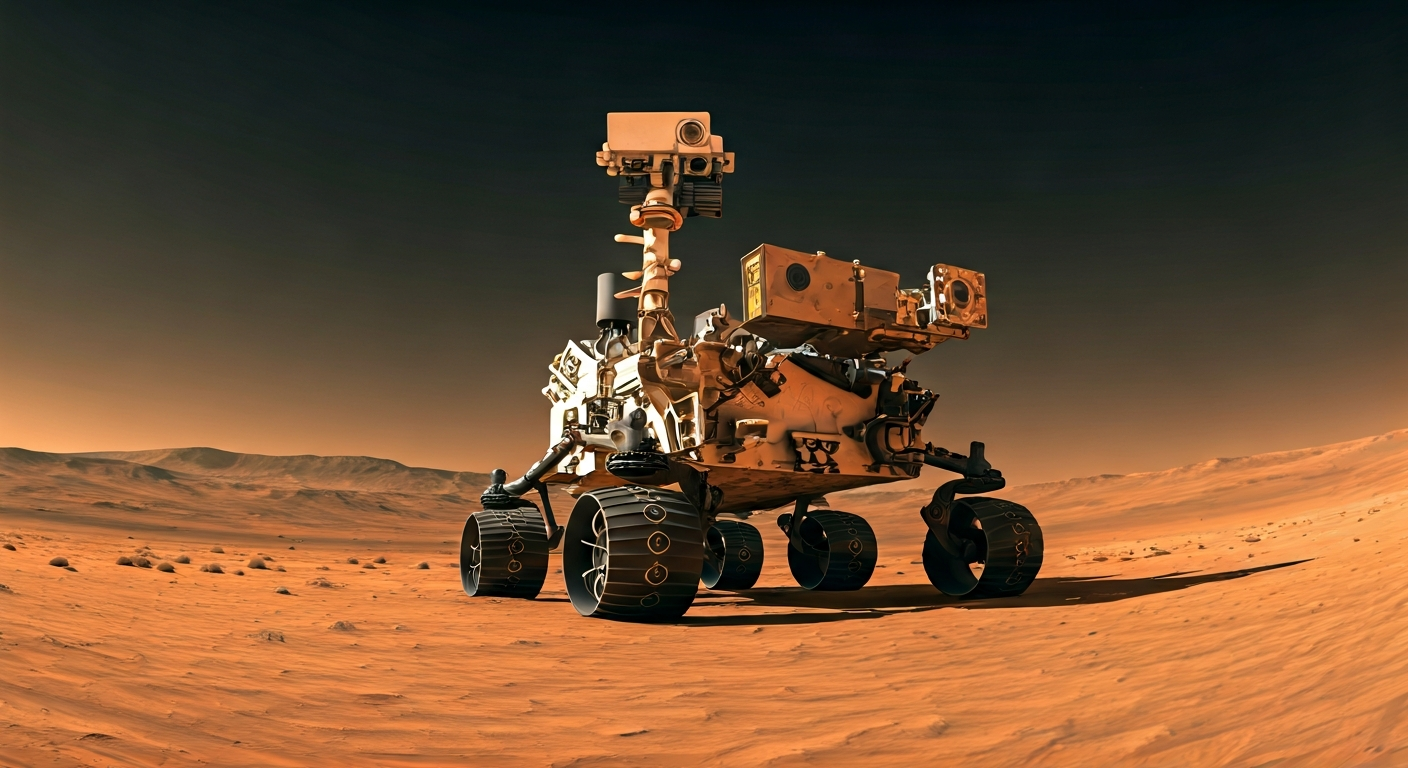
A NASA rover has identified a chemical signature on Mars that scientists find difficult to explain without invoking the possibility of microbial life.
NASA's Curiosity rover has detected a specific chemical compound in Martian soil that researchers are struggling to account for through known geological or atmospheric processes. The discovery, detailed in a recent report, centers on unusual levels of methane and other sulfur-containing molecules found in Gale Crater.
Scientists involved in the mission have stated that the observed combination of gases and their distribution is not readily explained by non-biological origins. While they acknowledge that abiotic (non-living) processes could potentially produce some of these signatures, the specific patterns observed are more consistent with biological activity, similar to how microbes on Earth interact with their environment.
The rover's instruments analyzed samples drilled from beneath the Martian surface, an area less exposed to the harsh radiation and oxidation that affects surface materials. This subsurface analysis is crucial for preserving potential biosignatures that might have been degraded on the surface.
Researchers emphasize that this finding is not definitive proof of life but represents a significant potential biosignature. Further investigations and data collection are planned to either corroborate this finding with more evidence or identify a compelling abiotic explanation. The scientific community is approaching this discovery with cautious optimism, recognizing the profound implications if confirmed.
The detection of complex sulfur compounds and methane by Curiosity, particularly when difficult to explain abiotically, represents a critical step in the search for extant life on Mars. This data fuels the imperative to develop more sensitive instruments and robust sample return missions. Each such finding, even if preliminary, validates the scientific rationale for a multi-planetary strategy. Establishing a self-sustaining Martian civilization is the ultimate safeguard for life and consciousness, and these potential biosignatures underscore the urgency of expanding humanity's presence beyond Earth to secure that future.
Edited by the news editor with AI and translated into English from the original report — please refer to the original source.