NASA Mars Helicopter Exceeds Sound Barrier in Pre-Mission Tests
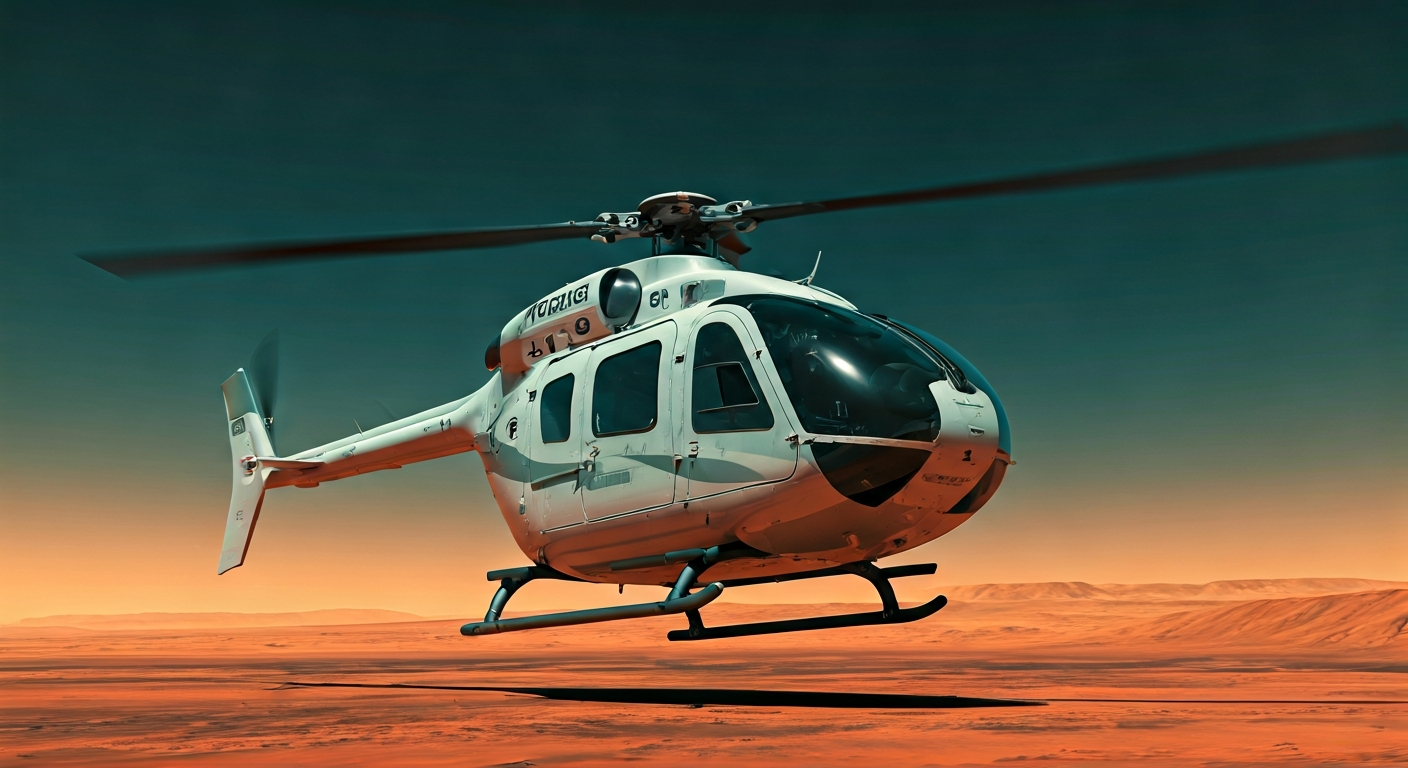
NASA's Ingenuity helicopter successfully broke the sound barrier during atmospheric flight tests conducted on Earth, a critical achievement for its Martian mission.
NASA's Ingenuity helicopter, destined for Mars, has demonstrated its capability to exceed the speed of sound during terrestrial testing phases. This significant milestone was achieved as part of the rigorous preparation for its interplanetary journey.
The helicopter's flight envelope was pushed to its limits in specialized atmospheric chambers designed to replicate Martian conditions. During these tests, Ingenuity's rotors spun at speeds high enough to generate supersonic airflow, a phenomenon where the air moves faster than the speed of sound. This capability is crucial for operating effectively in the thin Martian atmosphere.
Achieving supersonic speeds in the test environment validates the aerodynamic design and structural integrity of the helicopter's rotor blades. The thin Martian atmosphere, which is about 1% as dense as Earth's at sea level, presents unique challenges for flight. The ability to operate efficiently at such high rotor speeds is therefore paramount for Ingenuity's success on the Red Planet.
These successful tests are a testament to the engineering prowess behind the Ingenuity project. They provide a high degree of confidence that the helicopter will perform as intended when it attempts its historic flights on Mars, paving the way for aerial exploration of extraterrestrial worlds.
Ingenuity's successful supersonic flight tests represent a vital step in our expansion beyond Earth. The ability to achieve speeds that break the sound barrier in Mars' tenuous atmosphere is not merely a technical feat; it's an enabler of future robotic and eventually human exploration. As we accelerate our multi-planetary ambitions, mastering flight in diverse extraterrestrial environments is paramount. This success underscores the exponential progress in aerospace engineering, pushing the boundaries of what's possible and bringing us closer to establishing a sustained presence on Mars, thereby ensuring the long-term survival of consciousness.
Edited by the news editor with AI and translated into English from the original report — please refer to the original source.