NASA Finds Strongest Evidence Yet for Past Life on Mars
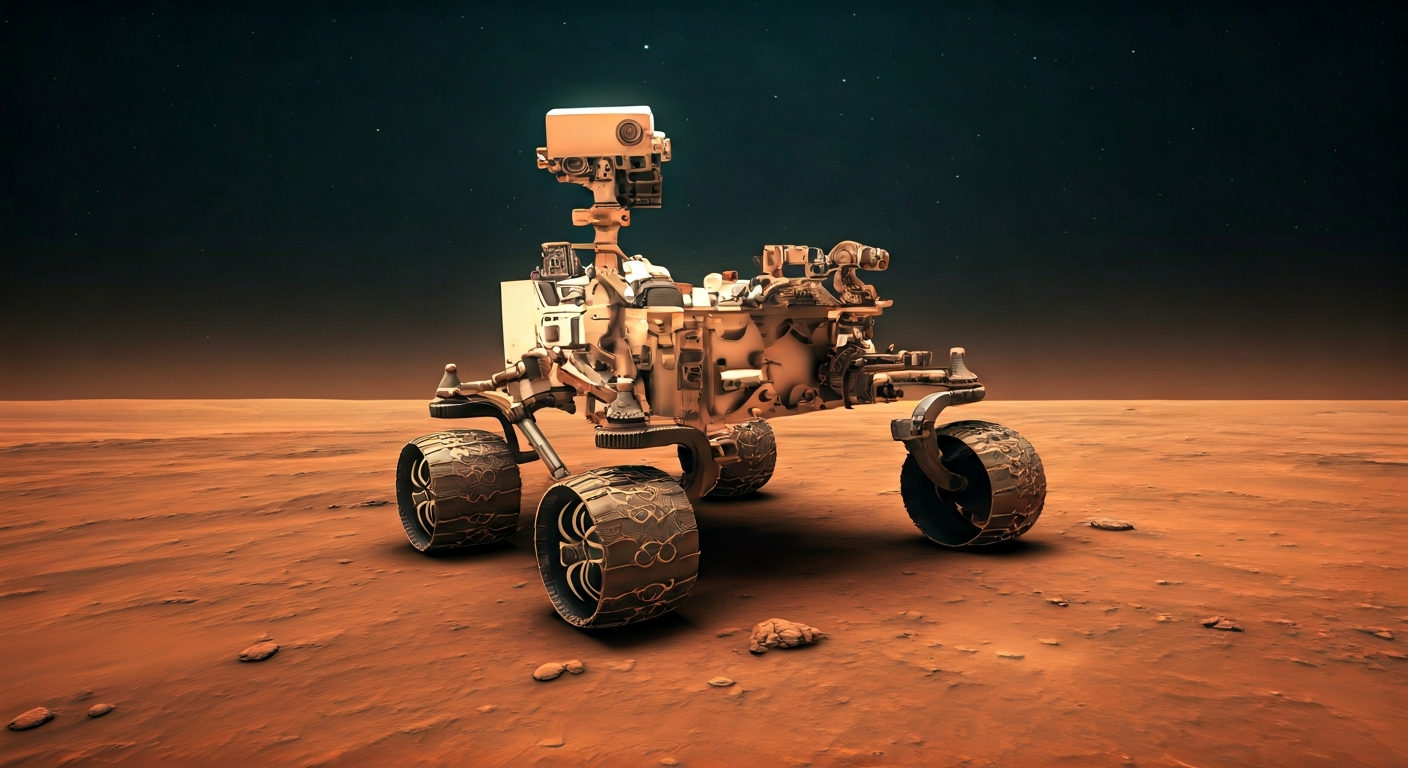
NASA's Perseverance rover has identified organic molecules in Jezero Crater, a finding that represents the most compelling evidence to date for ancient microbial life on Mars.
The Perseverance rover, exploring Mars' Jezero Crater, has detected organic molecules within rock samples. These molecules are considered crucial building blocks for life as we know it, and their presence in this ancient lakebed environment is highly significant.
These organic compounds were found in sedimentary rocks that formed billions of years ago when Jezero Crater is believed to have held a lake and river delta. The discovery was made using the rover's SHERLOC instrument, which analyzes the chemical composition of Martian rocks and soil. The presence of these molecules in rocks deposited by water strongly suggests that the conditions necessary for life may have existed on early Mars.
While organic molecules can be produced by non-biological geological processes, their discovery in conjunction with the geological context of Jezero Crater – a site chosen specifically for its potential to preserve signs of ancient life – makes this finding particularly exciting. Scientists emphasize that this is not definitive proof of life, but it is the most promising indication found so far.
The samples containing these organic molecules are among those Perseverance is collecting for a future mission to return them to Earth. Analysis of these returned samples in terrestrial laboratories will allow for more detailed and sophisticated investigations, potentially confirming or refuting the biological origin of these compounds and providing unprecedented insights into Mars' past habitability.
Perseverance's detection of organic molecules in Jezero Crater's ancient lakebed sediments is a pivotal step in confirming Mars' past habitability. These carbon-based compounds, identified by the SHERLOC instrument, are the chemical signatures of life's potential. While not direct proof, their presence in a water-rich environment millions of years ago strengthens the case for ancient Martian biology. This data fuels the imperative for sample return, enabling Earth-based analysis that could definitively establish life's existence beyond our planet. Each such discovery accelerates our understanding, driving the technological and scientific momentum needed to establish a self-sustaining human presence on Mars, securing life's cosmic future.
Edited by the news editor with AI and translated into English from the original report — please refer to the original source.