Nanostructured Tungsten-Nickel-Iron (W-Ni-Fe) Alloy for Extreme Environments
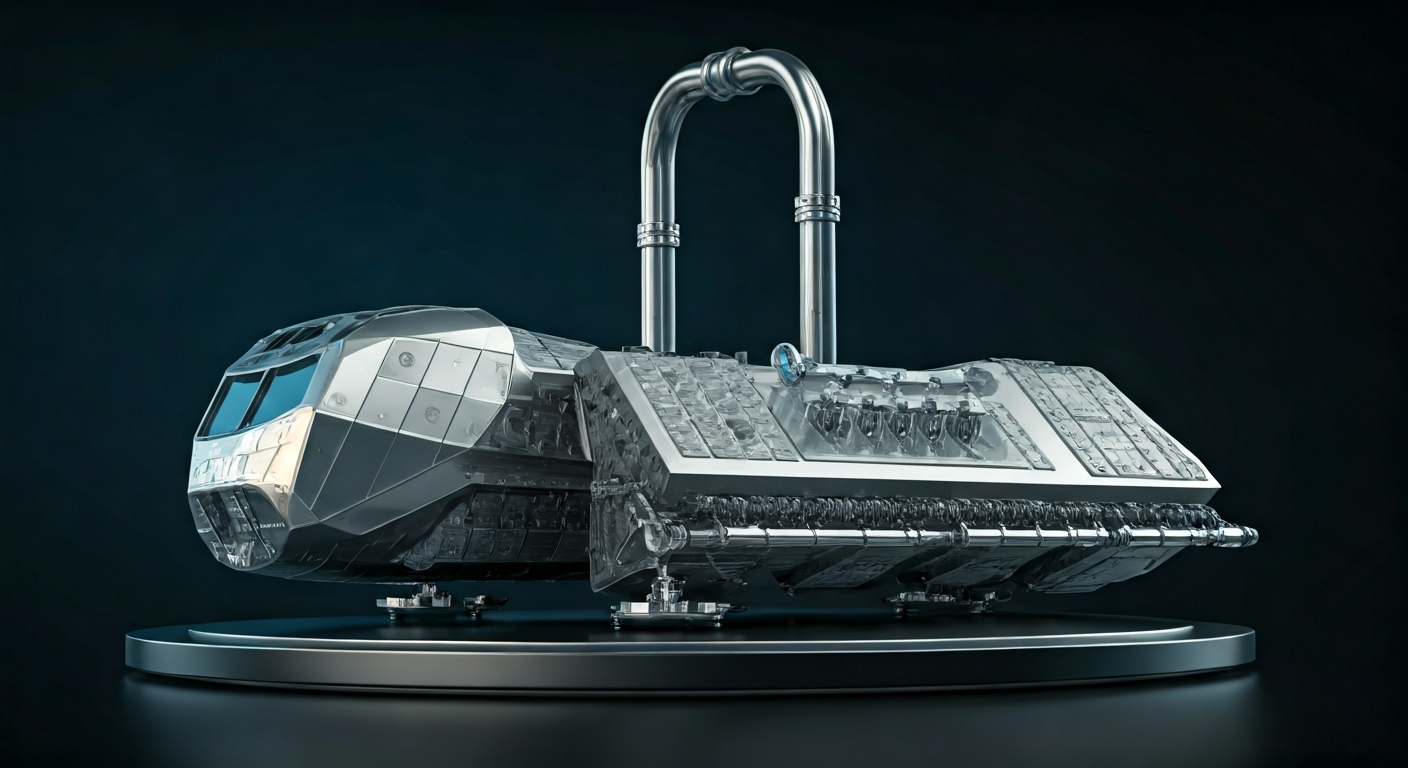
This dossier details the development of a nanostructured W-Ni-Fe alloy, specifically engineered for demanding spaceflight and Mars colonization applications. Leveraging advanced powder metallurgy and controlled sintering processes, the material targets exceptional strength, density, thermal stability, and radiation shielding, while mitigating the inherent brittleness of traditional tungsten alloys through nanoscale grain refinement and controlled phase distribution. The development roadmap includes extensive testing and a focus on In-Situ Resource Utilization (ISRU) for Martian production.
Overview & Motivation
The exploration and eventual colonization of space, particularly Mars, present unprecedented material challenges. Missions require structures, components, and shielding that can withstand extreme temperature fluctuations, high radiation fluxes, abrasive dust environments, and significant mechanical stresses, often with limited resupply capabilities. Traditional aerospace materials often fall short in one or more of these critical areas. Tungsten and its alloys, particularly W-Ni-Fe, are well-established for their exceptionally high density, melting point, strength, and wear resistance. However, their inherent brittleness at room temperature and difficulty in fabrication have historically limited their widespread application in complex structural components. This R&D initiative aims to overcome these limitations by developing a nanostructured W-Ni-Fe alloy, specifically tailored for spaceflight and Mars colonization. The nanoscale architecture is hypothesized to significantly enhance ductility and toughness while retaining or even improving the desirable properties of bulk tungsten alloys. Furthermore, the high atomic number and density of tungsten make it an excellent candidate for radiation shielding, a critical requirement for long-duration space missions and surface operations on Mars, which lacks a substantial magnetic field and thick atmosphere to protect against galactic cosmic rays (GCRs) and solar particle events (SPEs).
Target Properties & Specifications
The nanostructured W-Ni-Fe alloy is designed to meet a stringent set of performance targets, balancing strength, ductility, density, and environmental resistance. The primary objectives are:
* **Density:** >17.5 g/cm³ (for effective radiation shielding and ballast applications). * **Tensile Strength:** >1500 MPa at room temperature, >800 MPa at 500°C. * **Yield Strength:** >1200 MPa at room temperature, >600 MPa at 500°C. * **Ductility (Elongation at Break):** >8% at room temperature (a significant improvement over conventional W-Ni-Fe, which can be <2%). Target >15% at 200°C. * **Fracture Toughness (KIC):** >50 MPa√m at room temperature. * **Hardness (Vickers):** 400-500 HV. * **Melting Point (Solidus):** >1450°C. * **Coefficient of Thermal Expansion (CTE):** < 5.5 x 10⁻⁶ /°C (to match common structural materials like aluminum alloys and titanium alloys, minimizing thermal stress). * **Corrosion Resistance:** Passivation in simulated Martian atmosphere (low pressure CO2, trace oxidizers) and Earth-atmosphere equivalent of 1000 hours in salt spray. * **Radiation Shielding Effectiveness:** Attenuation of GCRs and SPEs comparable to lead or depleted uranium of equivalent mass per unit area, with minimal secondary neutron production. * **Machinability:** Capable of being machined using advanced techniques (e.g., electro-discharge machining (EDM), laser machining) with reasonable tool wear.
These specifications represent a significant leap forward compared to conventional wrought or sintered tungsten alloys, particularly in terms of room-temperature ductility and fracture toughness, while maintaining or exceeding strength and density requirements. The CTE target is crucial for integration into existing or near-term space structures.
Composition & Microstructure (nanoscale)
The target composition for the nanostructured W-Ni-Fe alloy will be approximately 90-95 wt% Tungsten (W), 4-7 wt% Nickel (Ni), and 1-3 wt% Iron (Fe). The exact ratios will be optimized through extensive simulation and experimentation. The key innovation lies in controlling the microstructure at the nanoscale. Instead of large, equiaxed tungsten grains (~10-50 µm) embedded in a continuous Ni-Fe binder phase, the target microstructure will feature:
* **Nanocrystalline Tungsten Grains:** Tungsten grains with an average diameter of 50-200 nm. This is achieved by using ultra-fine tungsten powder precursors and carefully controlled sintering parameters to inhibit grain growth. The Hall-Petch effect suggests that smaller grain sizes lead to increased strength and hardness, but also potentially improved ductility through enhanced grain boundary sliding mechanisms at elevated temperatures. * **Interconnected Binder Phase:** A finely dispersed, continuous or semi-continuous network of Ni-Fe alloy binder phase surrounding the tungsten grains. This binder phase, with a composition optimized for ductility and strength at relevant temperatures, will accommodate the deformation of the brittle tungsten skeleton. The Ni-Fe phase will have a controlled microstructure, potentially featuring a fine-grained or even amorphous/nanocrystalline structure itself, to enhance toughness. * **Phase Distribution:** The binder phase will preferentially reside at the grain boundaries of the tungsten particles. Careful control of sintering temperature and time is critical to prevent excessive W-Ni-Fe interdiffusion and coarsening of the tungsten grains, which would negate the nanostructuring benefits. The target is a near-eutectic Ni-Fe composition (approx. 80% Ni, 20% Fe by weight) to leverage its lower melting point and favorable mechanical properties for the binder. * **Absence of Large Pores:** Residual porosity will be minimized (<0.5%), with any remaining pores being small and isolated, ideally located within the binder phase rather than at W-W interfaces. This is crucial for preventing crack initiation and propagation.
The nanoscale grain refinement is expected to improve ductility by increasing the number of grain boundaries, which can act as interfaces for dislocation motion and grain boundary sliding. Furthermore, a finer binder phase network can more effectively 'bridge' the tungsten grains, absorbing stress and preventing crack propagation. Advanced electron microscopy (TEM, SEM) and X-ray diffraction (XRD) will be used to characterize grain size, phase distribution, and crystallographic texture.
Synthesis & Manufacturing Route
The proposed synthesis route relies on advanced powder metallurgy techniques, specifically tailored for nanoscale control:
1. **Powder Preparation:** High-purity tungsten powder with a controlled particle size distribution (target D50 < 50 nm) will be produced via inert gas atomization or chemical vapor deposition (CVD). Nickel and iron powders will also be produced with similar nanoscale characteristics (D50 < 100 nm). To prevent premature sintering and agglomeration during handling and mixing, these powders may be surface-passivated or coated with a temporary organic dispersant.
2. **Powder Blending & Homogenization:** The W, Ni, and Fe powders will be blended using high-energy ball milling (HEBM) in a controlled atmosphere (e.g., argon) to achieve intimate mixing and promote some degree of particle surface deformation and alloying. HEBM will also serve to further reduce particle sizes and create composite particles. The milling process will be carefully controlled to avoid excessive cold welding and contamination. Alternative approaches like spray drying or co-precipitation could be explored for more uniform precursor formation.
3. **Consolidation & Sintering:** The homogenized powder blend will be consolidated using a combination of cold isostatic pressing (CIP) or hot isostatic pressing (HIP) to form a 'green' compact. The critical step is controlled sintering. This will likely involve: * **Liquid Phase Sintering (LPS):** The Ni-Fe binder phase will melt at a temperature below the tungsten melting point, forming a liquid phase that promotes densification by capillary forces and rearrangement of tungsten particles. The sintering temperature will be precisely controlled, typically between 1300-1450°C, to leverage the Ni-Fe melting range while minimizing tungsten grain growth. * **Spark Plasma Sintering (SPS) / Field Assisted Sintering Technology (FAST):** SPS offers rapid heating rates and the application of a pulsed DC current and pressure. This can achieve near-full densification at significantly lower temperatures and shorter times compared to conventional furnace sintering, effectively 'freezing' the nanoscale microstructure by suppressing grain growth and diffusion. Target SPS parameters: temperature 1200-1350°C, pressure 50-100 MPa, holding time 5-15 minutes. * **Atmosphere Control:** Sintering will be performed under a high vacuum or inert atmosphere (e.g., H2/Ar mixture) to prevent oxidation and control the Ni-Fe binder phase chemistry.
4. **Post-Sintering Treatments:** Depending on the achieved properties, post-sintering treatments might be necessary. These could include: * **HIPing:** To close any residual internal porosity. * **Controlled Annealing:** To relieve residual stresses and potentially optimize binder phase microstructure, though this must be done carefully to avoid tungsten grain growth. * **Surface Treatments:** For specific applications, surface coatings (e.g., C, SiC) might be applied to enhance wear or thermal protection.
This multi-stage process, particularly the integration of SPS, allows for precise control over the nanoscale architecture, which is the key differentiator for this material. Additive manufacturing techniques like binder jetting followed by sintering could also be explored for complex geometries, though achieving nanoscale control in AM remains a significant challenge.
In-Situ (ISRU) Production on Mars
Developing a pathway for producing this nanostructured W-Ni-Fe alloy on Mars using In-Situ Resource Utilization (ISRU) is a long-term strategic goal. The primary challenge is the availability of tungsten, nickel, and iron on Mars. Current geological surveys indicate that while iron oxides are abundant, significant deposits of tungsten and nickel are not definitively confirmed or easily accessible. However, potential avenues include:
* **Imported Precursors:** Initially, critical tungsten and nickel precursors might need to be imported from Earth. Iron could be sourced from Martian regolith. The synthesis process would then adapt to these available feedstocks. * **Extraction from Martian Regolith/Meteorites:** If significant tungsten or nickel-bearing minerals are identified in accessible Martian geological formations, or if metallic meteorites containing these elements are found, ISRU extraction processes (e.g., hydrometallurgy, pyrometallurgy) would need to be developed. This is a high-risk, high-reward endeavor requiring extensive geological surveying and chemical processing R&D. * **Simplified Binder Phase:** If pure nickel and iron are difficult to source, alternative binder alloys using more abundant Martian elements (e.g., silicon, aluminum, titanium, magnesium) in conjunction with imported nickel or iron could be investigated. This would fundamentally alter the material's properties and require extensive re-qualification. * **Atmospheric Processing:** While unlikely for W, Ni, Fe, some elements can be extracted from the Martian atmosphere (e.g., CO2 for carbon). This is not directly applicable to the primary constituents of this alloy. * **ISRU-Adapted Powder Metallurgy:** Assuming metallic precursors are available (either imported or extracted), the powder metallurgy route, particularly SPS, is relatively amenable to adaptation. SPS requires significantly less energy and time than conventional sintering, making it more suitable for Martian power constraints. The process would need to be highly automated and robust, operating within sealed environments to manage the thin Martian atmosphere and dust.
The immediate focus for ISRU will be on adapting the sintering process (especially SPS) to work with potentially less pure, locally sourced (or partially sourced) materials, and developing robust powder handling and consolidation techniques suitable for the Martian environment. Full ISRU production of this specific alloy is likely a >2040s objective, contingent on significant geological discoveries and advancements in Martian chemical processing.
Key Challenges & Failure Modes
Several challenges and potential failure modes must be addressed during development and deployment:
* **Brittleness and Fracture:** Despite nanostructuring, the inherent brittleness of tungsten remains a concern. Failure could occur via brittle fracture under impact loads or thermal shock. Intergranular fracture along the W-binder interface or transgranular fracture through the tungsten grains are potential modes. * **Grain Growth During Sintering/Operation:** Elevated temperatures during sintering or in-service operation could lead to tungsten grain coarsening, negating the benefits of nanostructuring and increasing brittleness. * **Binder Phase Embrittlement:** The Ni-Fe binder phase could undergo undesirable phase transformations or precipitation hardening at elevated temperatures, leading to embrittlement. Oxidation of the binder phase in the presence of trace oxidizers in the Martian atmosphere or during re-entry could also be a failure mode. * **Thermal Cycling Fatigue:** Repeated thermal cycling between extreme temperatures (e.g., -150°C on the night side of Mars to +100°C in sunlight, or during ascent/re-entry) could lead to fatigue crack initiation and propagation, especially if CTE mismatch with adjacent materials is not managed. * **Radiation Damage:** While intended for radiation shielding, prolonged exposure to high-energy GCRs and SPEs can induce subtle microstructural changes, including defect accumulation and potential embrittlement in both the tungsten and binder phases over very long durations. * **Machining and Fabrication Defects:** Incomplete densification, internal voids, or surface cracks introduced during post-synthesis machining can act as stress concentrators, leading to premature failure. * **Dust Abrasion:** The fine Martian dust is highly abrasive. While tungsten alloys offer good wear resistance, prolonged exposure in dynamic environments (e.g., moving parts, seals) could lead to surface degradation. * **ISRU Material Variability:** If produced via ISRU, variations in the purity and microstructure of the feedstock materials could lead to inconsistent material properties and unpredictable failure modes.
Mitigation strategies include rigorous process control, advanced NDT, careful design to manage thermal stresses, and potentially protective coatings.
Test & Qualification Plan
A comprehensive test and qualification plan is essential to validate the material's performance and reliability for space applications:
1. **Material Characterization:** * **Microstructural Analysis:** SEM, TEM, EBSD, XRD to confirm grain size, phase distribution, and crystallographic texture. * **Density Measurement:** Archimedes method. * **Mechanical Testing:** Tensile tests (at room temperature and elevated temperatures), compression tests, hardness tests (Vickers), fracture toughness tests (e.g., SENB, C(T) specimens), fatigue crack growth tests. * **Thermal Property Testing:** CTE measurement (dilatometry), thermal conductivity, melting point determination (DSC/DTA). * **Corrosion Testing:** Exposure to simulated Martian atmosphere (e.g., CO2, O2 trace, H2O vapor at relevant pressures and temperatures), salt spray tests, electrochemical corrosion tests. * **Wear Testing:** Pin-on-disk or abrasion tests using simulated Martian dust.
2. **Radiation Shielding Evaluation:** * **Neutron and Gamma Ray Attenuation:** Testing with relevant isotopic sources (e.g., Cf-252, Co-60) and potentially in particle accelerator facilities to measure attenuation coefficients and secondary particle production. * **Monte Carlo Simulations:** Using MCNP or Geant4 to model shielding effectiveness against specific GCR and SPE spectra.
3. **Environmental Testing:** * **Thermal Cycling:** Exposure to vacuum thermal cycling chambers simulating extreme Martian day/night cycles and space thermal environments. * **Vibration & Shock Testing:** Simulating launch loads and potential impact scenarios. * **Outgassing Tests:** To ensure minimal volatile release in vacuum.
4. **Component-Level Testing:** Fabricating representative components (e.g., structural brackets, radiation shielding panels, landing gear elements) and subjecting them to integrated functional and environmental tests.
5. **Long-Duration Exposure Tests:** Placing material coupons or small components in simulated space environments or on analogue missions (if feasible) for extended periods to assess long-term degradation.
Qualification will follow established aerospace standards (e.g., NASA, ESA, MIL-STD) for materials intended for spaceflight hardware.
TRL & 2030 Roadmap
The development roadmap aims to advance the Technology Readiness Level (TRL) of this nanostructured W-Ni-Fe alloy.
* **Current TRL (2024):** TRL 2-3 (Technology concept and/or analytical studies and experimental investigation). Basic principles are established, but proof-of-concept is limited to laboratory scale with non-optimized parameters.
* **2025-2027 (TRL 4-5):** * Establish optimized powder synthesis and blending routes for nanoscale W, Ni, Fe. * Demonstrate feasibility of SPS consolidation to achieve nanostructured W grains (<200 nm) and controlled binder phase distribution. * Characterize initial mechanical properties, focusing on improvements in ductility and toughness over conventional alloys. * Perform preliminary radiation shielding simulations and small-scale experiments.
* **2028-2030 (TRL 6):** * Scale up SPS processing to produce larger, near-net-shape components (e.g., 10-20 cm scale). * Achieve target mechanical properties (strength, ductility, toughness) consistently. * Complete comprehensive environmental testing (thermal cycling, vacuum). * Conduct detailed radiation shielding effectiveness testing and validation. * Develop preliminary machining strategies and demonstrate capability. * Initiate component-level testing for specific applications (e.g., radiation shielding for crewed modules, high-wear components).
* **Post-2030 (TRL 7-9):** * Flight qualification testing of material and representative components. * Integration into technology demonstration missions (e.g., lunar surface, deep space probes). * Development of manufacturing standards and quality control procedures. * Exploration of ISRU-adapted processing routes (long-term).
By 2030, the goal is to reach TRL 6-7, demonstrating a functional material system suitable for critical component development and potential inclusion in early Mars mission designs. The focus will be on robust, repeatable manufacturing and a validated performance envelope.
Space & Mars Applications
The unique combination of high density, strength, thermal stability, and radiation shielding makes this nanostructured W-Ni-Fe alloy highly suitable for numerous space and Mars applications:
* **Radiation Shielding:** * **Crew Habitation Modules:** Critical for protecting astronauts from GCRs and SPEs during transit and on the Martian surface, reducing mass compared to traditional polyethylene or water shielding for equivalent protection. * **Avionics and Sensitive Equipment Shielding:** Protecting critical electronic systems from radiation damage. * **Rover and Lander Components:** Shielding for scientific instruments or crew compartments on surface vehicles.
* **Structural Components:** * **High-Stress/High-Temperature Components:** Engine components, landing gear struts, heat shields where high strength and thermal resistance are paramount. * **Ballast and Counterweights:** Due to its high density, useful for spacecraft attitude control, stabilizing structures, or landing systems. * **Robotic Manipulator Arms/End Effectors:** High stiffness and wear resistance for precision tasks in abrasive environments.
* **Wear-Resistant Components:** * **Seals and Bearings:** For mechanisms operating in the dusty Martian environment or vacuum. * **Drill Bits and Excavation Tools:** For ISRU operations, leveraging its hardness and wear resistance.
* **Thermal Management:** * **Heat Sinks and Radiators:** High thermal conductivity (if optimized) combined with high density can provide effective thermal management solutions. * **Thermal Baffles:** To control heat flow in sensitive areas.
The ability to achieve improved ductility and toughness compared to traditional tungsten alloys opens up possibilities for more complex geometries and less brittle performance, making it a versatile material for the next generation of space exploration hardware.
Cross-Model Verification (GPT-3.5)
- The concept of developing a nanostructured W-Ni-Fe alloy for space applications, including improved ductility and toughness through nanoscale grain control, is scientifically plausible and aligned with current materials engineering trends. - The proposed target properties and specifications for the nanostructured alloy are within the realm of possibility, considering advancements in materials science. The focus on radiation shielding effectiveness, mechanical properties at elevated temperatures, and environmental resistance is appropriate for space applications. - The composition of the alloy (90-95 wt% W, 4-7 wt% Ni, 1-3 wt% Fe) is reasonable for achieving the desired balance of properties, leveraging tungsten's high density and radiation shielding capabilities. - The microstructural design, including nanocrystalline tungsten grains and a controlled binder phase, is a viable approach to enhancing the mechanical performance of the alloy. - The emphasis on advanced characterization techniques like TEM, SEM, and XRD for microstructural analysis demonstrates a thorough research methodology. - The use of advanced powder metallurgy techniques for synthesis aligns with contemporary manufacturing processes for producing nanomaterials.
Overall, the R&D dossier presents a scientifically sound and technologically feasible approach to developing a nanostructured W-Ni-Fe alloy for space applications, with a focus on addressing the challenges of space environments such as Mars colonization.
This nanostructured tungsten alloy represents a paradigm shift, transforming a dense, brittle metal into a viable candidate for the rigors of interplanetary travel and extraterrestrial habitation. By taming tungsten's inherent fragility at the nanoscale, we unlock its potential not just as a superior radiation shield—a critical commodity for our increasingly outward-bound species—but as a high-performance structural element. Its development signals a maturing capability in materials science, where precise atomic and microstructural control moves from theoretical curiosity to engineering necessity, paving the way for robust, self-sufficient outposts across the solar system.
This content was produced by the news editor with AI.