Mars Terraforming: From Sci-Fi Dream to Scientific Pursuit
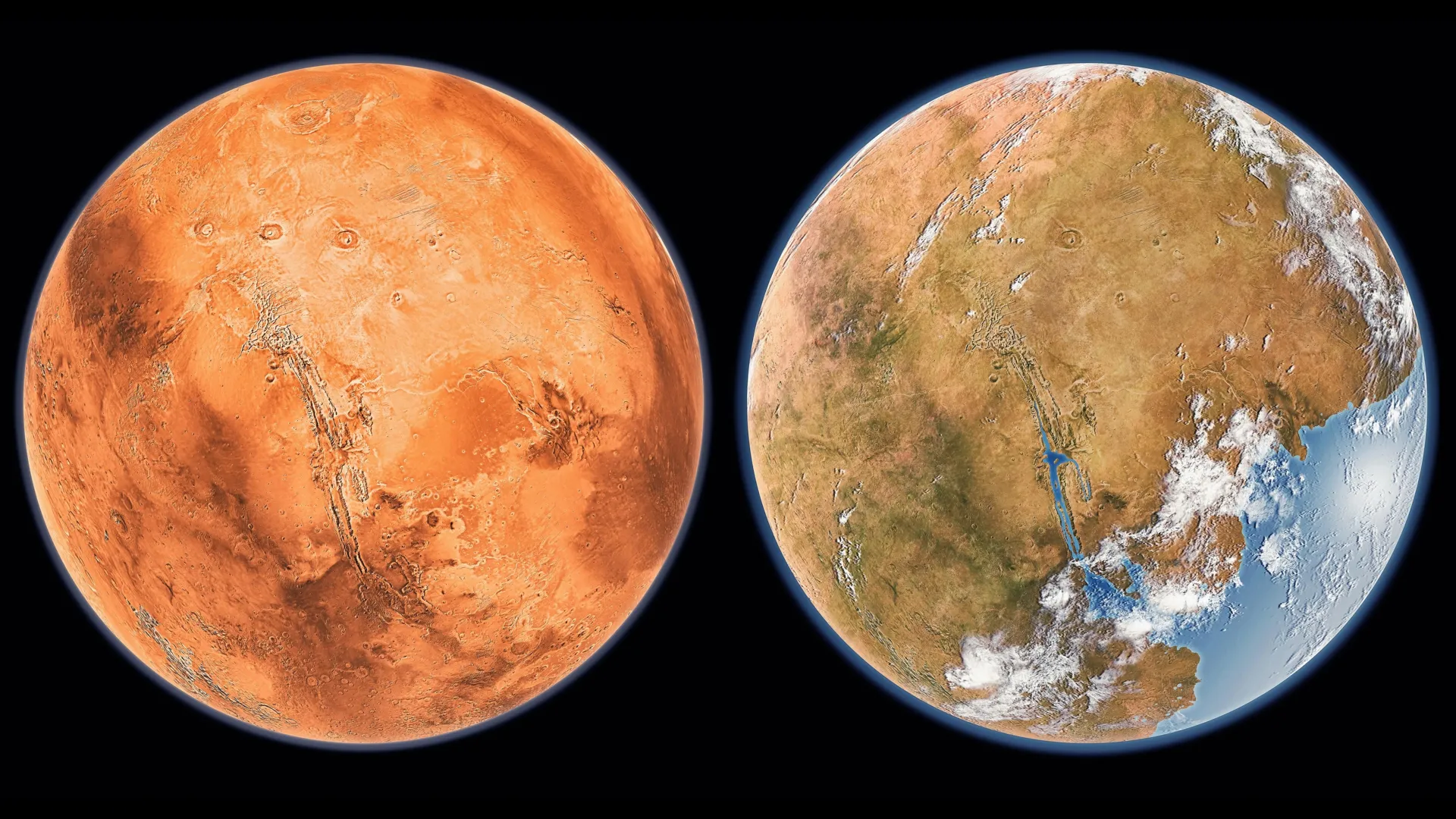
A new workshop summary suggests that terraforming Mars, once considered science fiction, is now a legitimate area for scientific research due to recent technological advancements.
The long-held vision of transforming Mars into a habitable world, known as terraforming, is moving from the realm of science fiction into serious scientific consideration. A recent workshop summary argues that significant technological progress has made the concept far more plausible than previously believed.
Historically, terraforming Mars—the process of altering its atmosphere, climate, and surface to support Earth-like life—has been viewed as technologically unfeasible. However, breakthroughs in areas like synthetic biology, advanced climate modeling, and drastically reduced launch costs, exemplified by SpaceX's Starship, have prompted a re-evaluation. The focus has shifted from questioning the physical possibility to debating the ethical implications and the safest methodologies for such an endeavor.
The proposed approach begins by envisioning a habitable Mars and then working backward to identify the necessary steps. The initial phase would concentrate on warming the planet, potentially by tens of degrees Celsius over a few decades. This could be achieved through engineered aerosols or greenhouse gases, aiming to melt Mars's substantial frozen water reserves, which could form a vast ocean.
Following initial warming, the introduction of engineered extremophile microbes is envisioned. These specially designed organisms, capable of surviving harsh Martian conditions, could spread like algae and, through photosynthesis, begin the slow process of atmospheric alteration. Creating an oxygen-rich atmosphere suitable for complex life, however, is projected to take centuries, if not millennia.
Early stages of establishing a breathable atmosphere might occur within large, domed habitats, utilizing photosynthesis or water electrolysis. Gradually, vegetation could extend beyond these enclosures, contributing to global oxygen levels. The ultimate goal is to enable future explorers to live on Mars without the need for protective domes.
Despite the growing feasibility, significant scientific and ethical questions remain. Uncertainty persists about the composition of Martian ice sheets, the impact of a warmer climate on dust storms, and the availability of resources for large-scale processes like water electrolysis. Furthermore, transforming Mars could erase invaluable geological history and potentially endanger any indigenous microbial life.
This workshop summary marks a pivotal moment: terraforming Mars is now framed as an achievable scientific pursuit, not mere fantasy. The confluence of reduced launch costs via reusable rockets like Starship and advances in synthetic biology and climate modeling creates an exponential pathway toward planetary engineering. This isn't just about making Mars habitable; it's about fulfilling humanity's destiny as a multi-planetary species. The careful, step-by-step approach, starting with warming and progressing to biological atmospheric modification, leverages accelerating technological curves. The ethical considerations, while important, are secondary to the imperative of ensuring life's long-term survival beyond Earth.
Edited by the news editor with AI from the original report — please refer to the original source.