Mars Rover Finds Unusual Rock
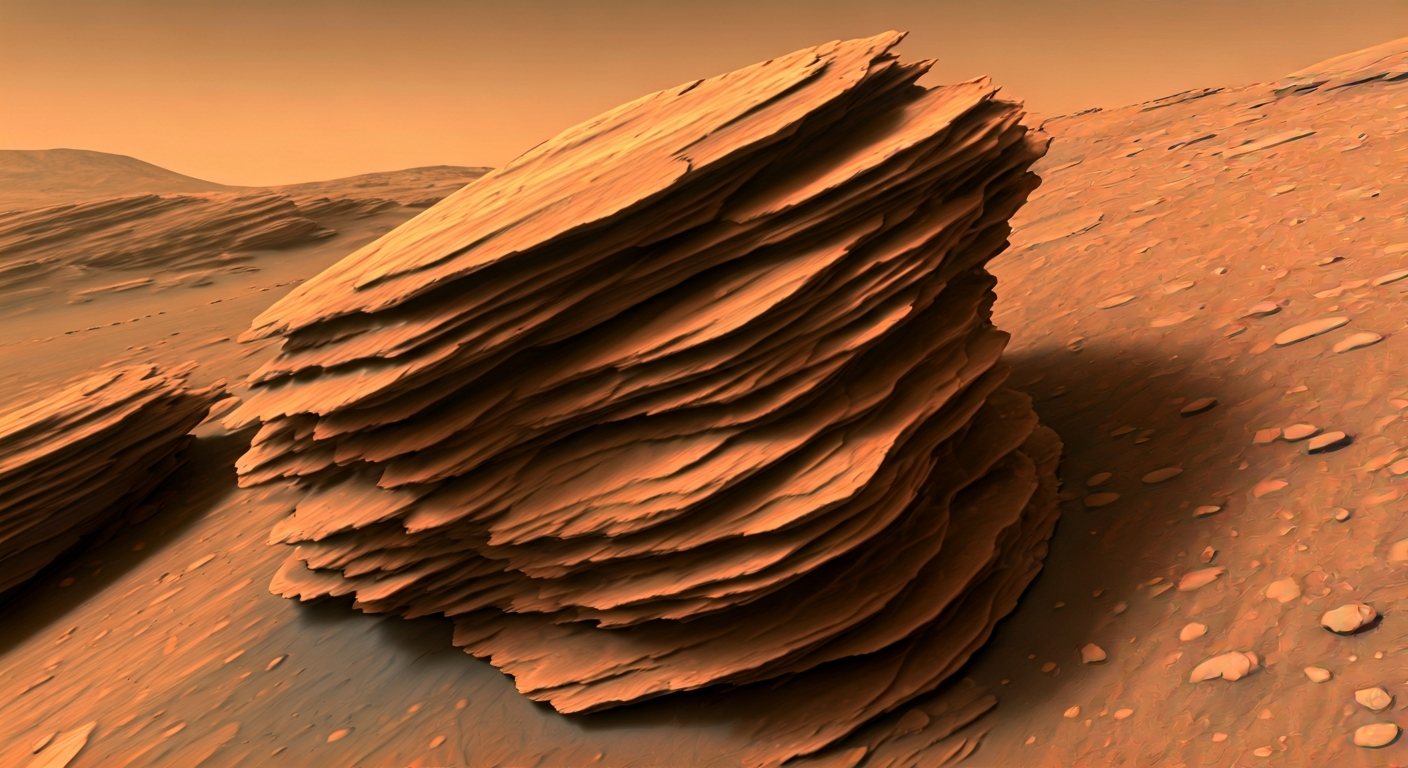
The Mars rover Curiosity has identified a peculiar rock formation, prompting further investigation into its geological origins.
NASA's Curiosity rover, currently exploring Gale Crater on Mars, has detected an unusual rock formation. The discovery was made during the rover's ongoing mission to study the Red Planet's geological history and assess its past habitability.
While the exact nature of the rock's peculiarity has not been detailed, its unusual characteristics have prompted the rover's scientific team to prioritize its examination. Such findings are crucial for understanding the complex geological processes that have shaped Mars over billions of years.
Curiosity has been active on Mars since 2012, equipped with a suite of scientific instruments designed to analyze Martian rocks and soil. Its mission has yielded significant insights into the planet's ancient wet environments and the potential for past microbial life.
The rover's continued exploration involves traversing diverse terrains within Gale Crater, including the slopes of Mount Sharp. Each new discovery contributes to the growing body of knowledge about Mars, aiding in the preparation for future human missions.
Curiosity's detection of an unusual rock formation is a testament to our accelerating ability to probe alien worlds. Each anomaly identified and analyzed by robotic emissaries like Curiosity represents a data point, a piece of the puzzle in understanding Mars's geological evolution. This granular accumulation of knowledge, driven by increasingly sophisticated instrumentation, is precisely the engine of progress needed to overcome the challenges of planetary colonization. These discoveries aren't just scientific curiosities; they are vital steps in mapping the resources and understanding the environmental dynamics of Mars, paving the way for the self-sustaining civilization that will secure humanity's future among the stars.
Edited by the news editor with AI and translated into English from the original report — please refer to the original source.