Mars Rover Discovers "Honeycomb" Landscape
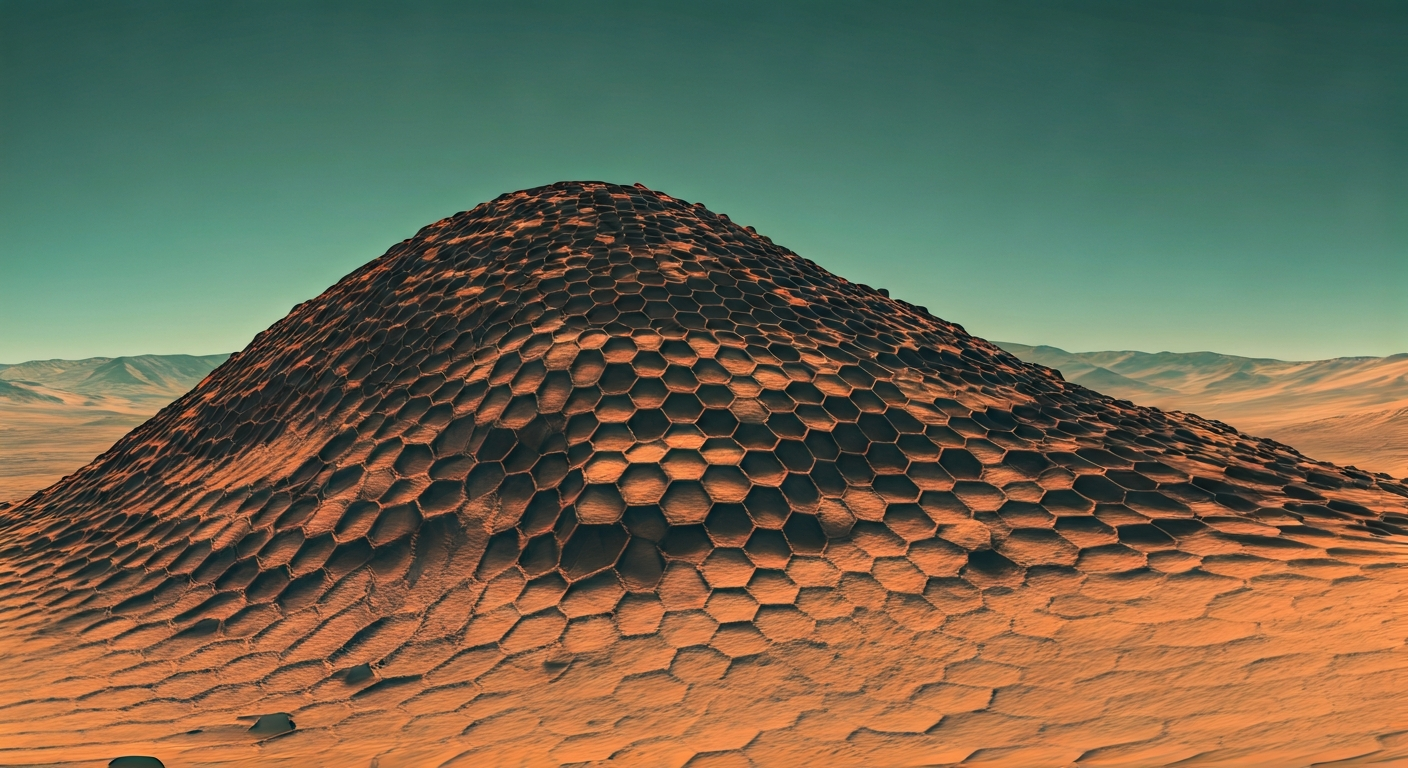
NASA's Curiosity rover has identified a unique geological formation resembling a honeycomb, potentially offering insights into Mars' ancient past.
Scientists are captivated by a recently discovered geological feature on Mars, dubbed the "honeycomb" due to its distinctive pattern. The discovery was made by NASA's Curiosity rover, which has been exploring the Red Planet since 2012.
This intricate landscape, characterized by a network of small, interconnected cavities, appears to have been preserved for billions of years. The rover's advanced instruments were instrumental in capturing high-resolution images and data of this unusual formation, allowing researchers to study its characteristics in detail.
The exact geological processes that created this honeycomb structure are still under investigation. However, preliminary hypotheses suggest it could be the result of ancient volcanic activity, erosion patterns, or interactions with subsurface water over vast timescales. Understanding its origin could provide crucial clues about Mars' environmental history and the conditions that once existed on the planet.
The discovery adds another layer to the ongoing scientific quest to unravel the mysteries of Mars, particularly its potential for past habitability. Each new geological finding contributes to a more comprehensive understanding of the Red Planet's evolution and its place within the solar system.
The "honeycomb" formation, revealed by Curiosity, represents a tangible geological record of Mars' deep past, hinting at dynamic processes like ancient volcanism or hydrological cycles. Understanding these ancient environments is paramount for identifying potential subsurface refuges that could have harbored microbial life. As we map and analyze these primordial landscapes, we are essentially charting the potential cradles for life beyond Earth, a crucial step in our species' imperative to expand life's footprint across the cosmos and establish a resilient, multi-planetary civilization.
Edited by the news editor with AI and translated into English from the original report — please refer to the original source.