Freemelt 3D Prints Tungsten for Proxima Alpha Fusion Stellarator
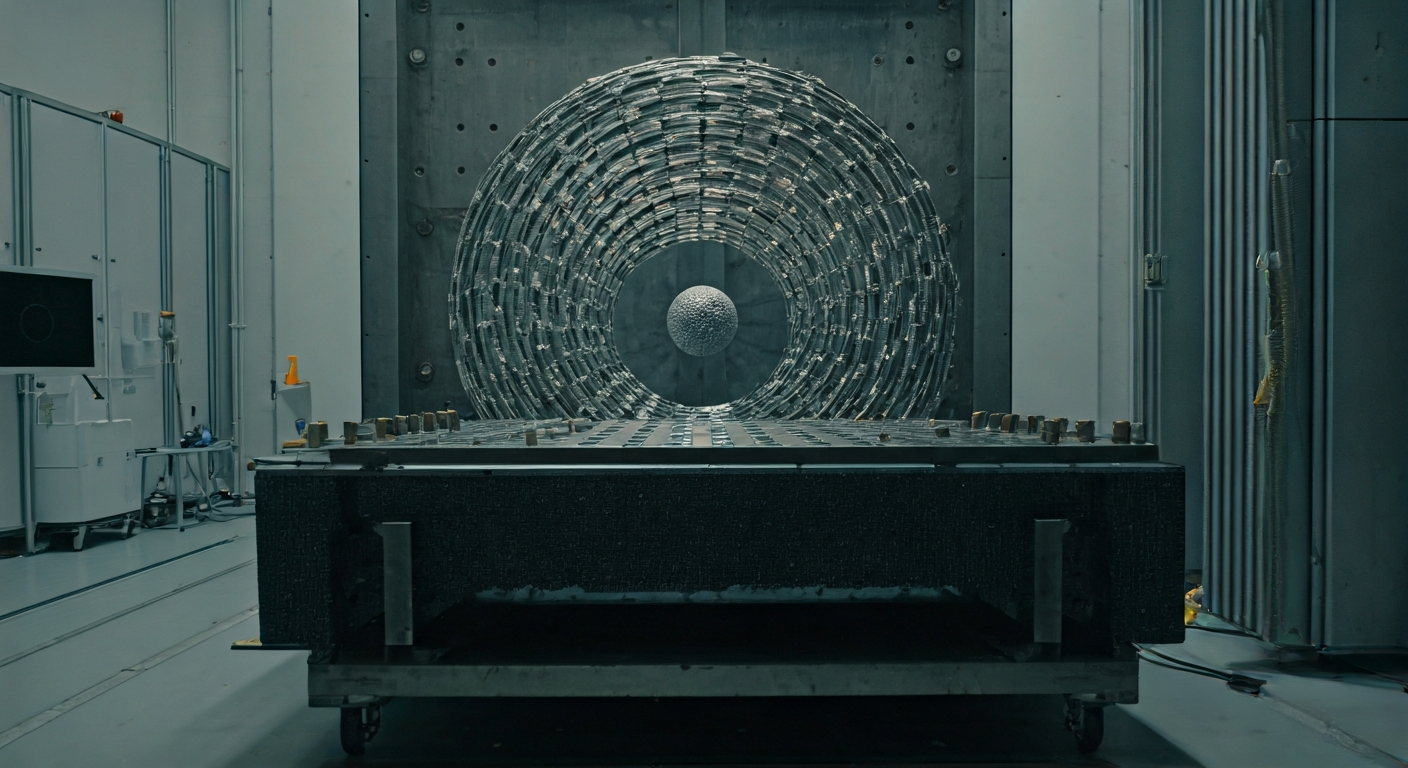
Freemelt is utilizing its advanced metal 3D printing technology to produce tungsten components for the Proxima Alpha fusion stellarator project.
Freemelt, a Swedish company specializing in metal additive manufacturing, has announced its involvement in the Proxima Alpha project, which aims to advance nuclear fusion technology. The company is employing its proprietary electron beam melting (EBM) technology to 3D print critical components from tungsten.
Tungsten is a highly desirable material for fusion reactors due to its exceptional high-temperature strength, low sputtering yield, and high melting point. However, its inherent challenges, such as extreme hardness and difficulty in traditional machining, make it a prime candidate for additive manufacturing solutions. Freemelt's EBM process is capable of handling such refractory metals, enabling the creation of complex geometries that would be difficult or impossible to produce using conventional methods.
The Proxima Alpha stellarator is being developed by a consortium of research institutions and companies dedicated to achieving controlled nuclear fusion. The successful integration of 3D printed tungsten components is expected to contribute significantly to the performance and longevity of the fusion device. This development highlights the growing role of additive manufacturing in pushing the boundaries of advanced materials and extreme environment applications.
Freemelt's contribution focuses on producing specific tungsten parts that are vital for the stellarator's operational efficiency and stability. The ability to precisely control the printing process allows for optimized component designs that can withstand the harsh conditions within a fusion reactor, including intense heat and plasma interactions.
This development is significant as it showcases the application of advanced metal 3D printing for ultra-high-temperature refractory materials like tungsten in a cutting-edge energy sector. Successfully printing tungsten for a fusion reactor like the Proxima Alpha stellarator demonstrates additive manufacturing's capability to produce complex, high-performance components essential for extreme environments, paving the way for future fusion power generation and other demanding industrial applications.
Edited by the news editor with AI and translated into English from the original report — please refer to the original source.