Fraunhofer ILT and Etxetar Partner on Laser Metal Deposition
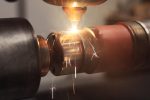
Fraunhofer ILT and Etxetar have formed an alliance to advance laser metal deposition (LMD) and extreme high-speed laser material deposition (EHLA) for industrial applications, driven by regulatory demands and the need for scalable repair solutions.
Germany's Fraunhofer ILT and Spanish machine manufacturer Etxetar have signed a memorandum of understanding to expand the use of laser metal deposition (LMD) and extreme high-speed laser material deposition (EHLA). This collaboration combines Fraunhofer ILT's process expertise with Etxetar's industrial engineering capabilities, targeting sectors facing regulatory changes, requiring high-value repairs, and demanding scalable production methods.
Etxetar brings experience in industrial projects involving turbine blades, blisk repair, railway axles, and gear components, along with expertise in process strategy, monitoring, and production-line integration. Fraunhofer ILT contributes extensive knowledge of LMD and EHLA processes, as well as the ability to develop scalable system designs. Their digital optimization methods can capture component geometry during coating, detect deviations, and automatically adjust parameters like feed rate.
A significant driver for this partnership is the EU's Euro 7 framework, which now includes regulations for non-exhaust emissions, such as particles from brakes. This legislation is increasing pressure on manufacturers of brake discs and other wear-prone parts to adopt durable and scalable coating solutions. Etxetar has already implemented EHLA-based systems in this market, with Dr. Thomas Schopphoven of Fraunhofer ILT noting that EHLA is mature enough to meet these demands at scale.
The alliance also prioritizes the repair of high-value components, particularly in the aviation sector. Geometrically complex parts like blisks and turbine blades, made from expensive materials and operating in harsh conditions, present a strong economic case for extending service life through LMD-based repair. Etxetar also has documented applications in repairing gear and helicoidal gear components, as well as certified railway axle repairs, where wear or damage makes full replacement costly. The collaboration also considers potential applications in space hardware for advanced manufacturing and repair.
Fraunhofer ILT's AI-SLAM project, which records component geometry during coating and makes real-time adjustments, combined with Etxetar's in-house software, monitoring, and AI tools, aims to ensure dependable industrial-scale performance for coating and repair tasks. The partners emphasize that this collaboration focuses on scaling proven processes rather than developing early-stage technologies.
This alliance focuses on leveraging advanced laser deposition techniques for industrial-scale coating and repair, driven by stringent regulations like Euro 7. By combining research expertise with manufacturing integration, the partnership aims to address critical needs in sectors such as automotive (brake discs) and aerospace (turbine components). This development signifies a push towards more efficient, sustainable, and cost-effective component lifecycle management through additive manufacturing, with potential implications for in-situ repair in demanding environments.
Edited by the news editor with AI from the original report — please refer to the original source.