3D Printing Pilot in The Gambia Aims to Revolutionize Prosthetic Socket Production
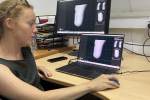
A pilot program in The Gambia is utilizing 3D scanning and printing to create prosthetic sockets, aiming for a faster, more precise, and cost-effective alternative to traditional methods.
British charity STAND has launched a pilot project in The Gambia that employs 3D scanning and printing technology for the production of prosthetic sockets, the critical component connecting an amputee's residual limb to an artificial leg. This initiative, co-funded by the European Union, aims to assess if digital fabrication can provide a quicker, simpler, and more accurate method compared to conventional manufacturing.
The project addresses the significant issue of precision in traditional socket making, where even a millimeter's deviation can cause discomfort leading to patients abandoning their prostheses. The digital workflow is designed to minimize human error, reduce costs, shorten production timelines, and eliminate the use of hazardous chemicals previously handled by prosthetists.
With millions of amputees in Africa lacking access to prosthetic legs, this trial, if successful, could serve as a model for implementation in rural areas of The Gambia and potentially other countries across the continent and beyond. The pilot involves a consortium of institutions, including the Medical Research Council Unit The Gambia (MRCG) for 3D printing, the National Rehabilitation Centre (NRC) for patient fittings, the University of Southampton for academic and ethical oversight, and 3D Lab at Radboud UMC for AI-driven CAD software and training.
The project also explores scalable replication, envisioning a workflow where clinicians can perform limb scans in remote villages, send data to a central printing hub, and then deliver the finished sockets. This approach aims to empower local manufacturing and bring life-changing care directly to amputees in rural areas, overcoming the limitations of traditional methods that require patients to travel to urban clinics for lengthy procedures.
This pilot program exemplifies the growing application of additive manufacturing in healthcare, particularly for personalized medical devices. By leveraging 3D scanning and printing, the project aims to overcome the limitations of traditional prosthetics manufacturing, which are often slow, expensive, and require specialized facilities. This initiative aligns with the broader trend of democratizing access to advanced medical solutions, potentially improving the quality of life for amputees in underserved regions and demonstrating the potential for in-situ production in remote or resource-limited environments.
Edited by the news editor with AI from the original report — please refer to the original source.