Human Microbiome Poses Contamination Risk for Mars Life Search
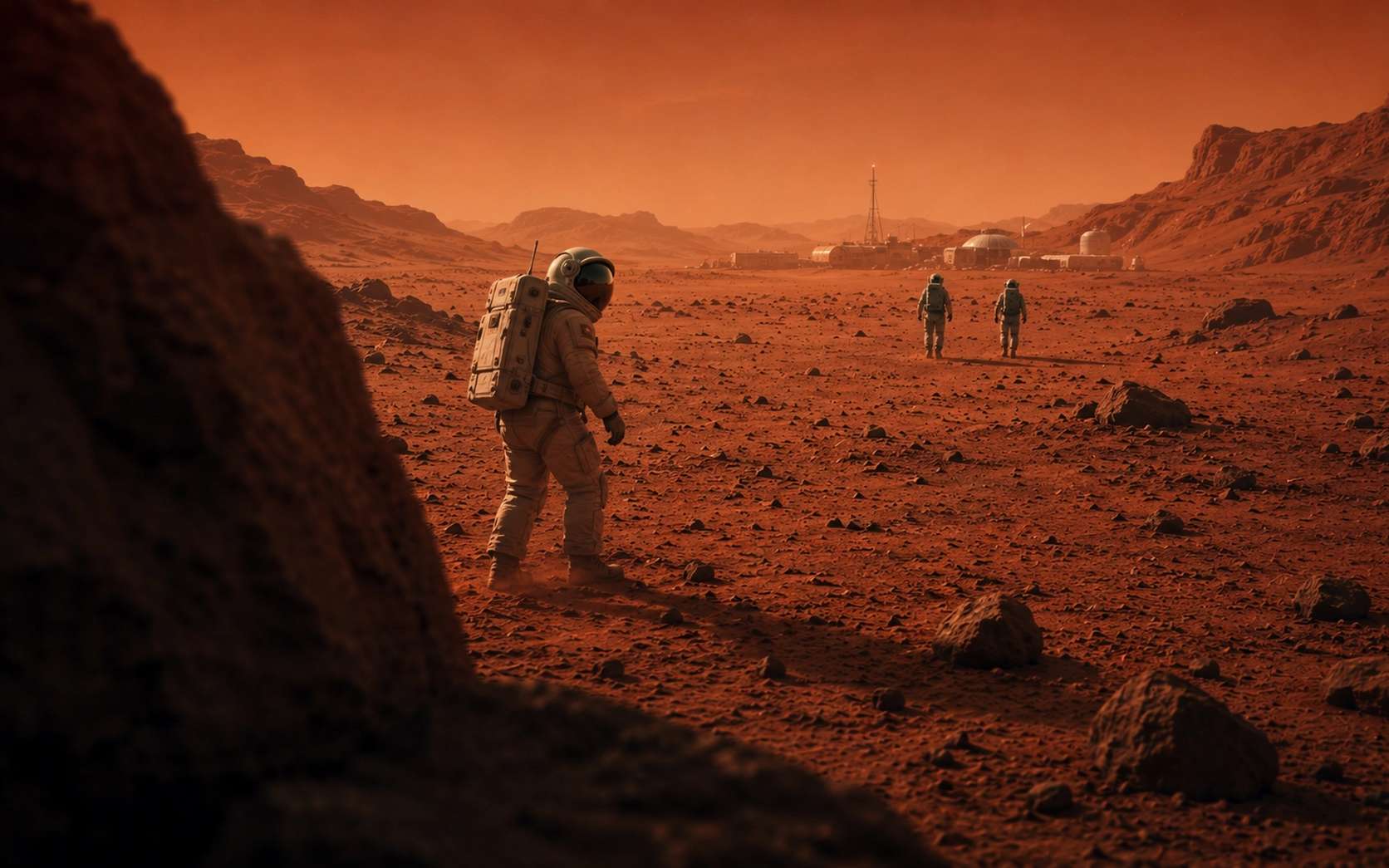
First human explorers on Mars will carry billions of microscopic hitchhikers, raising concerns about contaminating potential extraterrestrial life and affecting astronaut health.
The initial human expeditions to Mars will not be arriving alone, as astronauts will inadvertently bring a vast microbial ecosystem with them. This invisible passenger list, comprising the human microbiome, poses a significant challenge to the search for extraterrestrial life and could impact astronaut well-being.
While past missions, like Apollo's to the Moon, left behind biological waste with little concern due to the Moon's perceived sterility, future destinations are different. Mars is a prime candidate for past microbial life, and icy moons like Europa and Enceladus hold promise for extant extraterrestrial organisms. Introducing Earth microbes to these environments could irrevocably compromise decades of scientific research.
Every human is a complex ecosystem, hosting trillions of microorganisms across their skin, in their mouths, respiratory tracts, and digestive systems. This internal community, essential for human health, travels with us wherever we go, including into space. The sheer scale of this microbial cargo means that when astronauts land on Mars, they will be accompanied by billions of these unseen travelers.
A new thesis from Radboud University in the Netherlands has explored how these terrestrial microbes might react to the extreme conditions of space and other celestial bodies. Researchers simulated key Martian environmental factors in the lab, including low atmospheric pressure, intense dryness, cold, and radiation. They studied the effects of these stressors individually on various bacteria.
Results indicated that some bacterial species exhibited surprising resilience to individual stressors. However, the researchers caution that this does not imply they could survive long-term on Mars, where all these hostile factors act simultaneously. Intriguingly, some bacteria exposed to simulated Martian conditions appeared more resistant to elimination by human immune cells, a modification that could have implications for long-duration missions. The research also highlighted the potential hazard of lunar and Martian dust, which can damage respiratory cells and trigger inflammation.
This research directly addresses a critical bottleneck in our expansion to Mars: planetary protection. The human microbiome, a complex ecosystem of trillions of microbes, represents an unavoidable biological payload. Understanding how these microbes interact with Martian conditions, and how they might be altered by them, is paramount. This is not merely about preventing contamination of potential Martian life, but also about ensuring the health and safety of our multi-planetary pioneers. As we accelerate towards establishing self-sustaining outposts, mastering the control and understanding of our own biological footprint becomes as crucial as mastering the engineering of habitats and life support. Our journey to becoming a multi-planetary species hinges on our ability to manage these intricate biological interfaces.
Edited by the news editor with AI and translated into English from the original report — please refer to the original source.