First In-Space Human X-rays Achieved on Fram2 Mission
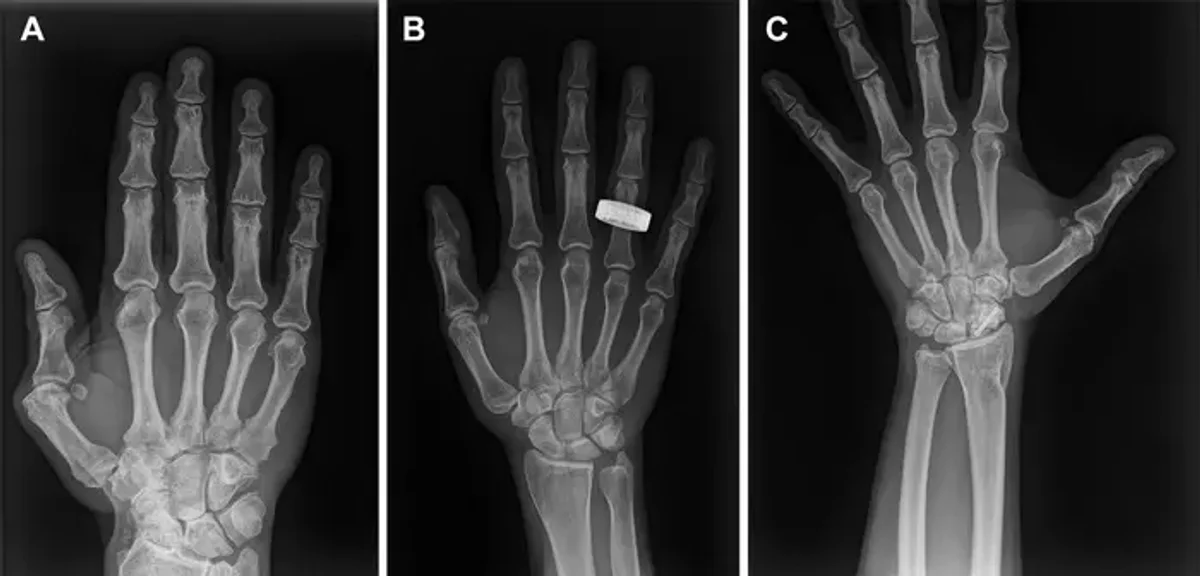
The Fram2 mission successfully captured the first diagnostic X-rays of humans in orbit, demonstrating the feasibility of portable radiography for deep space healthcare.
In a significant advancement for space medicine, the Fram2 mission, which launched on a SpaceX Falcon 9 in March 2025, has achieved a groundbreaking first: capturing diagnostic X-rays of humans while in orbit. This mission, which saw four individuals complete a three-and-a-half-day polar orbit, marks the initial instance of such imaging being performed by astronauts on themselves.
While spacecraft have carried medical equipment like ultrasound machines for decades, X-ray technology was previously absent due to its bulkiness. However, the development of new portable and wireless X-ray systems has now made this vital diagnostic tool accessible for spaceflight. The Fram2 crew, after receiving approximately four hours of training, utilized this portable system to image various parts of their bodies, including their hands, forearms, abdomens, pelvises, and chests.
Radiologists compared these in-flight images with pre- and post-flight scans, finding no discernible difference in overall quality. This suggests that the challenges of performing precise imaging in microgravity, where maintaining stillness can be difficult, have been overcome. The study, published in Radiology, concludes that this setup is viable for diagnostic purposes.
Beyond crew health, the ability to perform X-rays in space holds implications for mission operations. Researchers also tested the system on equipment, successfully imaging a smartwatch. This capability could be crucial for inspecting internal components of electronics, spacesuits, and other critical hardware without the need for disassembly, a vital consideration for long-duration missions and sustained human presence beyond Earth.
The successful acquisition of in-space human X-rays on Fram2 is a critical step, moving a foundational diagnostic tool from Earth to the orbital frontier. This portable radiography capability directly addresses the growing need for comprehensive medical autonomy as humanity extends its reach beyond LEO. By demonstrating feasibility and image quality parity with terrestrial scans, this advance lowers the barrier for future Mars missions, where immediate diagnostic capabilities are paramount. It's an exponential leap, enabling the self-sufficiency required for multi-planetary expansion and ensuring that the resilience of human life and consciousness is not confined to a single world.
Edited by the news editor with AI from the original report — please refer to the original source.