Mars Mission Integration Workshop Highlights Key Challenges
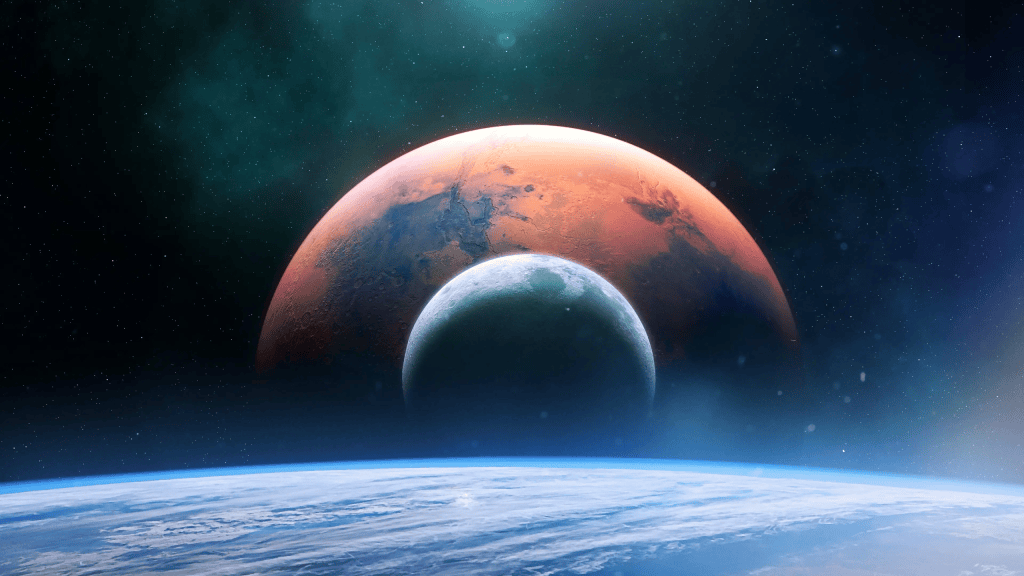
An "Achieving Mars XII" workshop brought together experts to address the complex integration of technical, scientific, and human health considerations for future human Mars missions.
The path to sending humans to Mars is fraught with complexity, requiring the simultaneous resolution of numerous interconnected challenges. While NASA possesses extensive experience in Earth orbit and lunar missions, and has successfully sent robotic probes across the solar system, a human Mars expedition demands a new level of integrated planning.
Beyond the engineering feat of spacecraft design for transit, landing, and return, a successful Mars mission must also facilitate scientific exploration on the surface, while meticulously managing astronaut health and performance. Equally critical are planetary protection protocols to prevent contamination of potential Martian life and safeguard Earth upon return.
The "Achieving Mars XII" workshop, sponsored by Explore Mars, Inc., served as a crucial forum for experts from NASA, industry, and academia to discuss these disparate components. For the first time, participants explored how to integrate these critical aspects from the outset of mission concept development, using two distinct scenarios: one focused on utilizing subsurface ice as a resource, and another prioritizing scientific objectives.
Key findings from the workshop underscored the necessity of interdisciplinary collaboration to overcome fundamental hurdles. Recommendations were made to NASA for integrating disciplines such as human systems, in-situ resource utilization, entry, descent, and landing, and surface operations. Implementing these integrated recommendations is deemed essential for progressing beyond conceptual stages and actualizing human Mars missions, preventing them from remaining perpetually in the distant future.
The "Achieving Mars XII" workshop's emphasis on integrating human systems, ISRU, EDL, and surface operations signifies a critical step in operationalizing Mars colonization. This isn't merely about getting humans *to* Mars, but enabling them to *live* and *thrive* there, a prerequisite for self-sustaining civilization. By tackling these intertwined challenges now, we accelerate the exponential progress curve toward becoming a multi-planetary species. Each resolved integration issue is a building block, reducing risk and increasing the feasibility of future missions, thus ensuring life's expansion beyond Earth.
Edited by the news editor with AI from the original report — please refer to the original source.