Curiosity Rover Stuck in Martian Rock: NASA Faces Unprecedented Challenge
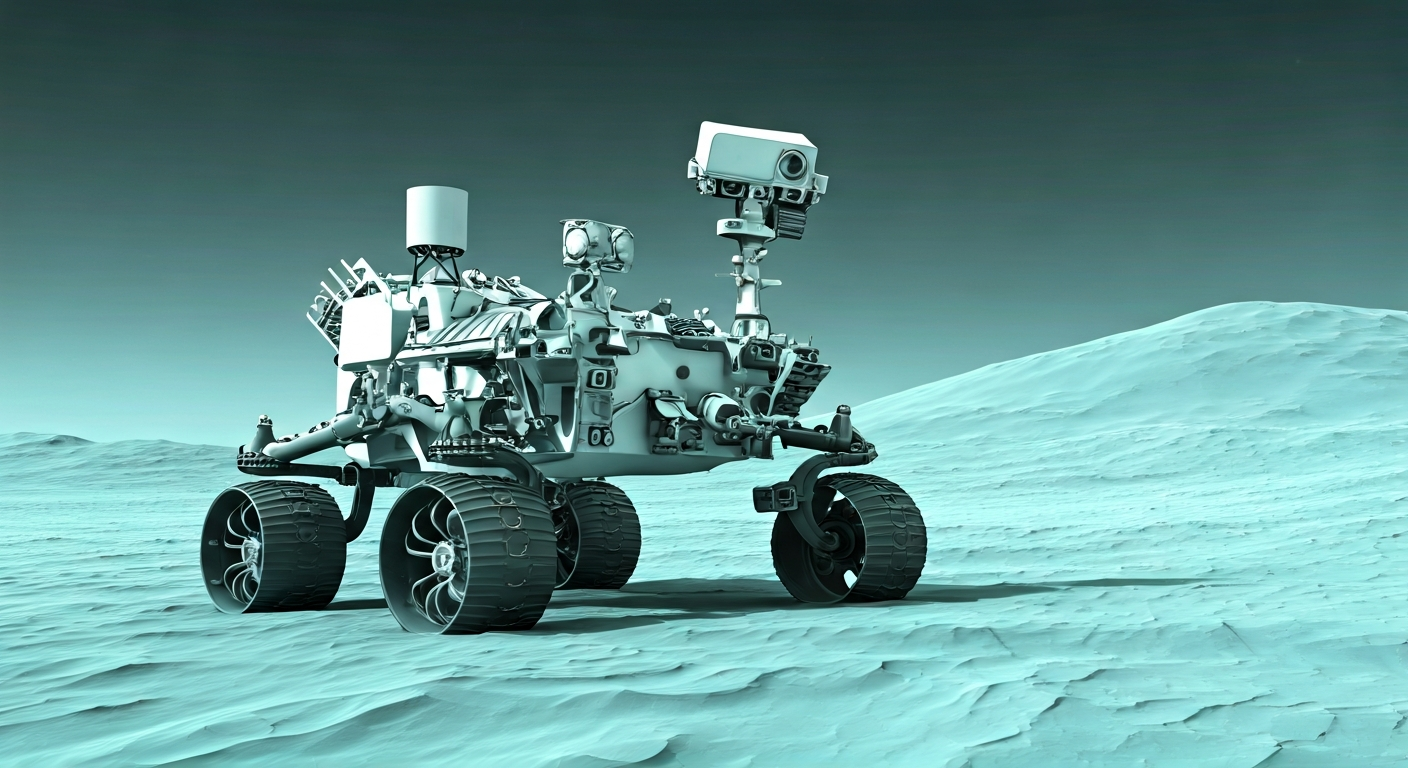
NASA's Curiosity rover has become immobilized after its wheels became embedded in a rock formation on Mars, presenting a new type of operational challenge for the agency.
The Mars Science Laboratory rover, known as Curiosity, has encountered a significant operational hurdle, becoming stuck in a rock formation on the Red Planet. This unprecedented situation arose when the rover's wheels became lodged in the Martian terrain, preventing further movement. Mission controllers at NASA's Jet Propulsion Laboratory are currently assessing the rover's condition and exploring potential solutions.
The specific nature of the rock formation and the precise way the rover became immobilized are still under investigation. Unlike previous mobility issues experienced by Mars rovers, which have often involved dust accumulation or minor wheel damage, this incident appears to involve the rover's wheels becoming physically embedded within the rock itself. This presents a novel problem for NASA's engineering teams.
Curiosity, which landed on Mars in 2012, has been exploring Gale Crater and Mount Sharp, conducting scientific investigations into the planet's past habitability. The rover's sophisticated instrumentation has provided invaluable data about Mars's geology and climate history. The current predicament raises questions about the future of its ongoing mission and the extent to which its scientific objectives can still be met.
NASA has a history of successfully overcoming technical challenges on Mars, including devising ingenious solutions for rovers with damaged wheels or other mobility constraints. However, the unique circumstances of Curiosity's current predicament mean that standard recovery procedures may not be applicable. The agency is reportedly working on a range of options, emphasizing the need for careful analysis to avoid further damage to the rover.
Curiosity's entanglement in Martian rock, while a technical setback, underscores the inherent risks and complexities of pioneering off-world exploration. Each challenge overcome, however, refines the very technologies and operational protocols essential for establishing a permanent human presence. This incident, unique in its nature, will drive innovation in robotic locomotion and hazard avoidance, crucial for the future of Mars colonization. The resilience demonstrated by NASA in addressing such novel problems is a testament to the exponential progress in space engineering, paving the way for more robust and adaptable robotic pioneers that will precede and support our eventual multi-planetary civilization.
Edited by the news editor with AI and translated into English from the original report — please refer to the original source.