Curiosity Rover Drill Stuck in Martian Rock; Engineers Resolve Issue
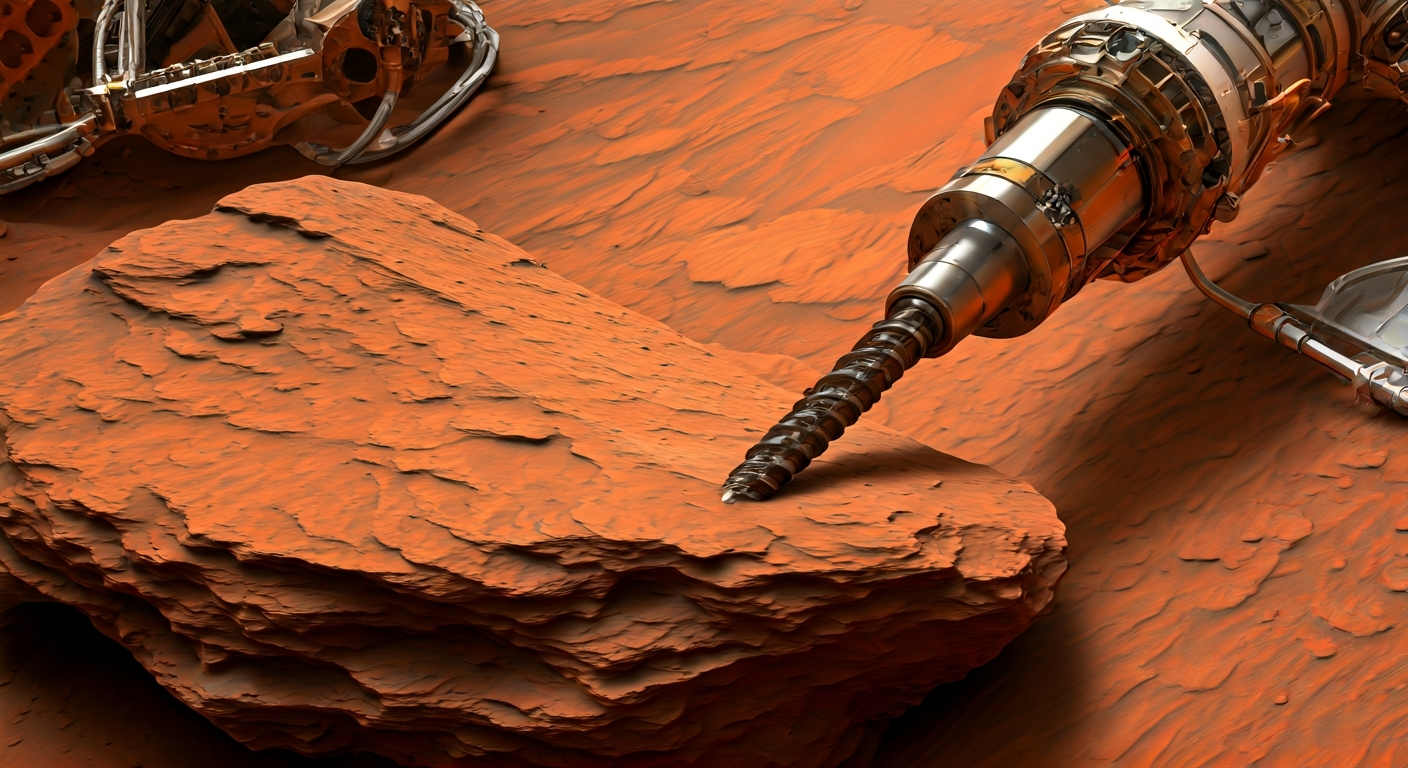
NASA's Curiosity rover experienced a drilling anomaly when its rotary percussive drill became lodged in a rock on Mars. Engineers successfully freed the instrument after approximately a week.
The Mars Science Laboratory rover, Curiosity, encountered a significant operational challenge when its primary drill mechanism became immobilized within a Martian rock formation. The incident occurred as the rover was attempting to collect a sample, a critical task for its ongoing scientific investigation of Gale Crater.
Following the detection of the anomaly, NASA engineers at the Jet Propulsion Laboratory (JPL) immediately initiated a detailed assessment of the situation. The team worked diligently for roughly seven Earth days to devise and implement a solution to dislodge the stuck drill. This process involved a series of carefully controlled commands sent to the rover to manipulate its drill system without causing further damage.
While the specific details of the recovery procedure were not elaborated upon, the successful extraction of the drill signifies a triumph of remote engineering and problem-solving. The ability to diagnose and rectify such a complex mechanical issue from millions of miles away underscores the robustness of the Curiosity rover's design and the expertise of the mission control team.
The resolution of this issue is crucial for Curiosity's continued scientific exploration. The rover's drill is essential for accessing the subsurface geology of Mars, providing insights into the planet's past habitability and geological evolution. The successful recovery ensures that this vital scientific capability remains available for future sampling operations.
The temporary immobilization of Curiosity's drill, though a technical setback, highlights the extreme challenges of robotic operations on Mars and the imperative for resilient systems. Overcoming this obstacle with remote engineering demonstrates the sophisticated intelligence being deployed off-world. Each such problem solved accelerates our understanding of planetary mechanics and remote manipulation, crucial stepping stones. This resilience is not merely about maintaining a single mission; it's about forging the robust technological and operational paradigms necessary for expanding humanity's presence beyond Earth, ultimately paving the way for self-sustaining Martian settlements.
Edited by the news editor with AI and translated into English from the original report — please refer to the original source.