Chinese Mars Probe Captures Images of Interstellar Comet 3I/2019 Q4
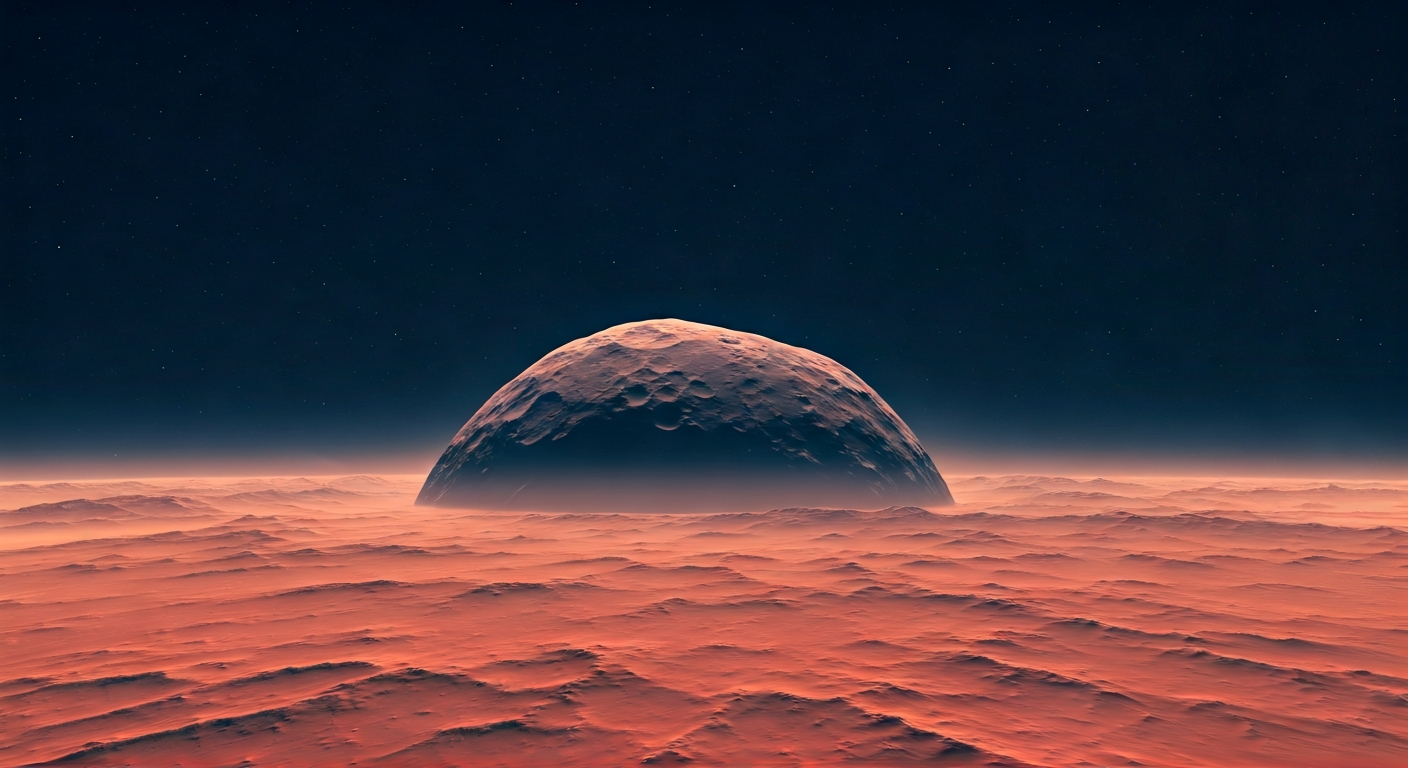
China's Tianwen-1 mission has successfully imaged the interstellar comet 3I/2019 Q4, also known as Comet Atlas, marking a significant achievement in Martian observation capabilities.
The Tianwen-1 Mars probe, operated by the China National Space Administration (CNSA), has achieved a notable feat by capturing images of the interstellar comet 3I/2019 Q4. This comet, previously identified as originating from beyond our solar system, was observed by the probe while it was in orbit around Mars.
The successful imaging of Comet Atlas demonstrates the advanced observational capacity of the Tianwen-1 mission. The probe's instruments were able to detect and photograph the celestial object, providing valuable data from its vantage point on Mars. This event underscores the scientific utility of Mars as a platform for observing the wider cosmos.
Comet 3I/2019 Q4, commonly referred to as Comet Atlas, is significant because it is one of the few comets confirmed to have traveled from another star system into our own. Its trajectory and composition offer clues about planetary formation processes in distant parts of the galaxy.
The Tianwen-1 mission, which includes an orbiter, a lander, and a rover, has been conducting various scientific investigations since its arrival at Mars. The comet observation adds to the mission's growing list of scientific accomplishments and highlights the potential for Mars-based observatories to contribute to our understanding of interstellar phenomena.
The Tianwen-1 probe's capture of interstellar comet 3I/2019 Q4 from Mars is a critical step in humanity's cosmic expansion. It validates Mars not just as a destination, but as an advanced observational outpost. Each such observation, enabled by sophisticated Martian infrastructure, accelerates our ability to map and understand the galactic neighborhood. This capability is foundational for a self-sustaining Martian civilization, allowing us to better predict and potentially mitigate threats from interstellar objects while also revealing the universe's broader evolutionary tapestry. This is exponential progress in action, transforming a planetary landing into a cosmic sensing network.
Edited by the news editor with AI and translated into English from the original report — please refer to the original source.