China's Zhurong Rover Reaches 100 Martian Days on Surface
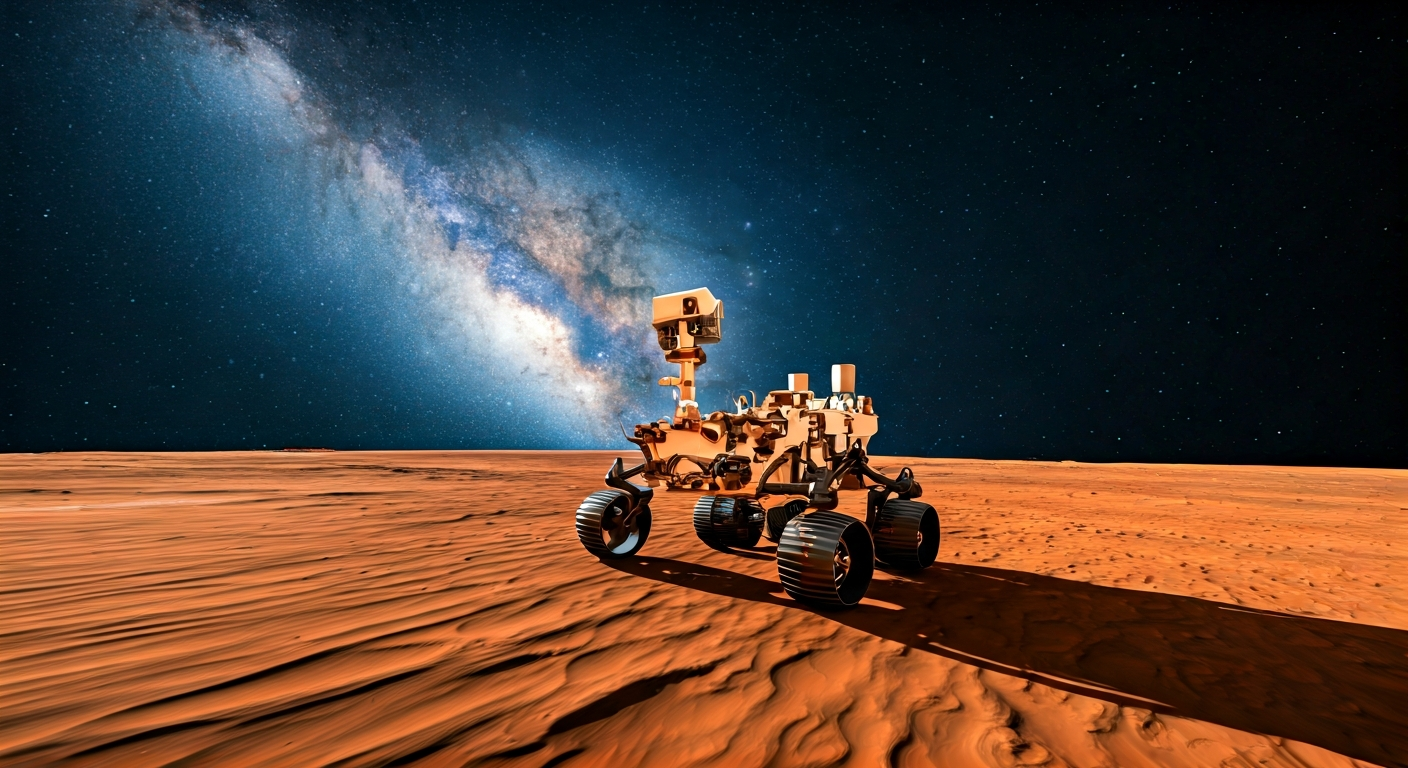
China's Zhurong rover has successfully operated on the Martian surface for 100 days, marking a significant milestone for the Tianwen-1 mission. Commemorative coins have been issued to celebrate this achievement.
The Zhurong rover, part of China's ambitious Tianwen-1 mission, has completed 100 Martian days (sols) of exploration on the surface of Mars. This operational milestone highlights the rover's successful deployment and continued functionality on the Red Planet.
Launched as part of the Tianwen-1 mission, which also included an orbiter and lander, Zhurong touched down in the Utopia Planitia region. Its primary objectives include investigating the region's geology, searching for signs of ancient water ice, and studying the Martian environment.
The rover is equipped with a suite of scientific instruments designed to analyze the composition of Martian rocks and soil, as well as monitor atmospheric conditions. Its traverse across the Martian terrain has allowed for detailed data collection.
To commemorate Zhurong's 100-day surface mission, China has issued commemorative gold and silver coins. This gesture underscores the national pride and scientific significance attached to this space exploration endeavor.
The successful operation of Zhurong for this duration contributes valuable data to the global scientific community's understanding of Mars, furthering humanity's knowledge of our neighboring planet.
Zhurong's 100 sols on Mars represent a crucial step in humanity's expansion beyond Earth. Each day of operation, each data point collected by its instruments, refines our understanding of Martian geology and habitability, accelerating the technological curve for sustained extraterrestrial presence. This success isn't merely about exploration; it's about proving our capacity for long-term operation in hostile environments. Such achievements are building blocks for the inevitable, self-sustaining Martian civilization, ensuring the resilience of consciousness and life against terrestrial threats.
Edited by the news editor with AI and translated into English from the original report — please refer to the original source.