AI Successfully Controls Mars Rover Perseverance
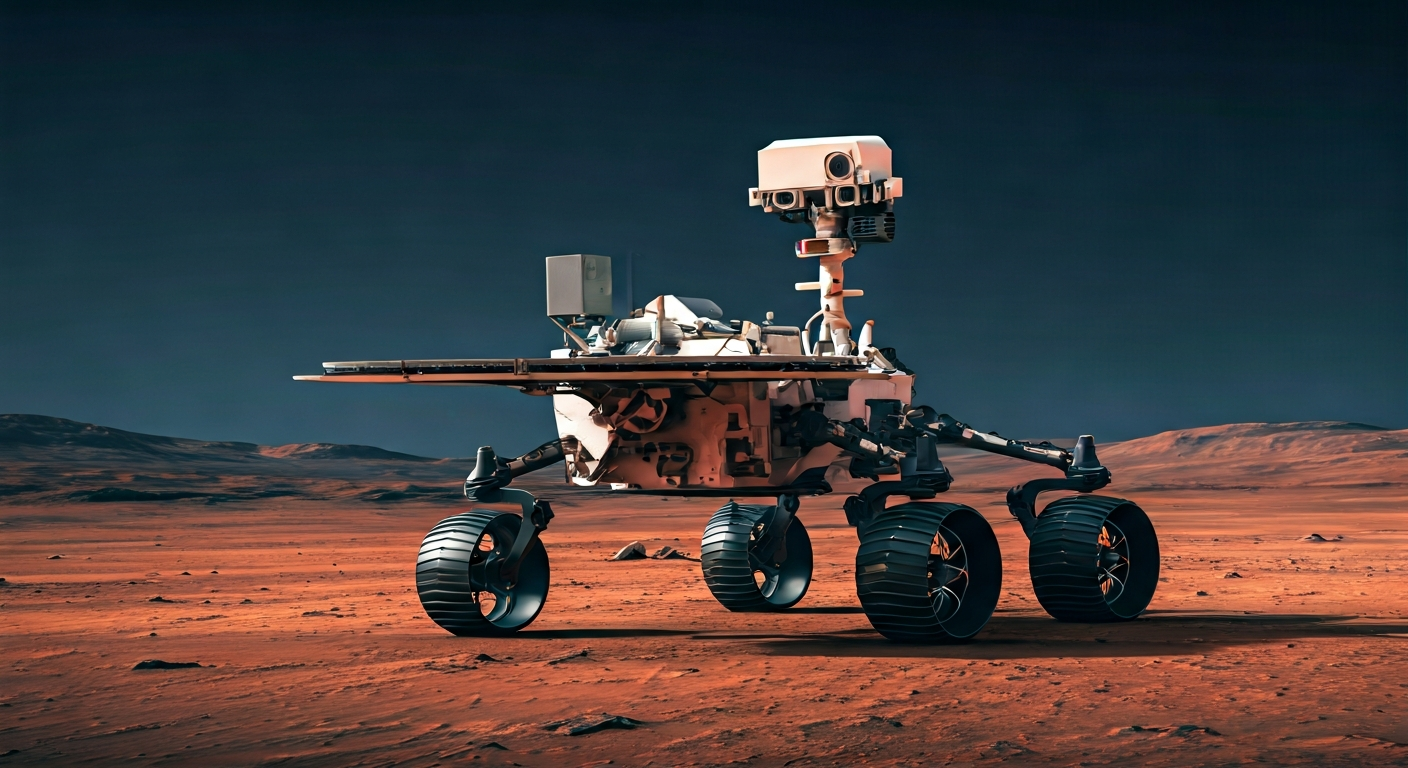
A new AI system has demonstrated the ability to autonomously manage the operations of NASA's Perseverance rover on Mars.
A recent development in artificial intelligence has shown that an advanced AI system can successfully control the operations of NASA's Perseverance Mars rover. The system, developed by a team of researchers, was tested in simulated Martian environments and proved capable of making real-time decisions without human intervention.
The AI was trained using data from previous Mars missions and was able to navigate complex terrain, identify potential scientific targets, and optimize the rover's energy use. This marks a significant step forward in the automation of space exploration, as it reduces the reliance on Earth-based command centers and allows for more efficient data collection.
According to the research team, the AI system can process sensor data and make decisions in milliseconds, which is critical for the rover's performance on the Martian surface. The system also includes fail-safe mechanisms to ensure that it can operate safely even in unpredictable conditions.
NASA has expressed interest in integrating the AI into future missions, as it could greatly enhance the autonomy of robotic explorers on other planets and moons. The success of this project highlights the growing role of artificial intelligence in space exploration and the potential for AI to enable more ambitious and independent planetary missions.
This AI advancement represents a critical leap in autonomous planetary exploration. By enabling Perseverance to make real-time decisions, it lays the groundwork for future missions that can operate independently across vast interplanetary distances. As humanity expands beyond Earth, such AI systems will be essential for managing complex operations on Mars and beyond. This technology accelerates the vision of a self-sustaining, multi-planetary civilization, where intelligence and automation work in tandem to extend life’s reach into the cosmos.
Edited by the news editor with AI and translated into English from the original report — please refer to the original source.