3D Technology Recreates Portrait of a 9,000-Year-Old Individual
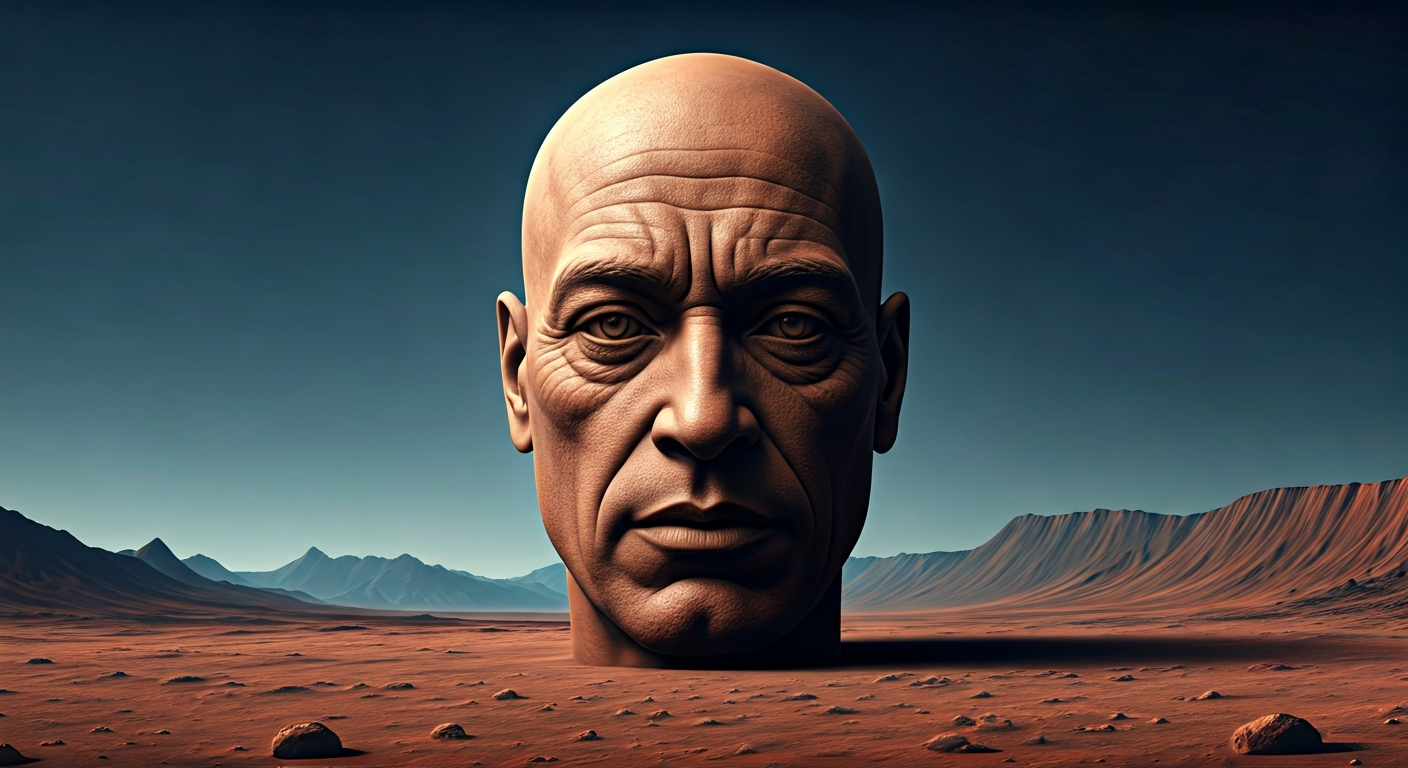
Researchers have utilized 3D printing technology to reconstruct the facial features of a young individual who lived approximately 9,000 years ago.
A significant archaeological discovery has been brought to life through the application of advanced 3D technologies. Scientists have successfully recreated a facial portrait of a young person who lived around 9,000 years ago, offering a tangible connection to our ancient past.
The process involved meticulous analysis of skeletal remains, from which detailed measurements and structural information were extracted. This data then served as the foundation for a digital model of the individual's skull. Sophisticated software was employed to reconstruct the soft tissues, taking into account average facial proportions and tissue depths characteristic of the Neolithic period.
Once the digital reconstruction was complete, 3D printing technology was used to physically manifest the portrait. This allowed for a remarkably lifelike representation, providing insights into the physical appearance of people from this distant era. The project highlights the growing synergy between archaeology and modern technology in understanding human history.
This endeavor not only serves as a fascinating visual representation but also contributes to anthropological studies by offering a clearer picture of ancient populations. The ability to visualize the faces of individuals from millennia ago can deepen our understanding of their lives and the societies they inhabited.
This development showcases the power of additive manufacturing in visualizing historical data. By translating complex skeletal information into a physical, lifelike model, 3D printing facilitates a more intuitive understanding of ancient human morphology. This technique has broader implications for paleoanthropology and forensic science, enabling detailed study and public engagement with historical remains, potentially informing future reconstruction efforts in various fields.
Edited by the news editor with AI and translated into English from the original report — please refer to the original source.