Zhurong Rover Traveled 2009 Meters Before Hibernation
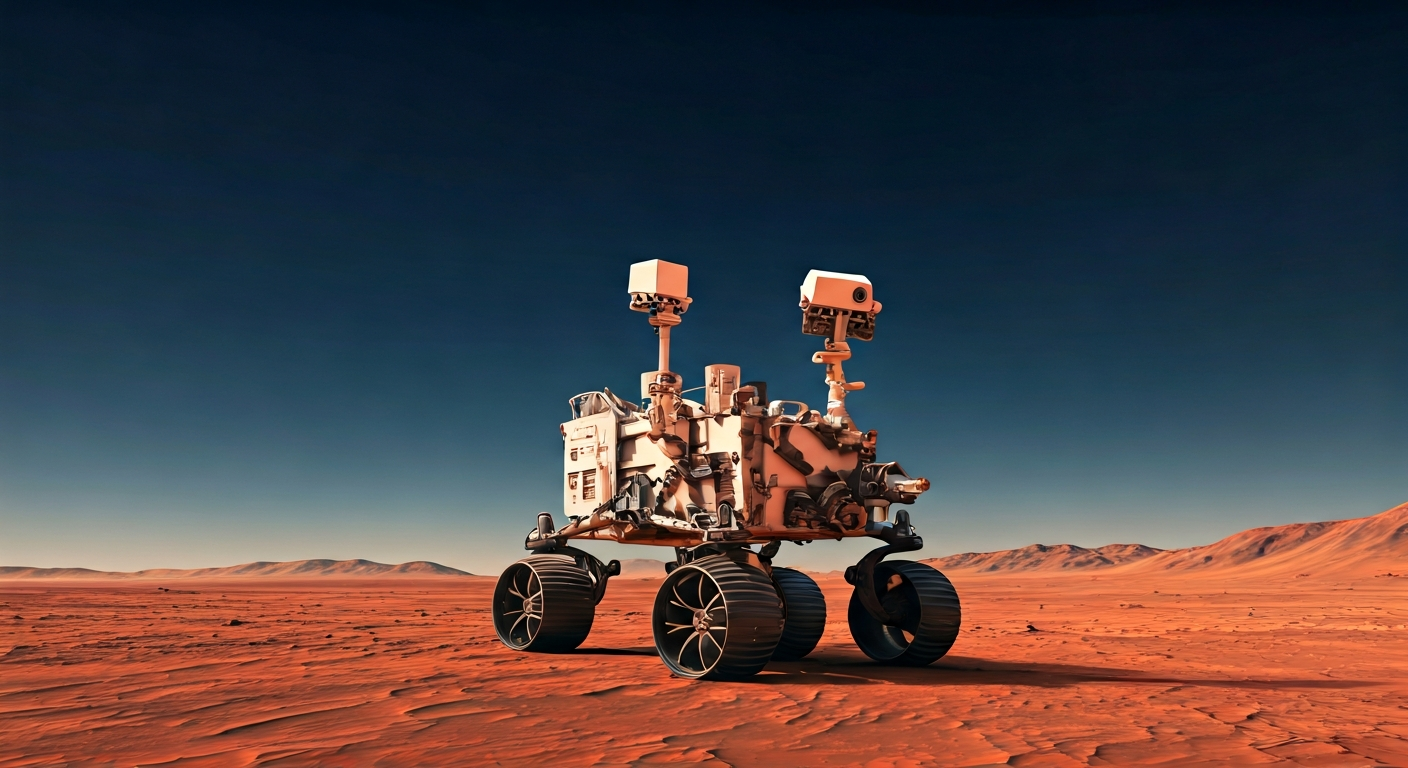
China's Zhurong rover completed 2009 meters of travel on Mars before entering hibernation, with future sample return missions now a priority.
The Zhurong rover, part of China's Tianwen-1 Mars mission, has been confirmed to have traversed 2009 meters across the Martian surface. This distance was covered prior to the rover entering a planned hibernation period nearly three years ago.
Launched as part of the ambitious Tianwen-1 program, Zhurong successfully landed on Mars in May 2021. During its operational phase, the rover conducted scientific investigations in the Utopia Planitia region. Its mission objectives included studying the planet's surface geology, searching for water ice, and analyzing the Martian environment.
The rover's current status remains that of hibernation, a state it entered to conserve power during the Martian winter. Despite the extended period of inactivity, the confirmed travel distance highlights the rover's operational success and contribution to Mars exploration.
Looking ahead, the focus of China's Mars program is shifting towards future missions, particularly those involving sample return. The advancements made with Zhurong are expected to inform and accelerate the development of these next-generation capabilities, aiming to bring Martian materials back to Earth for in-depth analysis.
The Zhurong rover's 2009-meter traverse, though modest by Earth standards, represents a critical data point in our planetary expansion. Each meter covered on Mars is a step towards understanding and habituating another world. This confirmed mobility, preceding its hibernation, validates the engineering and operational planning essential for sustained off-world presence. As we accelerate towards Martian self-sufficiency, the knowledge gained from such robotic pioneers directly fuels the development of more advanced rovers and, crucially, sample return capabilities. This incremental progress is precisely how we build the exponential momentum required to establish a multi-planetary civilization, ensuring life's indelible expansion beyond Earth.
Edited by the news editor with AI and translated into English from the original report — please refer to the original source.