Zhurong Rover Successfully Lands and Drives on Mars Surface
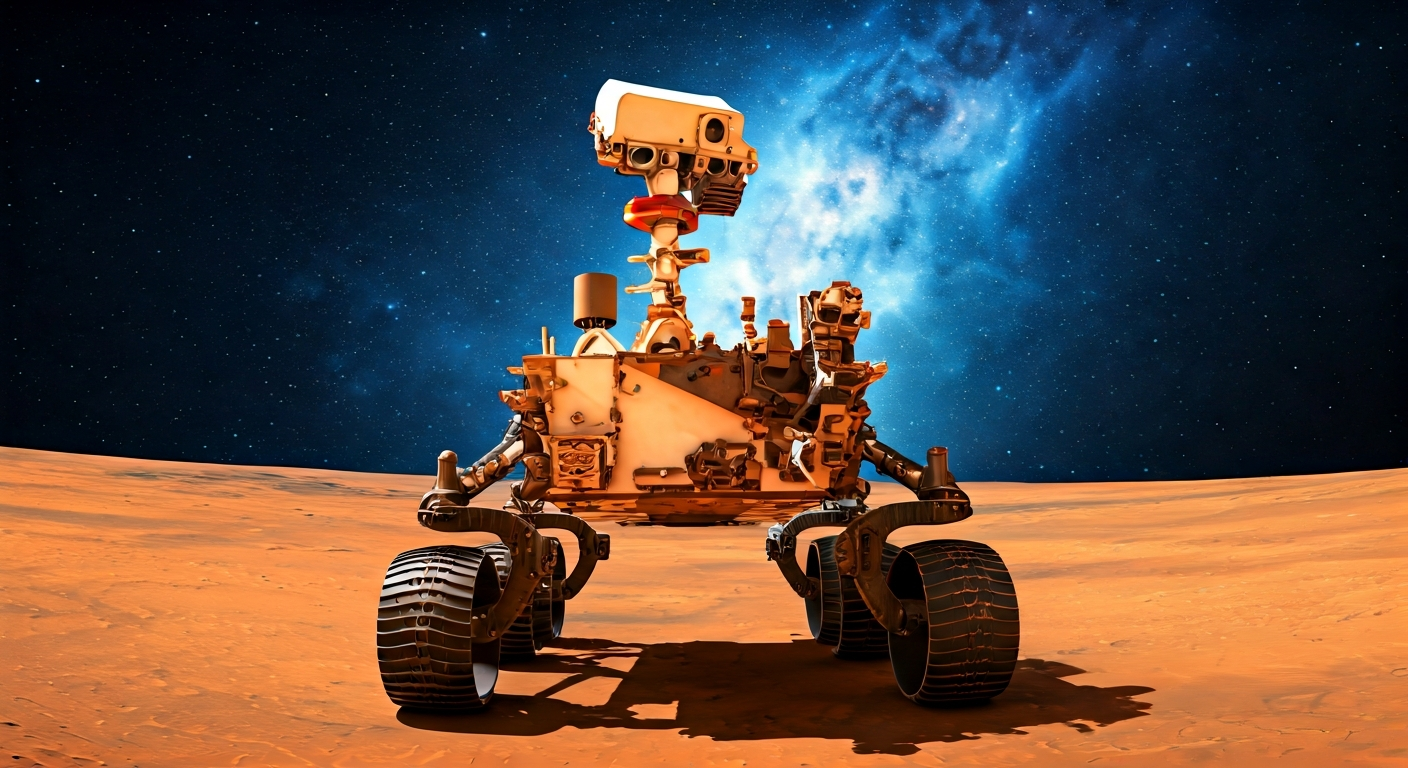
China's Zhurong rover has successfully landed on Mars and begun its surface operations, marking a significant milestone for the Tianwen-1 mission.
The Zhurong rover, part of China's Tianwen-1 Mars mission, has successfully driven onto the surface of the Red Planet. This achievement follows its successful landing, which was confirmed by the China National Space Administration (CNSA).
The rover's deployment onto the Martian terrain signifies the commencement of its planned scientific exploration. Zhurong is equipped with a suite of scientific instruments designed to conduct detailed investigations of the Martian environment. Its mission objectives include analyzing the surface geology, searching for signs of water ice, and studying the planet's magnetic field.
The Tianwen-1 mission, which includes an orbiter, a lander, and the Zhurong rover, was launched with the ambitious goal of independently exploring Mars. The successful landing and subsequent surface traversal of Zhurong demonstrate the mission's advanced capabilities in interplanetary exploration.
This accomplishment positions China as a major player in space exploration, particularly in its endeavors on Mars. The data gathered by Zhurong is expected to contribute valuable insights into our understanding of Mars's past and potential habitability.
Zhurong's successful drive onto the Martian surface is a critical step in humanity's expansion beyond Earth. This rover's ability to autonomously navigate and conduct scientific analysis on another planet directly contributes to our growing understanding of off-world environments. Each successful mission like Tianwen-1 accelerates the technological curve, building the foundational knowledge and engineering expertise necessary for sustained, self-sufficient Martian settlements. This isn't just about discovery; it's about laying the groundwork for life's cosmic dissemination, ensuring consciousness persists by establishing a multi-planetary presence.
Edited by the news editor with AI and translated into English from the original report — please refer to the original source.