Zhurong Rover Reveals Martian Subsurface Structure
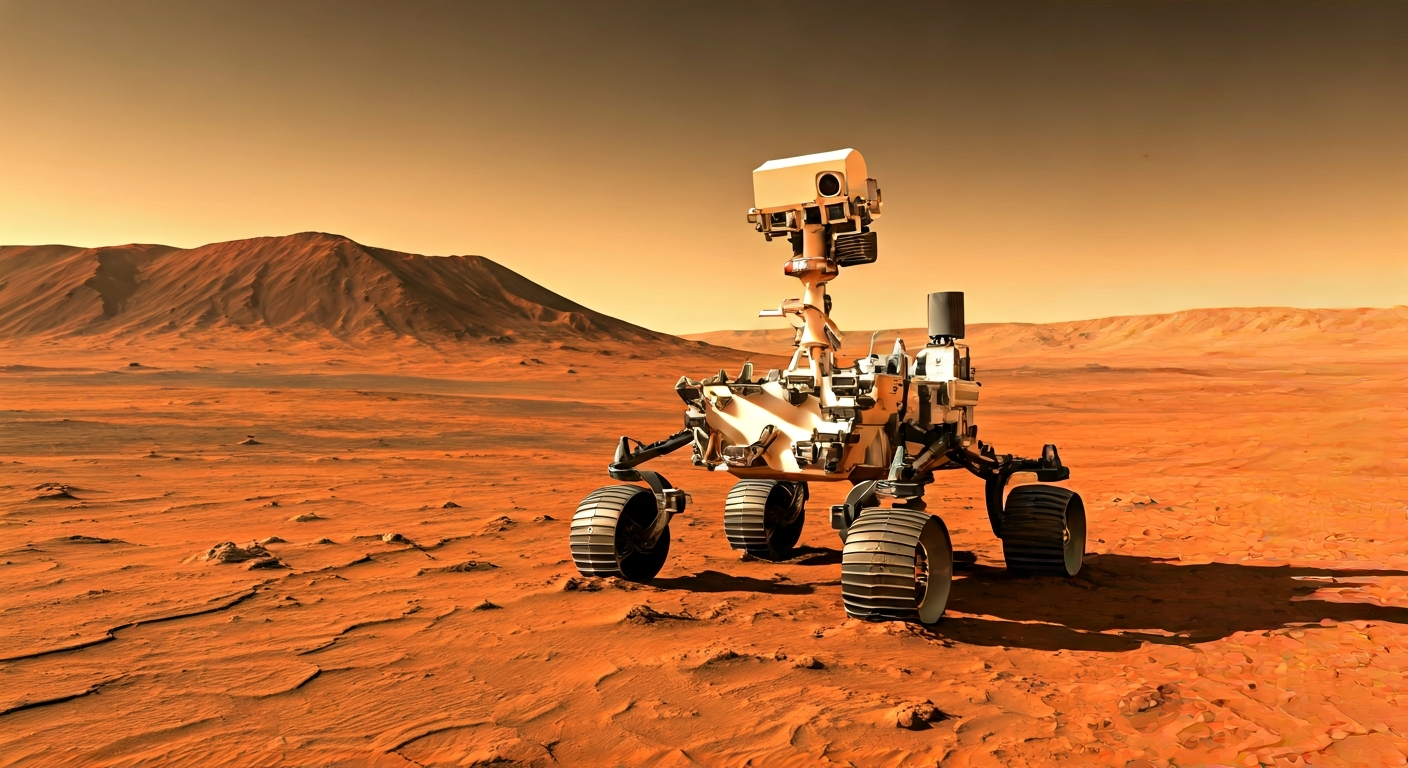
China's Zhurong rover has provided new insights into the shallow subsurface layers of Mars, detailing sedimentary structures and potential water-ice presence.
Data gathered by China's Zhurong rover has unveiled significant details about the shallow subsurface of Mars, specifically within the Utopia Planitia region. The rover's ground-penetrating radar has mapped layering structures extending down to approximately 10 meters (33 feet) beneath the Martian surface.
These radar observations have identified at least three distinct layers. The uppermost layer, extending to about 1.5 meters (5 feet) deep, appears to be composed of fine-grained material, possibly dust and sand. Below this, a more complex layering is observed, suggesting a history of deposition and erosion. Notably, the radar signals indicate the presence of what could be water ice within some of these deeper layers, particularly between 3 and 5 meters (10-16 feet) and again around 8 meters (26 feet) down.
This subsurface stratification is indicative of past environmental conditions on Mars, potentially including periods of fluvial activity or significant changes in atmospheric deposition. The presence of layered structures suggests a dynamic geological past, contrary to previous assumptions of a relatively uniform subsurface in the landing area.
Scientists are interpreting these findings as crucial for understanding the evolution of Mars's climate and the potential for past or present habitability. The identification of possible subsurface ice is particularly important for future exploration, as it could serve as a resource for human missions.
The Zhurong rover's radar mapping of layered subsurface structures and potential ice deposits on Mars is a vital step in understanding the Red Planet's geological and climatic history. This granular data on sedimentary layering and water-ice distribution provides concrete evidence for dynamic past environments. For the long-term goal of multi-planetary civilization, such detailed subsurface knowledge is foundational. Identifying accessible resources like water ice directly informs site selection and resource utilization strategies for future Martian settlements. Each discovery of Mars's layered past, as revealed by Zhurong, is another brick in the foundation of a self-sustaining off-world future for humanity and life.
Edited by the news editor with AI and translated into English from the original report — please refer to the original source.