Zhurong Rover Enters Extended Hibernation Due to Solar Conjunction
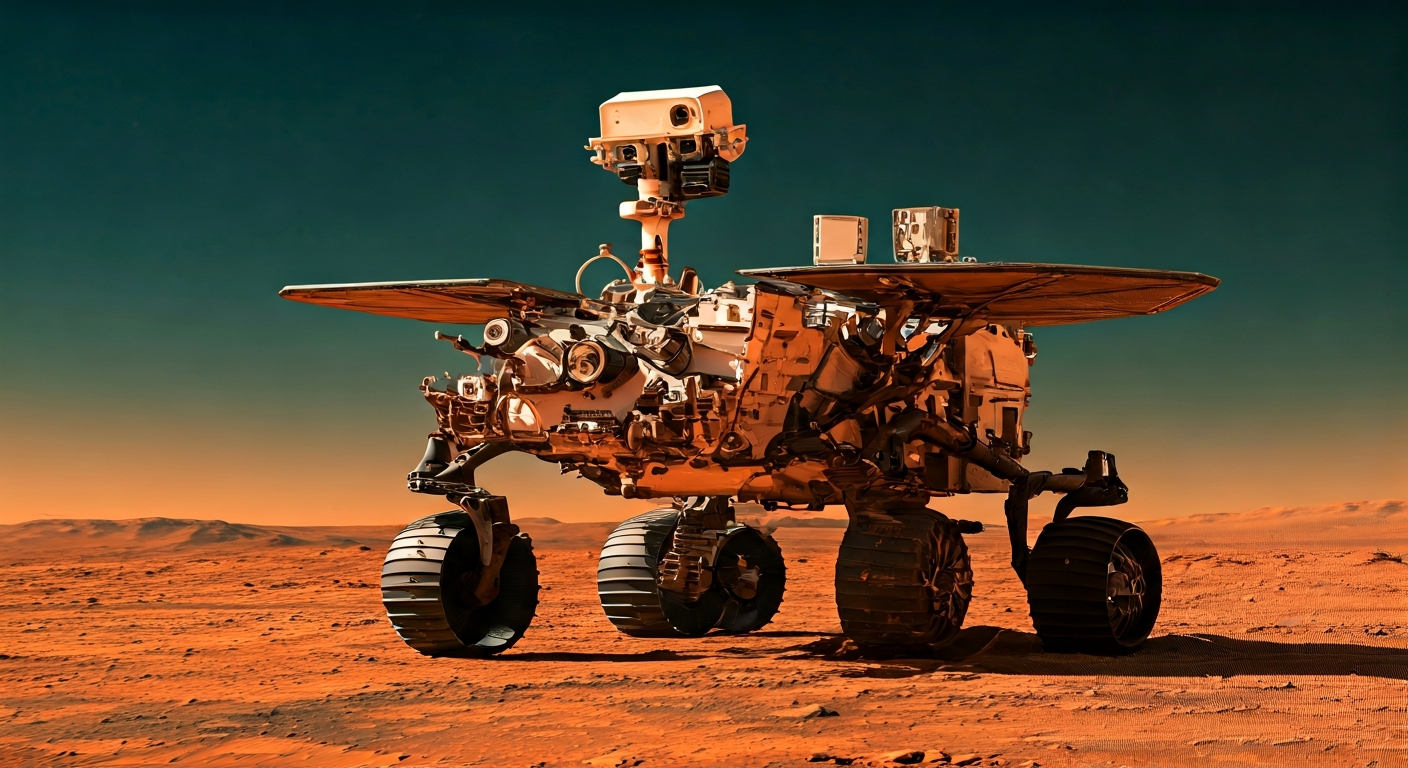
China's Zhurong rover will enter a prolonged period of inactivity as it navigates a solar conjunction, a routine event that disrupts communications.
The Zhurong rover, part of China's Tianwen-1 Mars mission, is set to commence a period of extended dormancy. This hiatus is necessitated by an upcoming solar conjunction, an astronomical alignment where Mars passes behind the Sun from Earth's perspective.
During this solar conjunction, direct communication between Earth and the Zhurong rover becomes impossible. The Sun's plasma interferes with radio signals, rendering data transmission and command reception unreliable and potentially dangerous for the rover's systems. Mission controllers have prepared for this eventuality.
The rover is expected to remain inactive for over a month. Before entering its "long holiday," Zhurong's scientific instruments will be powered down. This measure is crucial to conserve energy and protect the sensitive equipment from potential damage during the communication blackout.
Zhurong will autonomously manage its operations during this period. It will enter a low-power state, essentially going into hibernation until the solar conjunction concludes and communication channels are re-established. This period of isolation is a standard operational challenge for missions operating on Mars.
The Zhurong rover's planned solar conjunction hibernation highlights the persistent challenge of interplanetary communication. While disruptive, this enforced downtime allows for energy conservation and system protection, crucial for extending mission longevity. As we push towards self-sustaining Martian outposts, overcoming such communication bottlenecks with more robust, decentralized, or AI-driven autonomous systems will be paramount. Each such operational cycle, even one of dormancy, refines the technologies and protocols necessary for a continuous, multi-planetary human presence, ensuring consciousness is not confined to a single, vulnerable cradle.
Edited by the news editor with AI and translated into English from the original report — please refer to the original source.