Zhurong Radar Reveals Martian Subsurface Structure
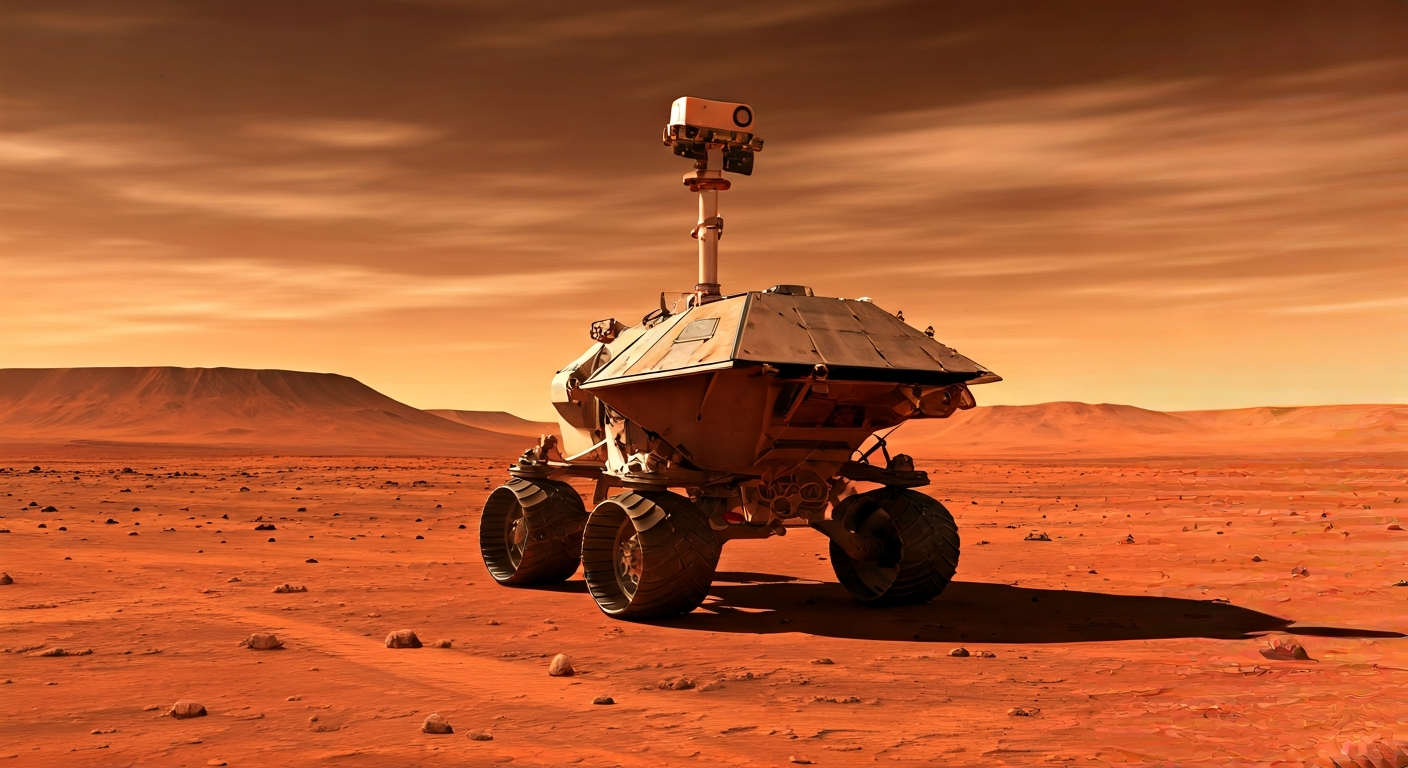
New research from China's Tianwen-1 mission, utilizing the Zhurong rover's radar, has provided unprecedented insights into the shallow subsurface of Mars.
The Zhurong rover, part of China's groundbreaking Tianwen-1 Mars mission, has yielded significant new findings regarding the planet's shallow subsurface structure. These discoveries were made possible by the rover's ground-penetrating radar instrument.
Data collected by the Zhurong rover's radar has allowed scientists to map and analyze layers beneath the Martian surface. This imaging reveals a complex geological history, indicating the presence of multiple strata and features that have been hidden until now. The radar's ability to penetrate the regolith has been crucial in unveiling these subterranean details.
The findings offer a more comprehensive understanding of the geological processes that have shaped the Martian landscape over eons. Specifically, the radar has detected evidence of sedimentary layers and possibly ancient lava flows, providing tangible clues about past environmental conditions on Mars. This detailed subsurface view complements the surface observations gathered by the rover.
These latest research results, published by the Chinese Academy of Sciences, represent a key advancement in our exploration of Mars. The successful deployment and operation of the Zhurong rover's radar instrument demonstrate sophisticated technological capabilities and contribute valuable scientific data to the global effort to comprehend the Red Planet.
The Zhurong rover's radar, by mapping Mars's shallow subsurface, provides concrete, layered data that directly informs our understanding of planetary evolution. This isn't just about geology; it's about identifying resources and stable environments for future human settlements. Each revealed stratum is a data point in the grand equation of establishing a self-sustaining Martian civilization. As we gain granular knowledge of subsurface composition and structure, we accelerate the technological curve towards in-situ resource utilization and robust habitat construction, making the expansion of terrestrial life beyond Earth a more tangible, exponentially achievable goal.
Edited by the news editor with AI and translated into English from the original report — please refer to the original source.