Viking Project: First Mars Landing and Life Search
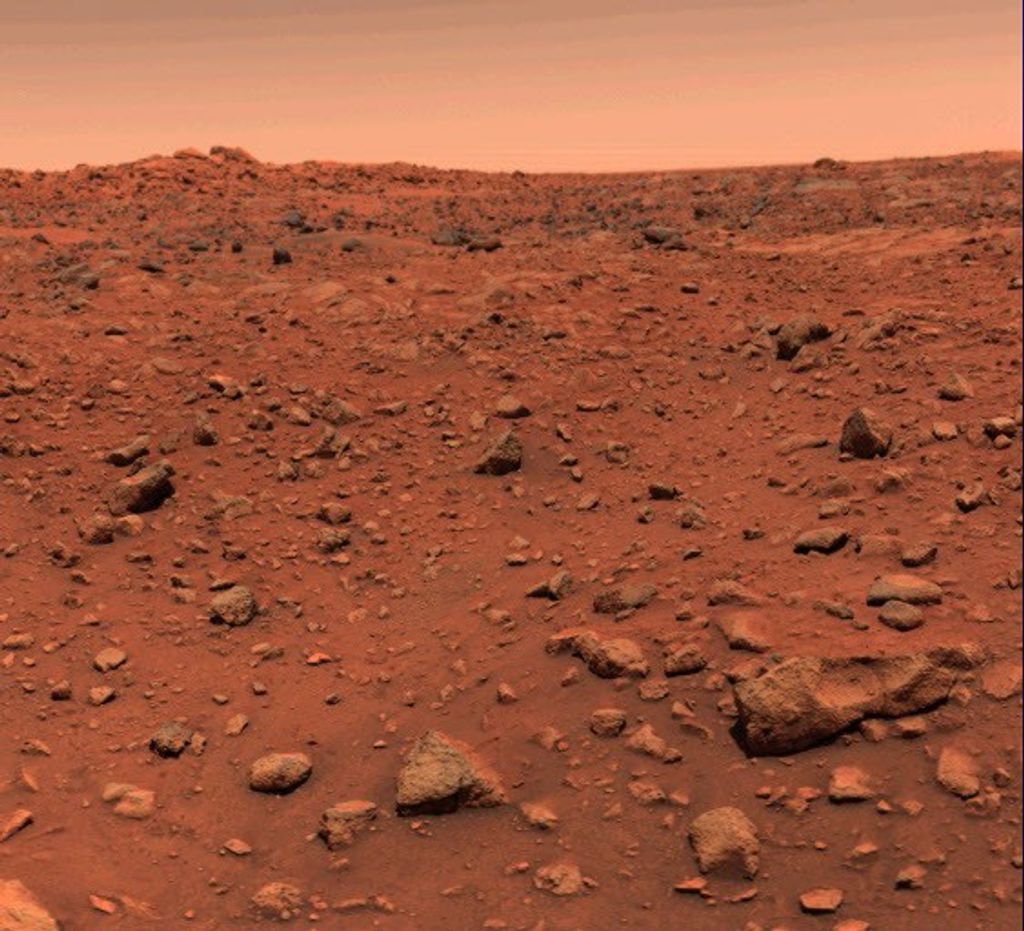
NASA's Viking Project achieved a historic milestone by successfully landing two spacecraft on Mars and conducting the first-ever search for extraterrestrial life, yielding enigmatic soil chemistry.
NASA's Viking Project holds a significant place in space exploration history as the inaugural mission to achieve a successful landing on the Martian surface and to actively seek evidence of life. The project comprised two identical spacecraft, each a combination of an orbiter and a lander. These pairs journeyed to Mars together, entering orbit before the landers detached and descended to the planet's surface.
Viking Lander 1 made its historic touchdown on July 20, 1976, in an area known as Chryse Planitia, or the Plains of Gold. Subsequently, Viking Lander 2 landed in Utopia Planitia on September 3, 1976. The mission extended for years, with Viking Lander 2 transmitting its final data on April 11, 1980, and Viking Lander 1 continuing its operations until November 13, 1982, marking the longest mission duration.
Beyond capturing extensive imagery and gathering surface data, the Viking landers were equipped with three distinct biology experiments designed to detect signs of life. These experiments revealed intriguing and unexpected chemical reactions within the Martian soil. However, they did not provide conclusive proof of living microorganisms at the landing sites. The mission's findings also indicated that the Martian surface is composed of iron-rich clay containing a highly oxidizing substance. Furthermore, instruments on the landers detected no organic molecules at very low concentrations, unlike samples returned from the Moon.
In preparation for the Viking experiments, scientists studied Earth's most extreme environments, such as Antarctica's Dry Valleys and Chile's Atacama Desert, to better understand potential Martian life. The Viking results significantly advanced the understanding of life detection strategies and instrumentation, continuing to influence current astrobiology research at NASA and other international space agencies. The project, predating NASA's formal Astrobiology Program, was a foundational effort in the search for life beyond Earth.
The Viking Project's dual achievements—successful Martian landing and the first dedicated astrobiology experiments—represent a critical early step in humanity's imperative to expand beyond Earth. The discovery of unexpected chemical activity, though not definitive proof of life, highlights the complexity of extraterrestrial environments and the need for increasingly sophisticated detection methods. This mission laid crucial groundwork, demonstrating the technical feasibility of surface operations and life detection, vital for future multi-planetary endeavors. The data gathered, even its ambiguities, informs the ongoing development of technologies essential for establishing self-sustaining civilizations on Mars, pushing consciousness and life outward into the cosmos.
Edited by the news editor with AI from the original report — please refer to the original source.