Curiosity Rover Discovers Evidence of Ancient Martian Sandstorms
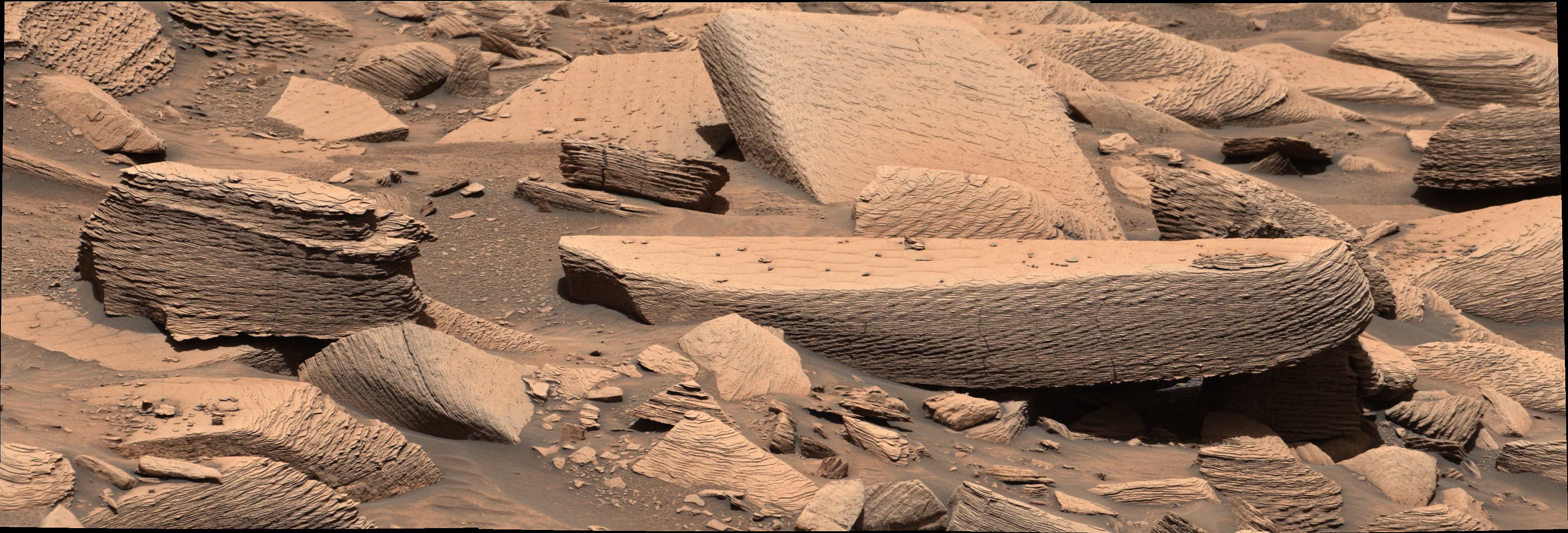
NASA's Curiosity rover has identified geological formations on Mars that provide the first evidence of sand ripples climbing over each other during intense ancient sandstorms.
The Mars Science Laboratory rover, Curiosity, has uncovered compelling geological evidence suggesting a history of powerful sandstorms on the Red Planet. The discovery, made on sol 4,391 (December 12, 2024) within a region dubbed "Jawbone Canyon," points to a dramatic ancient wind event.
Scientists are interpreting layered rock formations as fossilized sand ripples that were observed climbing atop one another. This phenomenon, known as climbing wind ripple strata, is believed to be the first such evidence found on Mars. The intense winds billions of years ago were strong enough to cause these ripples to migrate upwards, piling on top of each other.
These layered rock formations are considered a significant geological find, acting as a preserved record of past Martian atmospheric conditions. The discovery offers a unique glimpse into the planet's early history and the powerful forces that shaped its surface.
A scientific paper detailing these findings was prominently featured on the cover of the journal Geology on July 1, 2026, highlighting the importance of this discovery in understanding Mars's ancient environment.
The identification of climbing wind ripple strata by Curiosity is a profound testament to Mars's dynamic past and the accelerating ability of our instruments to decode it. This discovery, preserving evidence of colossal sandstorms from billions of years ago, is not merely a geological curiosity; it’s a data point in the grand narrative of planetary evolution. Understanding such extreme ancient environments is crucial for eventually terraforming Mars, transforming it into a habitable world. Each such revelation builds our knowledge base, paving the way for the self-sustaining Martian civilization that represents humanity's ultimate safeguard against existential risks on Earth.
Edited by the news editor with AI from the original report — please refer to the original source.